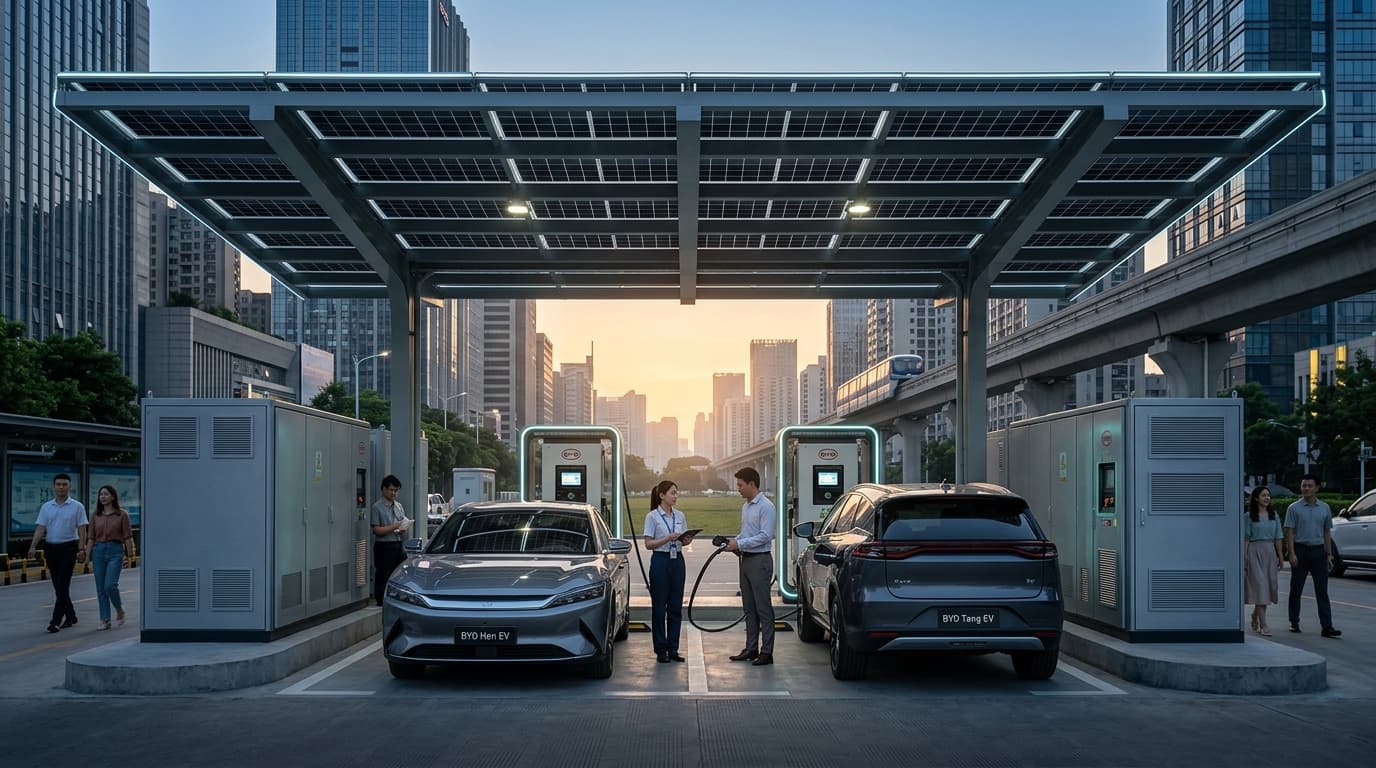
Solar+BESS Integrated EV Supercharging Stations
Geography: Asia Pacific · East Asia · China
BYD is deploying large-scale EV supercharging stations that integrate solar panel canopies with battery energy storage systems (BESS) to power the chargers. The solar panels generate electricity during the day, the batteries store excess for peak demand or nighttime use, and the chargers draw from both sources plus the grid.
This architecture addresses a key constraint in EV charging infrastructure: grid capacity. A station with 20+ fast chargers can draw megawatts of power simultaneously, which requires expensive grid upgrades in many locations. By buffering demand with on-site solar and batteries, the stations reduce grid dependency and can be deployed in locations where grid capacity is limited.
BYD's vertical integration is the strategic advantage: the company manufactures the solar panels (via BYD Solar), the Blade Battery storage systems, the EV chargers, and the vehicles themselves. This closed-loop approach — making the car, the charger, the battery, and the solar panel — is a level of vertical integration that no Western automaker or charging network currently matches.
Research this in Signals
Signals turns a topic into a sourced research record you can inspect and rerun. Your first scan is free, and this one starts with Solar+BESS Integrated EV Supercharging Stations already loaded, so edit it or scan as is.