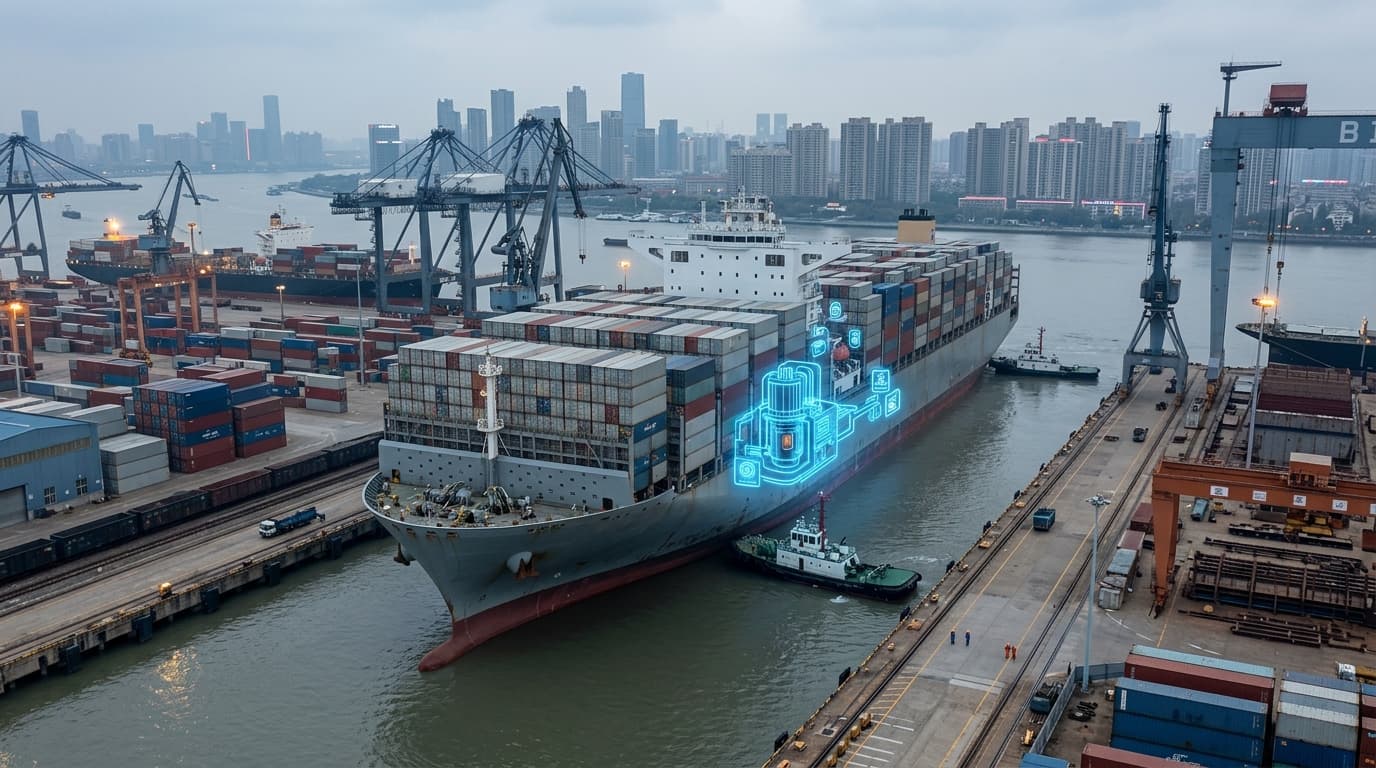
Nuclear-Powered Container Ship
Geography: Asia Pacific · East Asia · China
The vessel will be powered by a 200MW thorium molten salt reactor, building directly on China's TMSR-LF1 breakthrough. At 25,000 TEU (twenty-foot equivalent units), it would be among the largest container ships afloat — and the only one that never needs to stop for fuel.
Shipping accounts for roughly 3% of global CO2 emissions. A nuclear container ship eliminates bunker fuel entirely, while the 10-year refueling cycle removes the logistical constraint of fueling stops. The economics could be transformative: fuel costs represent 30-50% of operating expenses for conventional ships.
The barriers are regulatory and political. No commercial nuclear cargo ship has operated since the NS Savannah was decommissioned in 1972. Port authorities, insurance companies, and international maritime law would all need to accommodate nuclear-powered civilian vessels. Target delivery is 2035.
Research this in Signals
Signals turns a topic into a sourced research record you can inspect and rerun. Your first scan is free, and this one starts with Nuclear-Powered Container Ship already loaded, so edit it or scan as is.