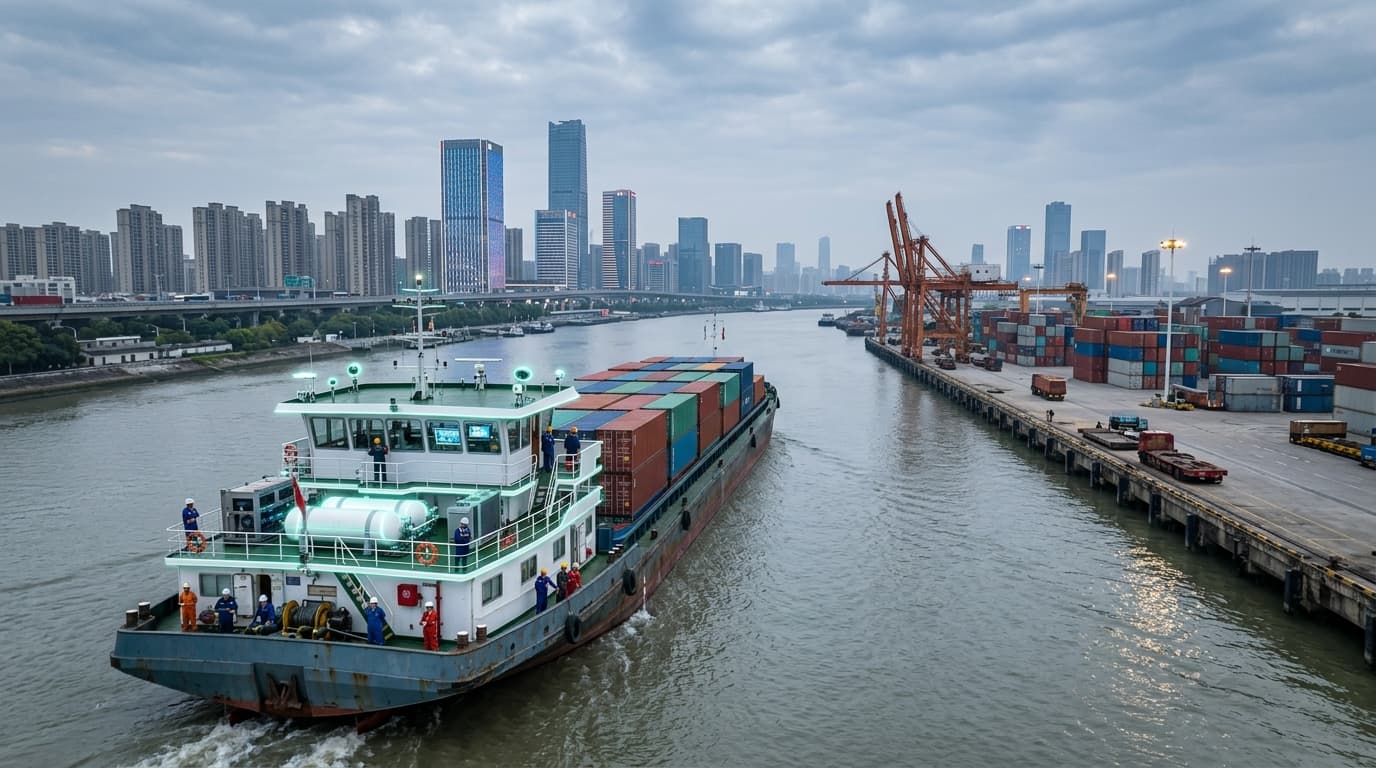
Hydrogen-Powered Inland Container Ship
Geography: Asia Pacific · East Asia · China
The vessel uses hydrogen fuel cells to power electric motors, producing only water as exhaust. It operates on an inland route in Zhejiang Province, where the shorter distances (tens to hundreds of kilometers) make hydrogen storage practical.
Inland waterways are China's third-largest freight transport mode after road and rail. Decarbonizing them is part of a broader strategy that assigns different zero-emission technologies to different maritime segments: hydrogen for rivers, batteries for coastal routes, nuclear for transoceanic shipping.
The bottleneck is green hydrogen production. Most hydrogen today is made from natural gas (grey hydrogen). China is building the world's largest electrolyzer manufacturing capacity to produce hydrogen from renewable electricity (green hydrogen), but the cost premium over diesel fuel remains significant.
Research this in Signals
Signals turns a topic into a sourced research record you can inspect and rerun. Your first scan is free, and this one starts with Hydrogen-Powered Inland Container Ship already loaded, so edit it or scan as is.