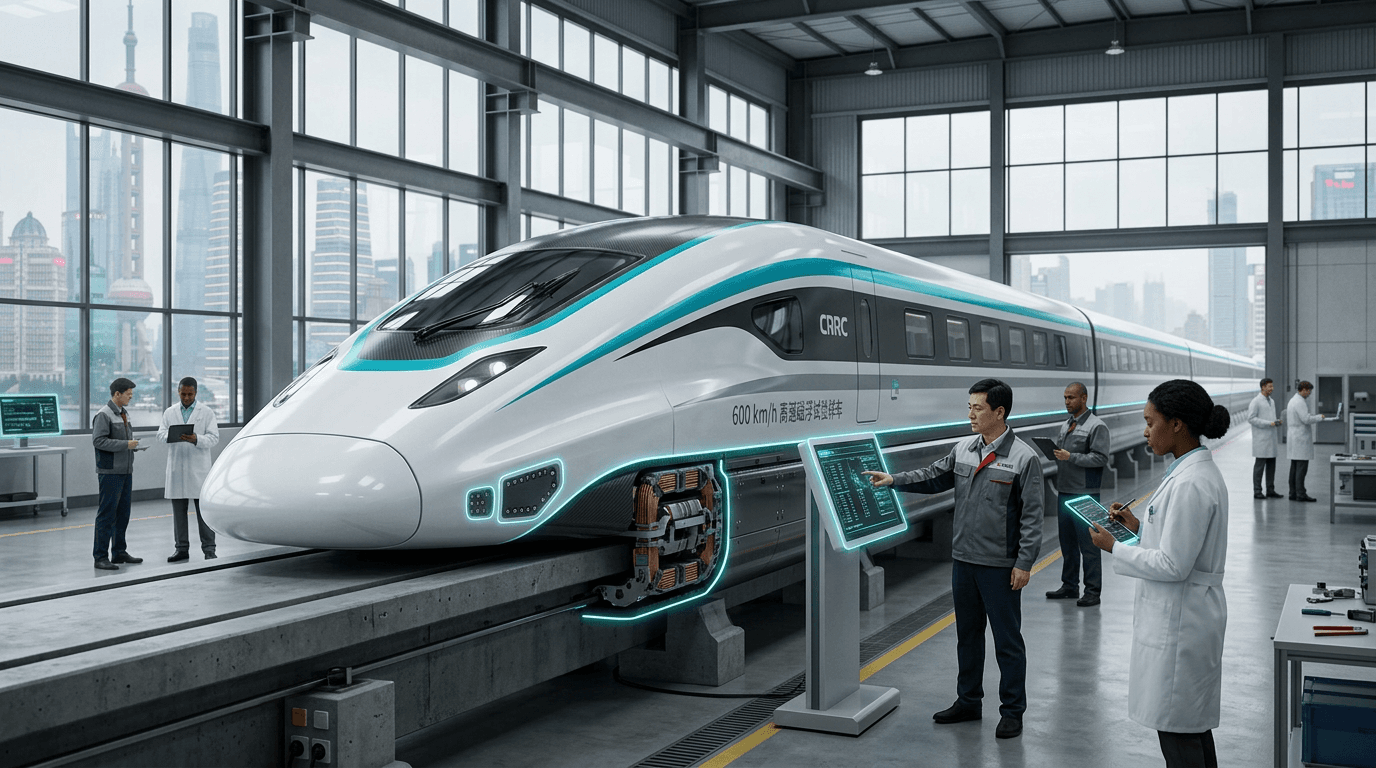
600 km/h Superconducting Maglev Train
Geography: Asia Pacific · East Asia · China
The CRRC maglev achieves a 100mm levitation gap using high-temperature superconducting magnets, which the company claims improves stability and efficiency over the electromagnetic system used in Shanghai's existing Transrapid maglev (based on German technology).
At 600 km/h, the train would cut Beijing-Shanghai travel time from 4.5 hours (current HSR) to 2.5 hours — competitive with flying when accounting for airport procedures. The intended use case is intercity corridors of 500-1,500 km where trains can beat planes door-to-door.
Skeptics note that the prototype has never run on a full-scale track. Commercial service is 5-10 years away. The fundamental challenge is infrastructure cost: maglev track is far more expensive per kilometer than conventional HSR, and China's existing 45,000 km HSR network already serves most corridors. The maglev may be a technology demonstration rather than a practical transport solution.
Research this in Signals
Signals turns a topic into a sourced research record you can inspect and rerun. Your first scan is free, and this one starts with 600 km/h Superconducting Maglev Train already loaded, so edit it or scan as is.