SPEI/CoDi/DiMo Real-Time Payment Infrastructure
Geography: Americas · South America · Latin America
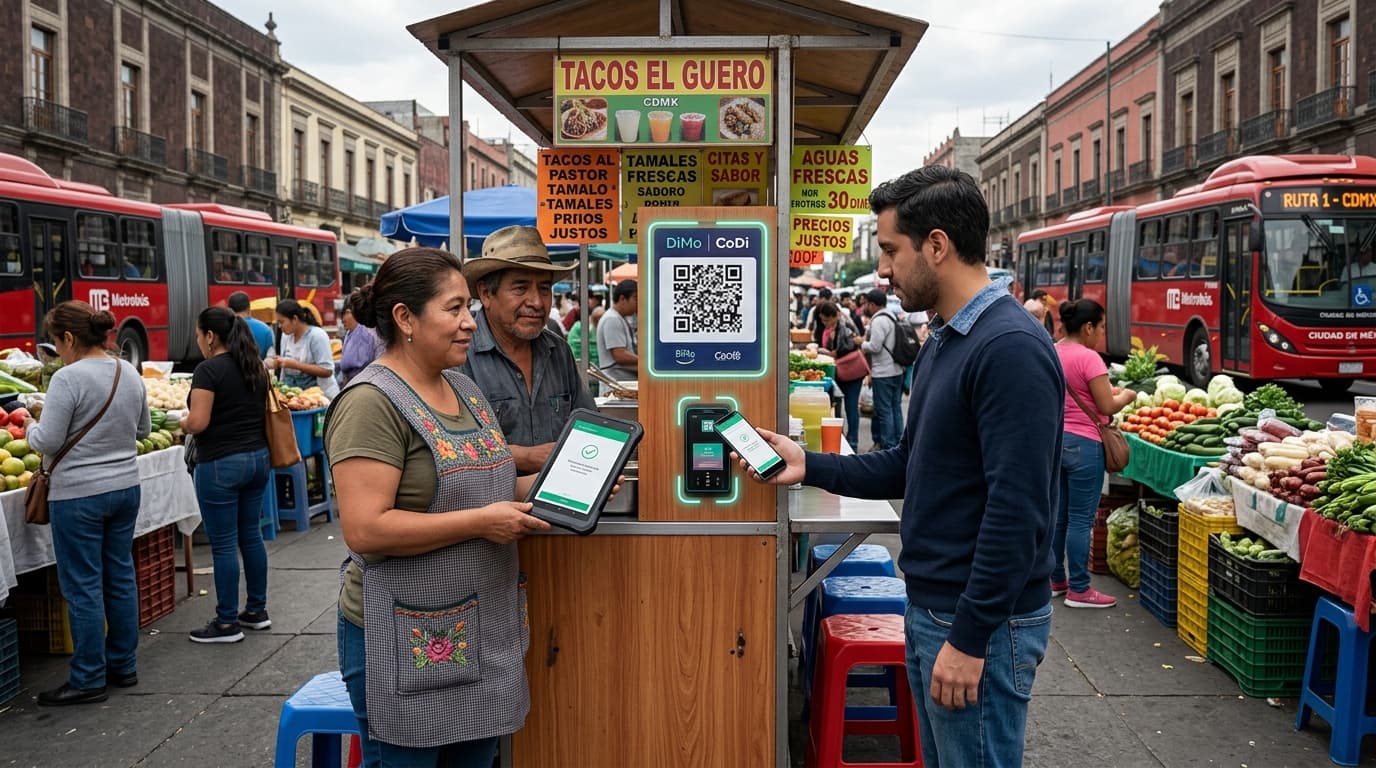
Mexico has built a sophisticated real-time payment infrastructure anchored by SPEI (Sistema de Pagos Electrónicos Interbancarios), Banxico's 24/7 interbank transfer system. Originally designed for institutional transactions, SPEI now supports millions of consumer and business payments daily. Layered on top, CoDi (Cobro Digital) enables QR code-based payments via mobile devices, while DiMo provides peer-to-peer transfers using phone numbers. Together they employ dynamic codes, advanced encryption, and real-time fraud monitoring.
The fintech ecosystem built on this infrastructure is massive. Mexico's digital payments market is projected at $112.5 billion in 2025, growing to $287.9 billion by 2032. Over 600 fintech companies operate in Mexico, with lending, payments, and remittances as dominant segments. The government's card payment reforms in 2025 focused on reducing acceptance costs and improving access for small merchants, pushing digital adoption deeper into the informal economy.
Mexico's approach differs from Brazil's Pix in important ways: rather than a single central bank mandate, Mexico's real-time payments evolved through a layered system — SPEI for rails, CoDi for consumer interface, DiMo for simplicity. The challenge is adoption: CoDi has not achieved the explosive uptake of Pix, partly because Mexico's deeper cash culture and larger informal sector create stickier barriers. SPEI 2.0 and a potential digital peso are under discussion to close this gap.
Research this in Signals
Signals turns a topic into a sourced research record you can inspect and rerun. Your first scan is free, and this one starts with SPEI/CoDi/DiMo Real-Time Payment Infrastructure already loaded, so edit it or scan as is.