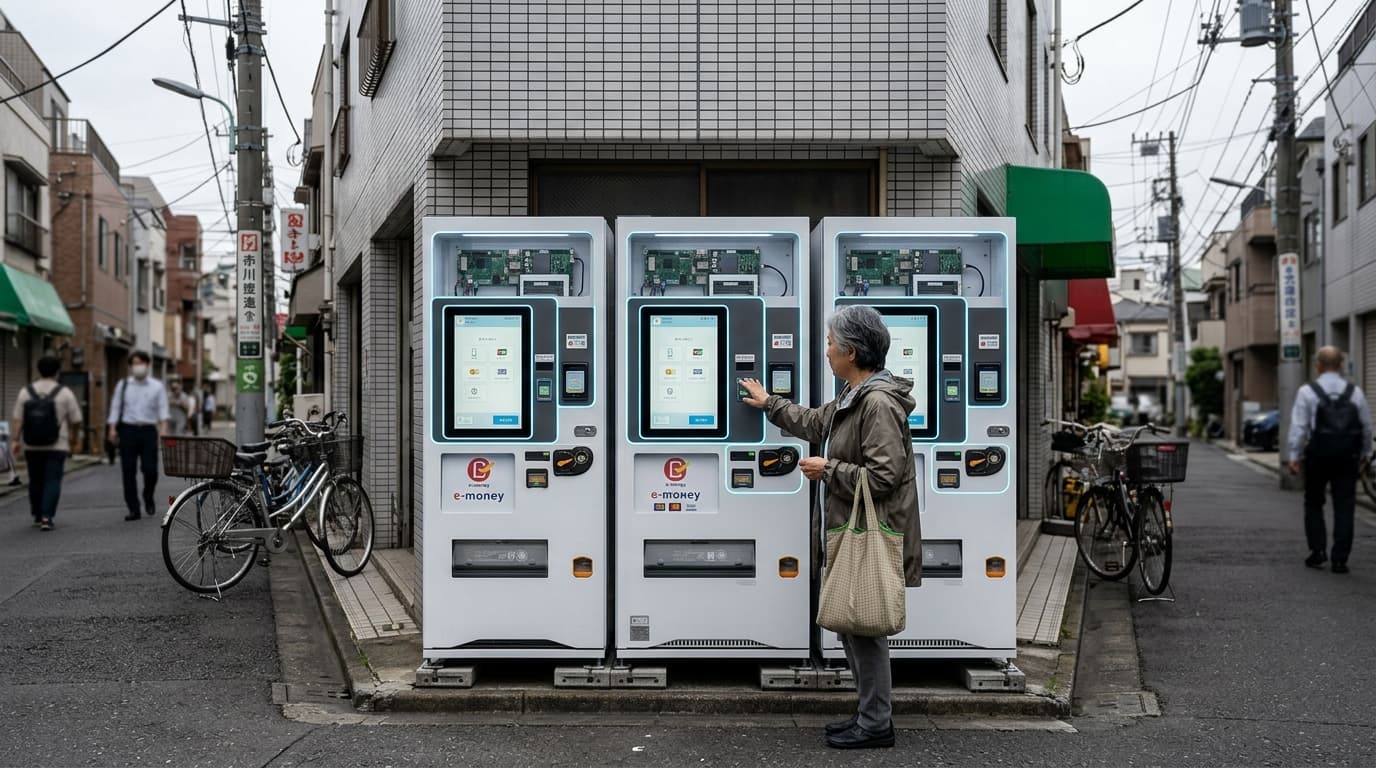
Autonomous Vending Machine Ecosystem
Geography: Asia Pacific · East Asia · Japan
Japan has approximately one vending machine per 23 people — the highest density on Earth — generating an estimated $27.5 billion in annual revenue. These machines dispense far more than drinks: hot meals, fresh fruit, electronics, umbrellas, face masks, flowers, and even insurance policies. Companies like Suntory, DyDo, and JR East deploy machines with AI-powered product recommendation (analyzing time, temperature, and customer demographics via camera), IoT connectivity for remote inventory monitoring, and predictive restocking algorithms.
The vending machine ecosystem is a uniquely Japanese innovation driven by specific conditions: extreme safety (machines can hold cash and products in public without theft), high labor costs, dense urban environments, and cultural comfort with automated transactions. Modern Japanese vending machines feature touchscreen interfaces, cashless payment (Suica, PayPay, credit cards), energy-efficient cooling/heating, and disaster mode — during earthquakes, designated machines unlock and dispense drinks for free. Some machines serve as Wi-Fi hotspots and emergency communication points.
What makes this strategically interesting is that Japan has effectively built the world's largest network of autonomous retail endpoints — 4+ million unattended points of sale operating 24/7 with minimal human intervention. As retail automation advances globally, Japan's decades of experience with unattended commerce — including the payment systems, logistics chains, and regulatory frameworks — provides a playbook for autonomous retail that goes far beyond what Amazon or Alibaba have deployed.
Research this in Signals
Signals turns a topic into a sourced research record you can inspect and rerun. Your first scan is free, and this one starts with Autonomous Vending Machine Ecosystem already loaded, so edit it or scan as is.