








Financial Inclusion and Serving the Underbanked
Financial Inclusion Infrastructure
Digital systems extending banking services to unbanked and underbanked populations
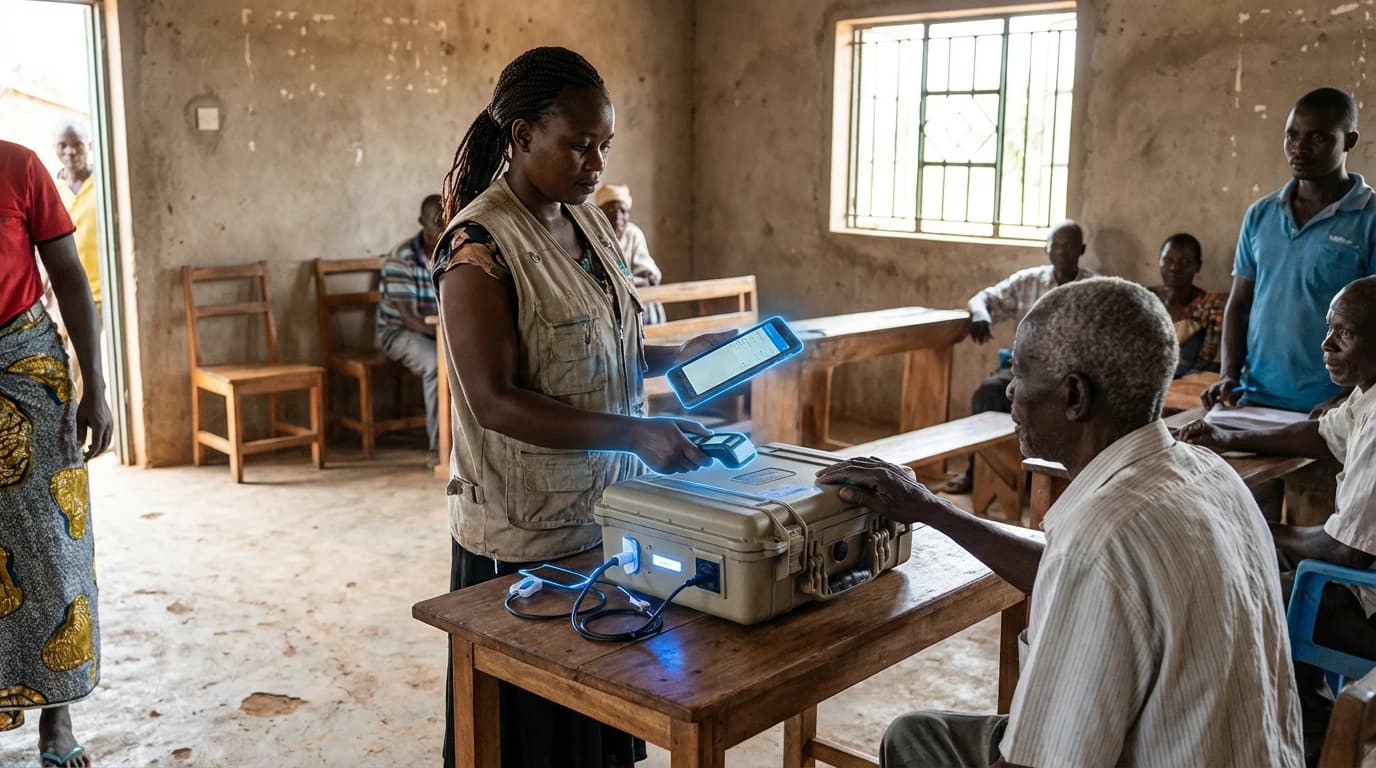
Financial inclusion infrastructure encompasses a suite of interconnected technologies designed to extend formal financial services to populations historically excluded from traditional banking systems. At its foundation, this infrastructure relies on digital identity frameworks that establish verifiable credentials without requiring physical documentation, often leveraging biometric data, mobile phone ownership, or government-issued digital IDs. Agent networks—comprising local retailers, post offices, and community centers—serve as physical touchpoints where cash-in and cash-out transactions occur, effectively replacing traditional bank branches in underserved areas. Alternative credit scoring mechanisms analyze non-traditional data sources such as mobile phone usage patterns, utility payment histories, and even social network behaviors to assess creditworthiness for individuals lacking conventional credit histories. Mobile money interoperability platforms enable seamless transactions across different service providers, preventing the fragmentation that would otherwise limit the utility of individual mobile money systems.
The fundamental challenge this infrastructure addresses is the exclusion of approximately 1.4 billion adults worldwide from formal financial services—a barrier that perpetuates poverty cycles, limits economic mobility, and constrains entrepreneurship in developing economies. Traditional banking models have proven economically unviable in many regions due to sparse population densities, low average transaction values, and the high costs of physical infrastructure. Financial inclusion infrastructure overcomes these limitations by dramatically reducing the cost per transaction through digital channels, eliminating the need for extensive branch networks, and creating new pathways for risk assessment that don't depend on documented financial histories. This technology enables previously impossible business models, such as micro-insurance products with premiums as low as a few cents, peer-to-peer lending within communities, and instant cross-border remittances that bypass expensive traditional channels. For governments and development organizations, these systems provide transparent, traceable mechanisms for distributing social benefits and emergency aid directly to recipients.
Early deployments in East Africa, South Asia, and parts of Latin America demonstrate the transformative potential of this infrastructure, with mobile money platforms achieving penetration rates exceeding 70 percent of adults in some markets. These systems now facilitate not just basic transactions but increasingly sophisticated services including savings accounts, microloans, and insurance products tailored to informal economy workers. The technology has proven particularly impactful for women entrepreneurs and rural populations, groups disproportionately excluded from traditional banking. Looking forward, financial inclusion infrastructure is converging with broader digital public infrastructure initiatives, where governments are establishing foundational identity, payment, and data exchange layers that enable both public services and private innovation. As artificial intelligence enhances alternative credit models and blockchain technologies offer new approaches to cross-border interoperability, this infrastructure is evolving from a development intervention into a fundamental component of modern financial systems, with implications extending beyond emerging markets to underserved populations in developed economies as well.
TRL
7/9Operational
Impact
5/5
Investment
4/5
Category
Ethics Security
Related Organizations
Maintains open-source software for creating interoperable digital payment systems to increase financial inclusion.
Developer

Safaricom
Kenya · Company
Telecommunications provider operating M-Pesa, the world's most successful SMS/USSD-based mobile money system.
Deployer

bKash
Bangladesh · Company
Mobile financial service provider in Bangladesh offering banking services via mobile phones.
Deployer
Mobile technology and data science company providing loans to the underserved in emerging markets.
Deployer
Payments technology company helping businesses in Africa and other emerging markets build customizable payments applications.
Developer
Cloud-native core banking system designed for financial institutions in emerging markets.
Developer
A partnership of governments, companies, and international organizations accelerating the transition from cash to digital payments.
Standards Body
An international nonprofit that allows people to lend money via the Internet to low-income entrepreneurs and students.
Developer
A non-profit organization that supports the development and growth of the Stellar network.
Developer
What was expected
Published forecasts about this technology, graded against what happened in Hindsight.
Supporting Evidence
Evidence data is not available for this technology yet.
Research this in Signals
Scan Financial Inclusion Infrastructure for yourself.
Signals turns a topic into a sourced research record you can inspect and rerun. Your first scan is free, and this one starts with Financial Inclusion Infrastructure already loaded, so edit it or scan as is.