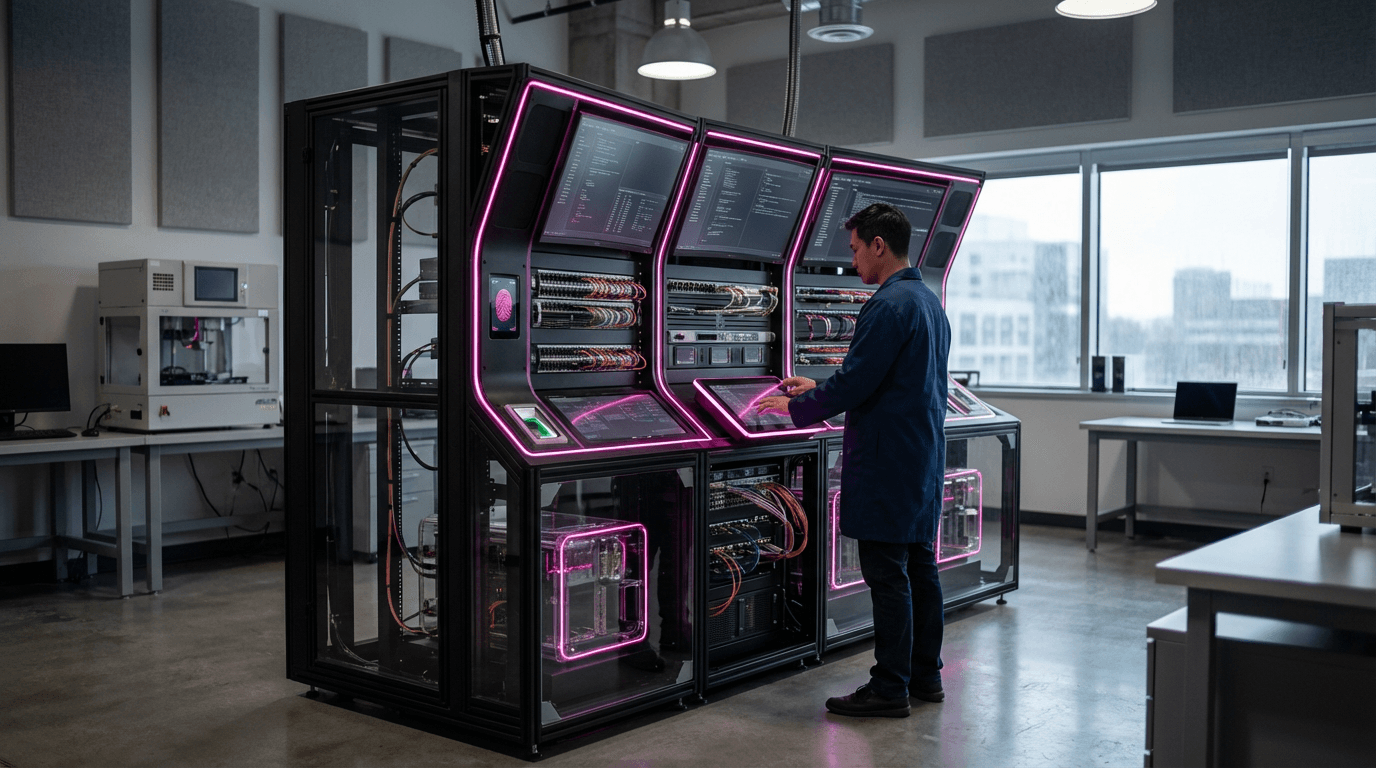
Synthetic Corporate Entities
The emergence of synthetic corporate entities represents a fundamental shift in how organizations structure their operations and manage risk. These are fully autonomous legal entities—typically structured as limited liability companies, special purpose vehicles, or trusts—that operate under algorithmic governance rather than traditional human management. At their core, these entities leverage advanced AI systems to make operational decisions, execute contracts through smart contract protocols, and manage assets according to predefined parameters and machine learning models. The technical architecture typically involves blockchain-based governance structures that provide transparency and immutability of decisions, coupled with natural language processing systems capable of interpreting and generating legally binding documents. Unlike traditional corporate entities that require human directors and officers, synthetic entities operate through algorithmic decision-making frameworks that can process market data, assess risk, and execute transactions at machine speed while maintaining legal personhood under existing corporate law structures.
The primary challenge these entities address is the friction and liability exposure inherent in traditional corporate structures when organizations need to conduct high-velocity experiments, isolate specific risks, or operate in volatile markets. Conventional subsidiary creation involves significant legal overhead, ongoing compliance costs, and the need for human oversight that can slow decision-making in fast-moving situations. Synthetic entities enable organizations to rapidly deploy purpose-built legal vehicles for specific functions—whether that's holding intellectual property in jurisdictions with favorable tax treatment, executing high-frequency trading strategies that require legal separation from parent companies, or testing new business models in regulatory gray areas while containing potential liabilities. This capability is particularly valuable for organizations operating in emerging technology sectors where regulatory frameworks remain uncertain and the ability to quickly pivot or dissolve operations provides strategic advantage. However, these entities also present significant challenges to existing legal frameworks, particularly around questions of accountability, fiduciary duty, and the attribution of liability when no human decision-maker can be identified.
Early implementations of synthetic corporate entities have appeared primarily in cryptocurrency trading operations and decentralized autonomous organizations, where blockchain-based governance structures provide the technical foundation for algorithmic decision-making. Some financial institutions are exploring their use for managing complex derivative portfolios or operating in markets where regulatory arbitrage opportunities exist. The technology also shows promise in supply chain management, where synthetic entities could autonomously manage procurement contracts and inventory across multiple jurisdictions. As regulatory frameworks begin to grapple with questions of algorithmic accountability and AI personhood, the trajectory of synthetic entities will likely depend on how legal systems adapt to recognize or restrict their operations. The broader trend toward automation in corporate governance and the increasing sophistication of AI decision-making systems suggest that some form of algorithmically-managed legal entities will become more prevalent, though likely within carefully defined regulatory boundaries that preserve human accountability for critical decisions.
Related Organizations

Builds frameworks for DAOs, specifically investment and collector DAOs.

Creators of the Autonolas (Olas) stack, an open-source framework for building co-owned, autonomous off-chain services (agents) for crypto.

Provides tools to build and manage Decentralized Autonomous Organizations (DAOs) on the blockchain.

A platform for building and deploying autonomous agents that can communicate, negotiate, and work together across a decentralized network.

A guild of legal engineers building the 'legal layer' for blockchain.

Builds infrastructure for the decentralized web, including Gnosis Safe.

State government agency responsible for business registration.

State government agency responsible for business registration.

Decentralized AI marketplace and developer of OpenCog Hyperon, a cognitive architecture for AGI.

Balancer Labs
United States · Startup
Developer of the Balancer protocol, an automated portfolio manager and liquidity provider.
Supporting Evidence
Research this in Signals
Signals turns a topic into a sourced research record you can inspect and rerun. Your first scan is free, and this one starts with Synthetic Corporate Entities already loaded, so edit it or scan as is.