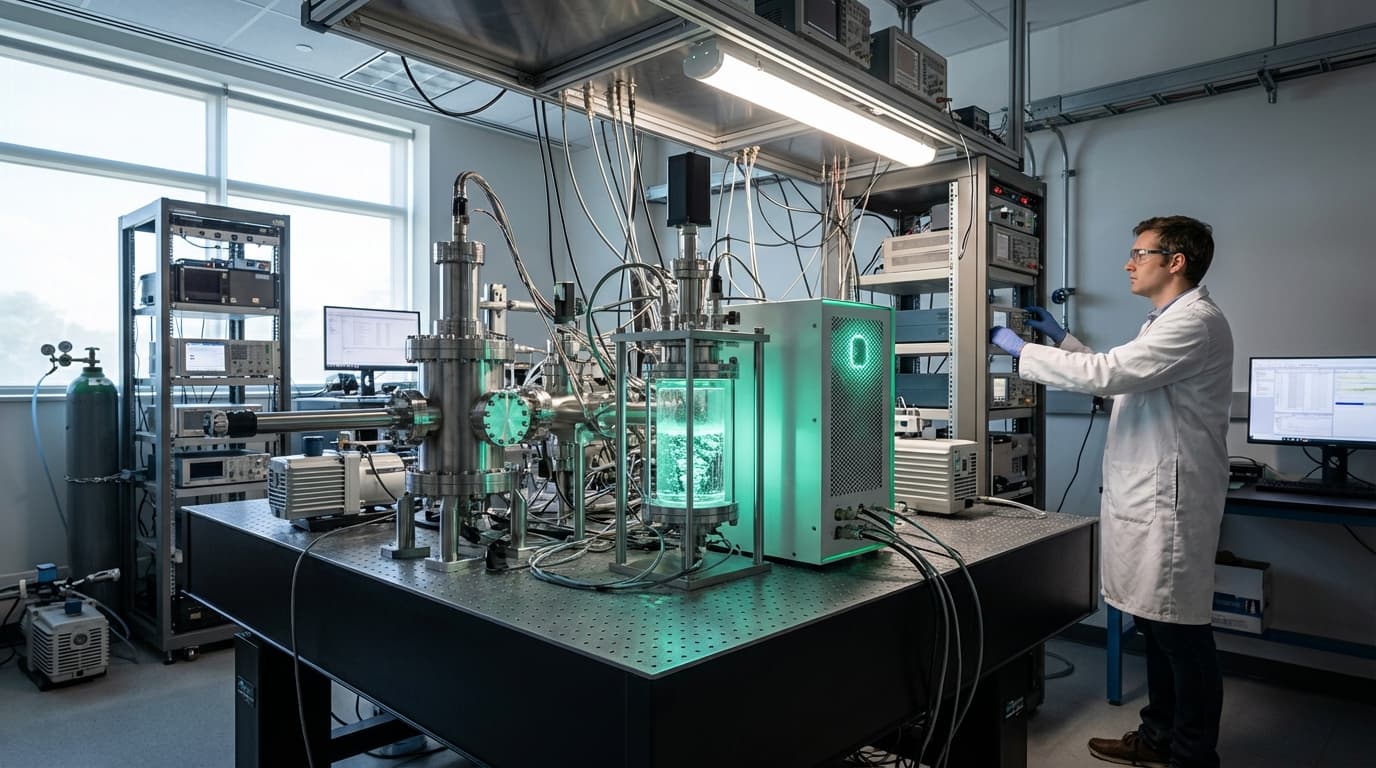
Quantum Catalyst Design
Quantum catalyst design uses quantum simulation to engineer catalysts (materials that speed up chemical reactions) for efficient nitrogen fixation (converting atmospheric nitrogen into usable forms, like ammonia for fertilizer) and carbon capture (removing carbon dioxide from the atmosphere), where industrial chemical processes like the Haber-Bosch process (the main method for producing ammonia) are energy-intensive (require large amounts of energy). Quantum simulation (using quantum computers to simulate molecules and reactions) could identify new catalysts to make these reactions energy-efficient (requiring less energy), having a massive impact on global energy consumption (reducing energy use worldwide) and carbon capture (enabling more efficient removal of carbon dioxide), potentially transforming industrial chemistry by enabling more efficient processes that could reduce energy use and greenhouse gas emissions, making chemical production more sustainable.
This innovation addresses the energy intensity of industrial chemistry, where better catalysts could reduce energy use. By using quantum simulation, these systems could design better catalysts. Chemical companies, quantum computing companies, and research institutions are developing these applications.
The technology is particularly significant for reducing industrial energy use, where better catalysts could have huge impact. As quantum computers improve, these applications will become more powerful. However, ensuring accuracy, managing complexity, and achieving practical advantages remain challenges. The technology represents one of the most promising applications of quantum computing, but requires continued development to achieve practical benefits. Success could transform industrial chemistry, but the technology must prove its advantages. Quantum catalyst design is one of the most promising applications of quantum computing, with significant potential impact.
Research this in Signals
Signals turns a topic into a sourced research record you can inspect and rerun. Your first scan is free, and this one starts with Quantum Catalyst Design already loaded, so edit it or scan as is.