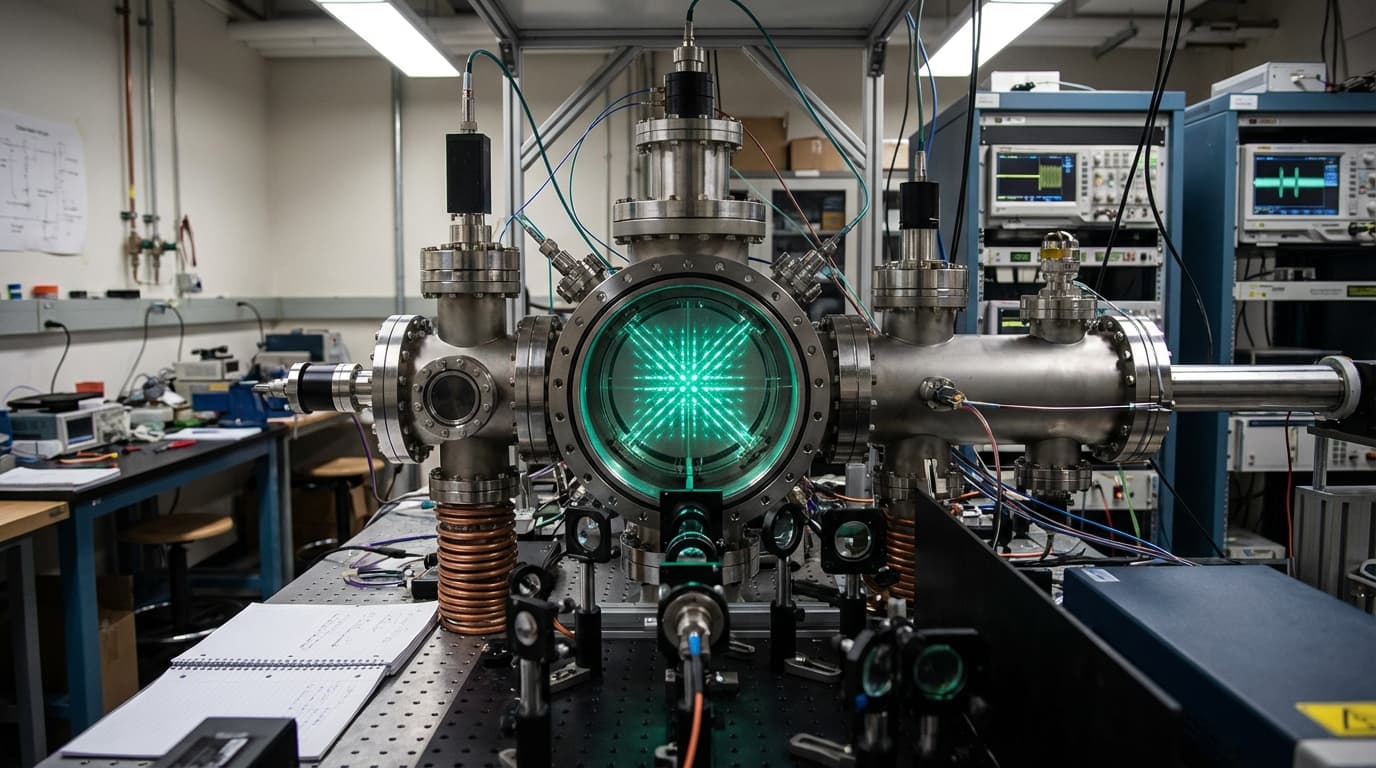
Neutral Atom Quantum Processors
Neutral atom quantum processors are quantum computing systems that use highly focused laser beams called optical tweezers (precise laser beams that can trap and manipulate individual atoms) to trap individual neutral atoms (atoms with no net electric charge) in two-dimensional or three-dimensional arrays, creating scalable qubit systems. These atoms can be rearranged dynamically (moved to different positions) and excited into Rydberg states (highly excited atomic states where electrons are far from the nucleus) to induce strong interactions between atoms, enabling quantum gates (operations on qubits), offering a path to thousands of qubits with high connectivity (many qubits can interact with each other), making this architecture promising for large-scale quantum computing.
This innovation addresses the scalability challenge in quantum computing, where neutral atoms can be arranged in large arrays. By enabling dynamic rearrangement and strong interactions, these systems could scale to large sizes. Companies like Atom Computing, QuEra, and research institutions are developing these technologies.
The technology is particularly significant for enabling large-scale quantum computers, where neutral atoms offer a promising path to thousands of qubits. As the technology improves, it could enable practical quantum computing applications. However, ensuring high fidelity, managing complexity, and achieving reliable operations remain challenges. The technology represents an important direction for quantum computing, but requires continued development to achieve the performance needed for practical use. Success could enable large-scale quantum computers, but the technology must overcome technical challenges. Neutral atom quantum computing is a rapidly advancing field with several companies making significant progress.
Research this in Signals
Signals turns a topic into a sourced research record you can inspect and rerun. Your first scan is free, and this one starts with Neutral Atom Quantum Processors already loaded, so edit it or scan as is.