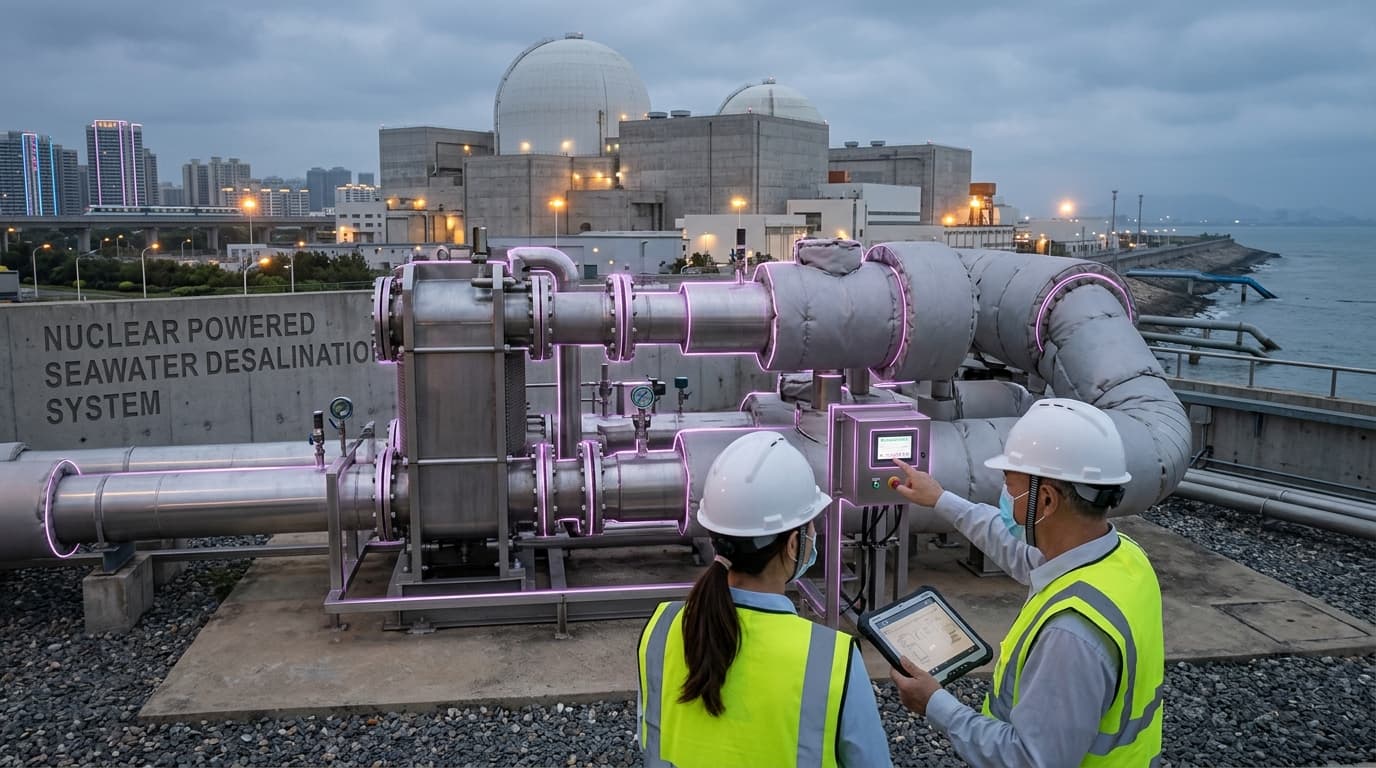
Nuclear-Powered Seawater Desalination
Geography: Asia Pacific · East Asia · China
China's coastal nuclear power plants are being designed and retrofitted to couple electricity generation with seawater desalination. The Changjiang Nuclear Power Plant on Hainan — which also hosts the Linglong One SMR — can supply electricity, district heating, and desalinated seawater from the same facility. The IAEA praised CNNC's multi-purpose nuclear technology approach during a visit in April 2025.
Nuclear desalination uses waste heat from the reactor's cooling cycle to power thermal desalination processes (multi-stage flash or multi-effect distillation), or electricity from the reactor to run reverse osmosis membranes. The advantage is baseload reliability: unlike solar-powered desalination, nuclear-powered systems produce fresh water 24/7 regardless of weather. This is critical for island territories and military installations where water security is a strategic priority.
China's island-building program in the South China Sea creates demand for exactly this technology — reliable fresh water production at remote locations without dependence on supply chains. The Qingdao Baifa facility is also integrating AI-driven optimization with desalination, cutting operational costs by 15%. China's national desalination capacity has grown rapidly, with the government targeting significant expansion as northern China faces increasing water stress from climate change and industrial demand.
Research this in Signals
Signals turns a topic into a sourced research record you can inspect and rerun. Your first scan is free, and this one starts with Nuclear-Powered Seawater Desalination already loaded, so edit it or scan as is.