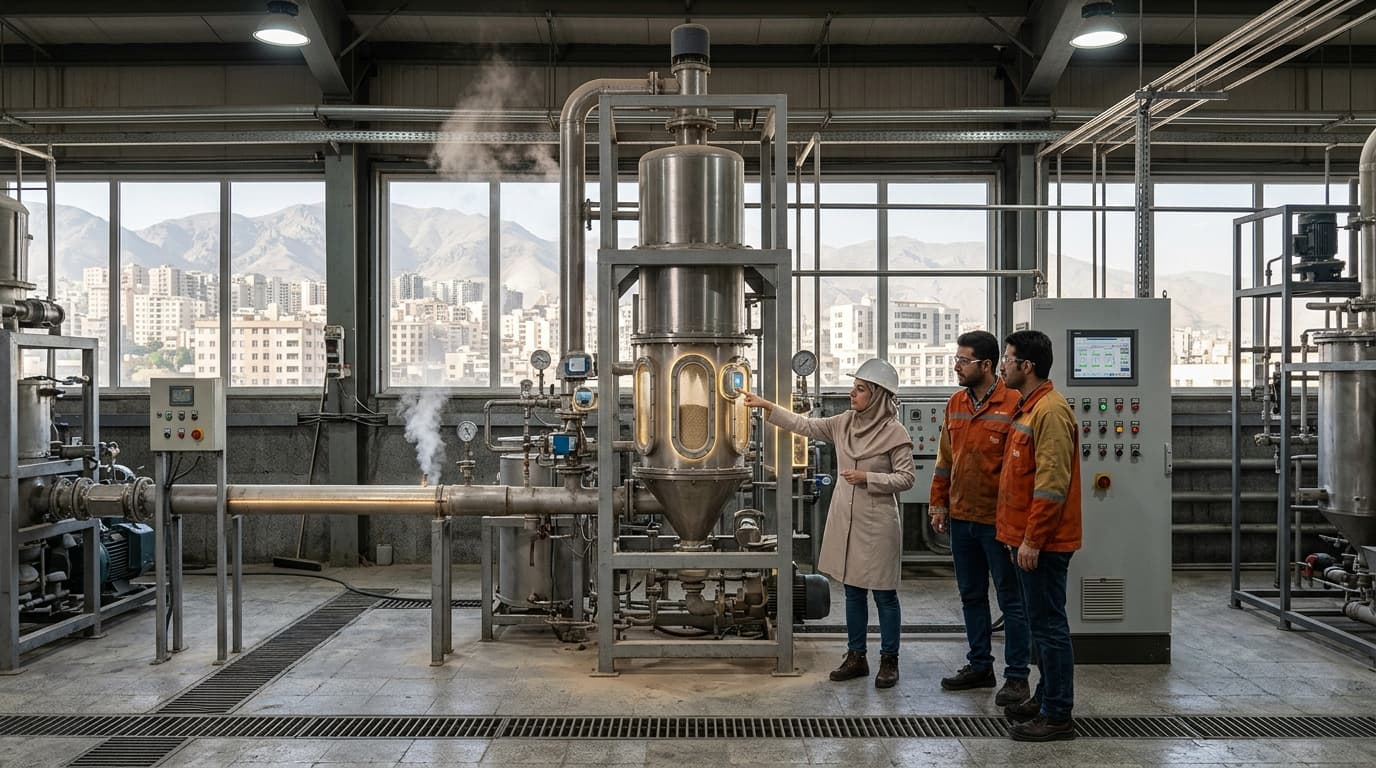
Indigenous Petrochemical Catalyst Production
Geography: Emea · Middle East · Iran
Iran has systematically localized the production of catalysts essential to its petrochemical industry — the country's largest non-oil industrial sector. Starting from near-complete import dependence, Iran now domestically produces approximately 78% of the catalysts required for its oil, gas, and petrochemical operations, covering polymerization catalysts, cracking catalysts, hydrotreatment catalysts, and reforming catalysts. The domestic catalyst industry supports over 800 producers and has reached competitive quality levels with European and American suppliers in several categories.
Catalysts are the critical consumable inputs for petrochemical processing — they determine product quality, energy efficiency, and process economics. Iran's petrochemical sector processes abundant domestic natural gas and crude oil feedstocks into polymers, fertilizers, and chemical intermediates for export. Without reliable catalyst supply, the entire petrochemical value chain would be vulnerable to sanctions-driven disruption. The localization effort was therefore driven by strategic necessity as much as economic opportunity.
The program demonstrates a broader pattern in Iranian industrial development: sanctions cut off supply of a critical input, forcing investment in domestic alternatives that eventually achieve competitiveness. The catalyst industry also intersects with Iran's nanotechnology research, as many advanced catalysts employ nano-scale materials for improved performance. Iran has expressed ambitions to enter international catalyst markets, though regulatory and reputational barriers limit exports to non-sanctioning countries for now.
Research this in Signals
Signals turns a topic into a sourced research record you can inspect and rerun. Your first scan is free, and this one starts with Indigenous Petrochemical Catalyst Production already loaded, so edit it or scan as is.