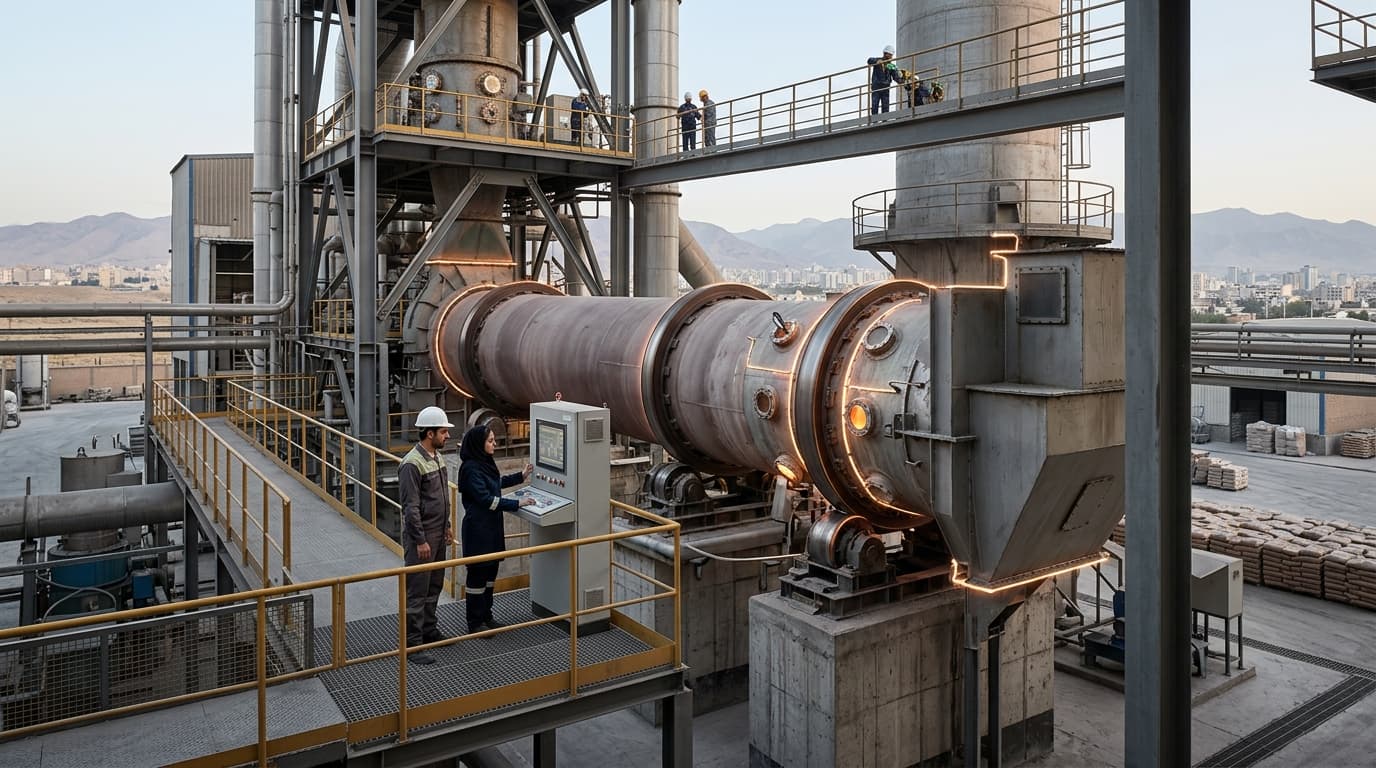
Large-Scale Cement and Clinker Production Technology
Geography: Emea · Middle East · Iran
Iran ranks among the world's top eight cement producers and is the fourth-largest clinker exporter globally, operating over 70 integrated cement plants that leverage abundant domestic limestone deposits and natural gas energy. Annual cement production capacity exceeds 85 million tons, with significant surplus directed toward export markets in Iraq, Afghanistan, Central Asian republics, and East Africa. Clinker exports alone exceeded 6 million tons in 2024, though the trend has shifted toward higher-value finished cement exports.
The cement industry demonstrates Iran's capacity for heavy industrial scale-up. Domestic engineering firms have developed expertise in designing and constructing cement plant components including rotary kilns, clinker coolers, and grinding systems, reducing dependence on European equipment suppliers. The industry has also driven innovation in alternative fuel use — burning industrial waste and tire-derived fuel to reduce natural gas consumption — and in supplementary cementitious materials that partially replace clinker and reduce CO2 emissions per ton of cement.
The strategic context involves both domestic infrastructure needs and regional export competition. Iran's extensive dam, highway, housing, and metro construction programs consume substantial cement volumes, while export capacity provides hard currency revenue and regional economic influence. Iranian cement is price-competitive in neighboring markets due to low energy costs and proximity, though quality certification for premium markets remains a challenge. The industry also faces environmental scrutiny: cement production is Iran's second-largest industrial CO2 source, and the country ranks among the top ten cement-sector emitters globally, creating pressure for technological modernization.
Research this in Signals
Signals turns a topic into a sourced research record you can inspect and rerun. Your first scan is free, and this one starts with Large-Scale Cement and Clinker Production Technology already loaded, so edit it or scan as is.