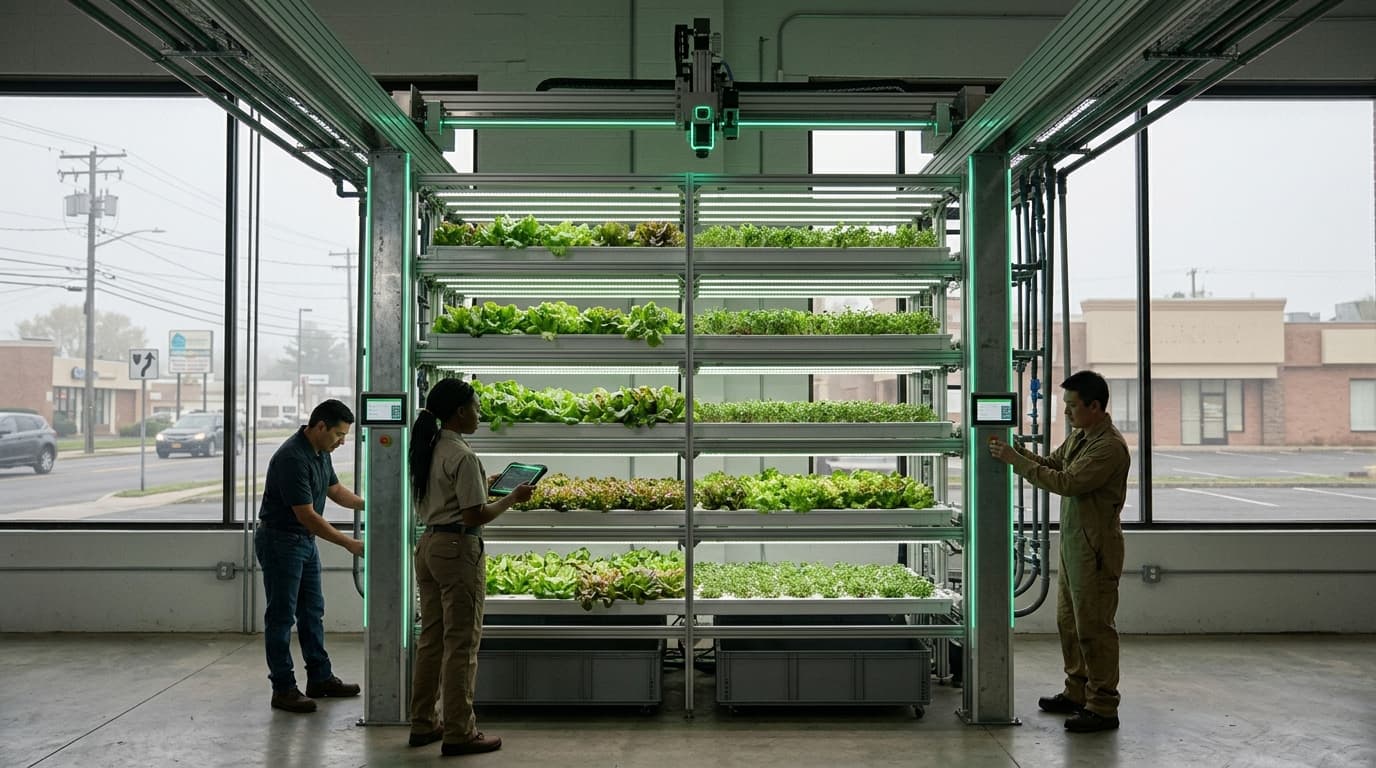
AI-Optimized Vertical Farming
Geography: Americas · North America · United States
AI-optimized vertical farms grow crops in stacked layers inside climate-controlled buildings, using LED lighting tuned to specific wavelengths, hydroponic or aeroponic growing systems, and AI that continuously optimizes growing conditions. Plenty Unlimited's facility in Compton, California produces 4.5 million pounds of leafy greens annually on less than two acres. The AI system adjusts light spectrum, intensity, duration, nutrient mix, temperature, and humidity for each crop.
Vertical farming uses 95% less water than conventional agriculture, requires no pesticides, and can produce year-round regardless of climate. Located near population centers, it eliminates the cold chain transportation that accounts for significant food waste and emissions. However, energy costs remain the key challenge — indoor farms use 10-50x more energy per unit of food than field agriculture.
The US vertical farming industry has faced financial headwinds — AeroFarms filed for bankruptcy and restructured, and AppHarvest failed. But companies that survived are improving unit economics through automation, AI optimization, and cheaper LEDs. If energy costs decline (through solar, nuclear, or geothermal), vertical farming economics improve dramatically, potentially enabling year-round local production of a wider variety of crops.
Research this in Signals
Signals turns a topic into a sourced research record you can inspect and rerun. Your first scan is free, and this one starts with AI-Optimized Vertical Farming already loaded, so edit it or scan as is.