Supply Chain Resilience Simulators
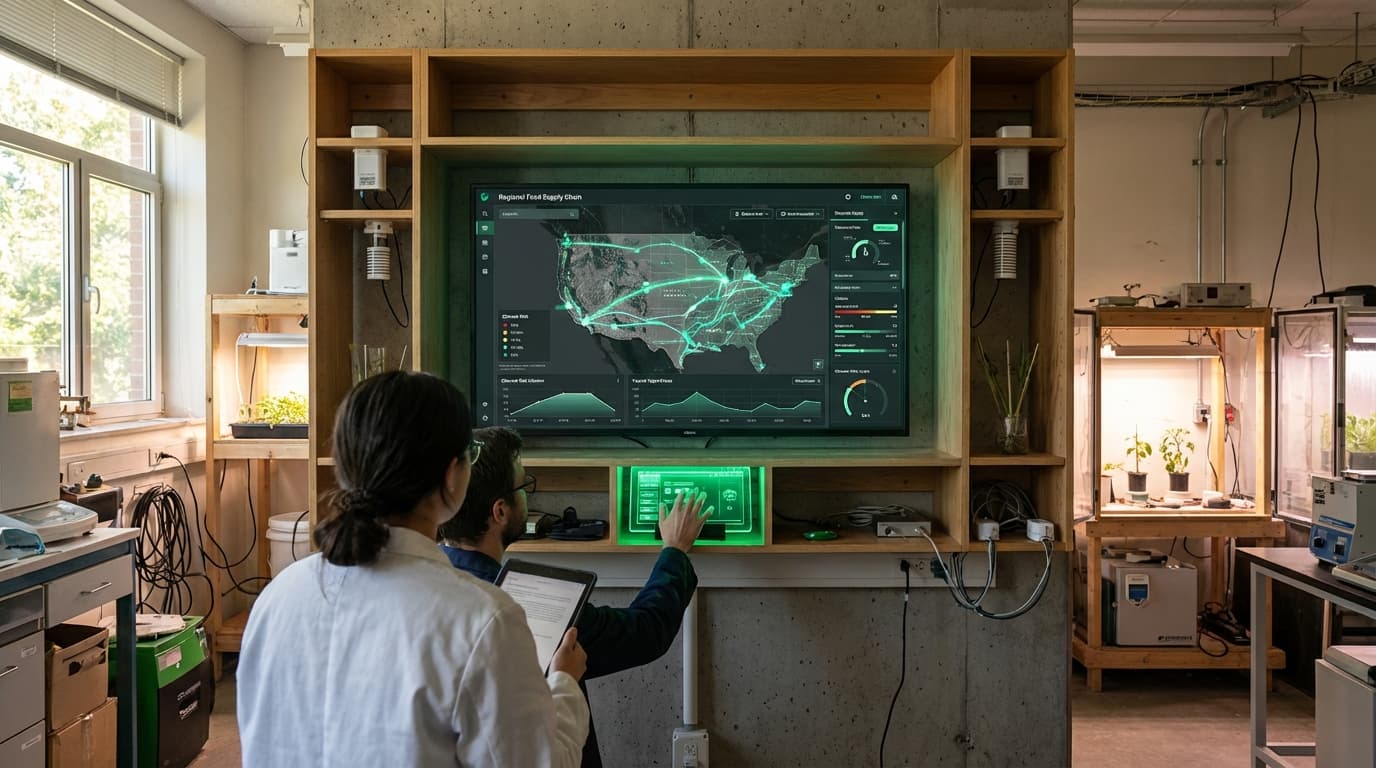
Supply chain resilience simulators build agent-based digital twins of regional food systems, ingesting data on crop calendars, processing capacity, transportation corridors, labor availability, and climate hazards. Scenario engines layer on shocks such as drought, pandemics, port closures, or cyber attacks, quantifying impacts on inventories, prices, and nutrition security while recommending diversification strategies or infrastructure investments.
Governments, retailers, and NGOs rely on these simulators to design contingency plans, evaluate incentives for regional processing hubs, and justify investments in cold-chain or rail upgrades. Tools from firms like One Concern or Vibrant Planet integrate satellite-derived vegetation indexes and socio-economic datasets, giving stakeholders a common operating picture for food resilience planning.
Future versions will plug into carbon markets and financial hedging platforms, allowing policy makers to simulate how climate adaptation subsidies or export bans ripple through value chains. Barriers include data silos, political sensitivities around sharing proprietary logistics information, and computational complexity when modeling entire continents. Open data standards and secure multiparty computation could unlock broader collaboration.
Related Organizations

Uses AI to build a shared source of truth for the global supply chain, mapping networks and compliance.

Focuses on supply chain resilience by applying AI to climate models to predict impacts on agriculture and logistics.


Supply chain risk analytics company applying AI to monitor global risks.
An operational resilience company that maps supply chains to the Nth tier.
A leading provider of multimethod simulation modeling software.

Supply chain planning software (RapidResponse) that provides concurrent planning via the cloud.

A world leader in supply chain management education and research.

Software corporation specializing in 3D design and digital mock-ups.

Provides an advanced visibility platform for shippers and logistics service providers, connecting data across the supply chain.
Supporting Evidence
Research this in Signals
Signals turns a topic into a sourced research record you can inspect and rerun. Your first scan is free, and this one starts with Supply Chain Resilience Simulators already loaded, so edit it or scan as is.