Plasma-Activated Water (PAW) Systems
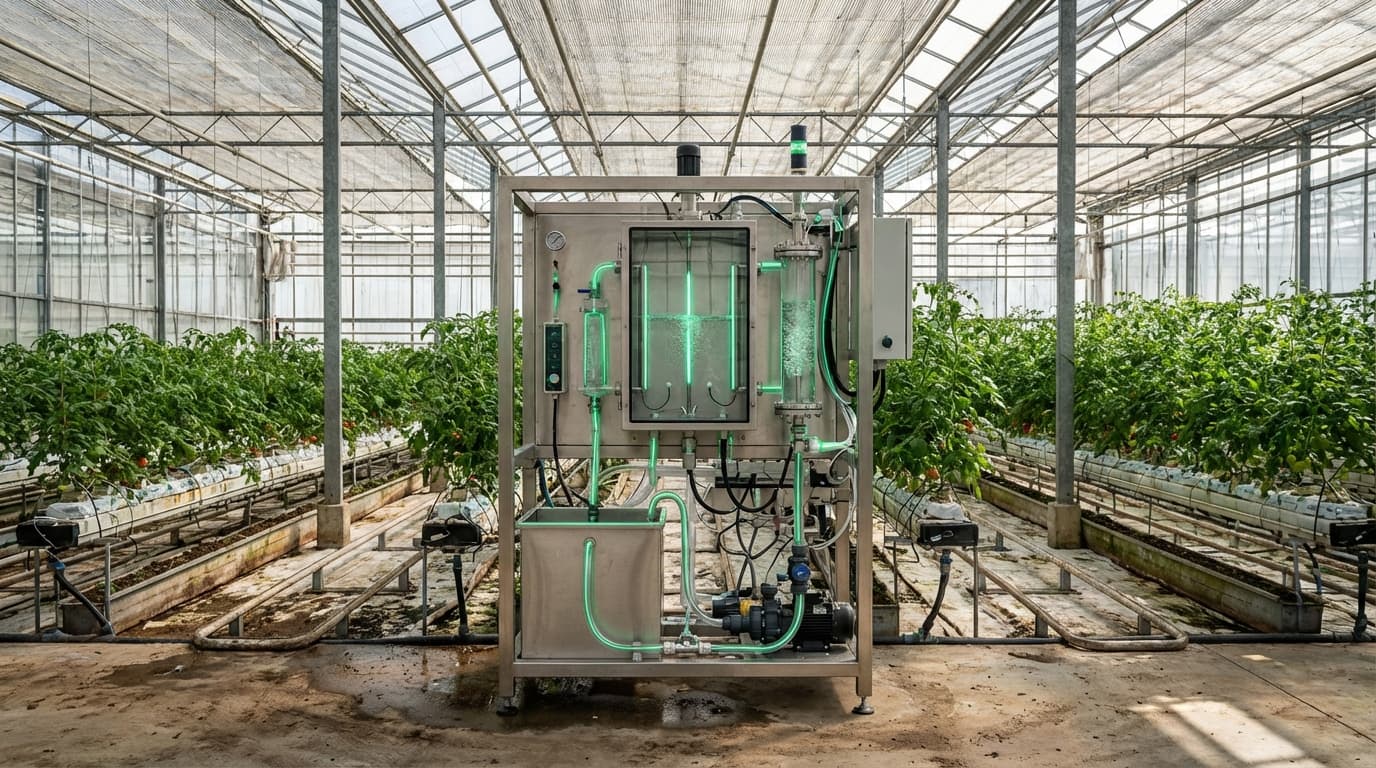
Plasma-activated water (PAW) systems route air and water through non-thermal plasma discharges generated by high-voltage electrodes or dielectric barrier reactors, fixing atmospheric nitrogen into nitrates, nitrites, and reactive oxygen species that act as bioavailable fertilizer and antimicrobial agents. Units are containerized, integrated with photovoltaic or wind microgrids, and controlled by PLCs that tailor ion concentrations to crop needs in real time.
For growers, PAW provides on-demand nitrogen generation, cutting reliance on Haber–Bosch ammonia, price volatility, and the logistics of hauling anhydrous tanks. Trials from startups like Nitricity and university extension programs show comparable yield response to synthetic fertilizers while improving soil microbiome balance and reducing nitrous oxide emissions.
As regulators push for fertilizer decarbonization, PAW could become a cornerstone of regional nutrient autonomy. Remaining hurdles include scaling electrode lifetimes, achieving consistent dosage at broadacre volumes, and navigating certification for organic production systems. Integration with irrigation pivots and fertigation robots, plus improved monitoring of nitrate residuals, will determine how quickly PAW displaces conventional nitrogen supply chains.
Related Organizations
Technology company that converts livestock slurry into a nitrogen-rich fertilizer using plasma.

Produces nitrogen fertilizer on-farm using only air, water, and renewable electricity.

Develops plasma-activated water (PAW) systems that mimic lightning to fix nitrogen and stimulate plant health without chemicals.
Drexel University (C. & J. Nyheim Plasma Institute)
United States · University
Conducts extensive research on the application of non-thermal plasma and pulsed electric fields in agriculture.

Leads the Perinatal Life Support (PLS) consortium, developing an artificial womb system using simulation mannequins.
Develops zero-emission plasma technology for chemical processes including nitrogen fixation.

Advanced Plasma Solutions
United States · Company
Specializes in non-thermal plasma applications for sustainability.

A global crop nutrition company and a provider of environmental solutions.

Supporting Evidence
Research this in Signals
Signals turns a topic into a sourced research record you can inspect and rerun. Your first scan is free, and this one starts with Plasma-Activated Water (PAW) Systems already loaded, so edit it or scan as is.