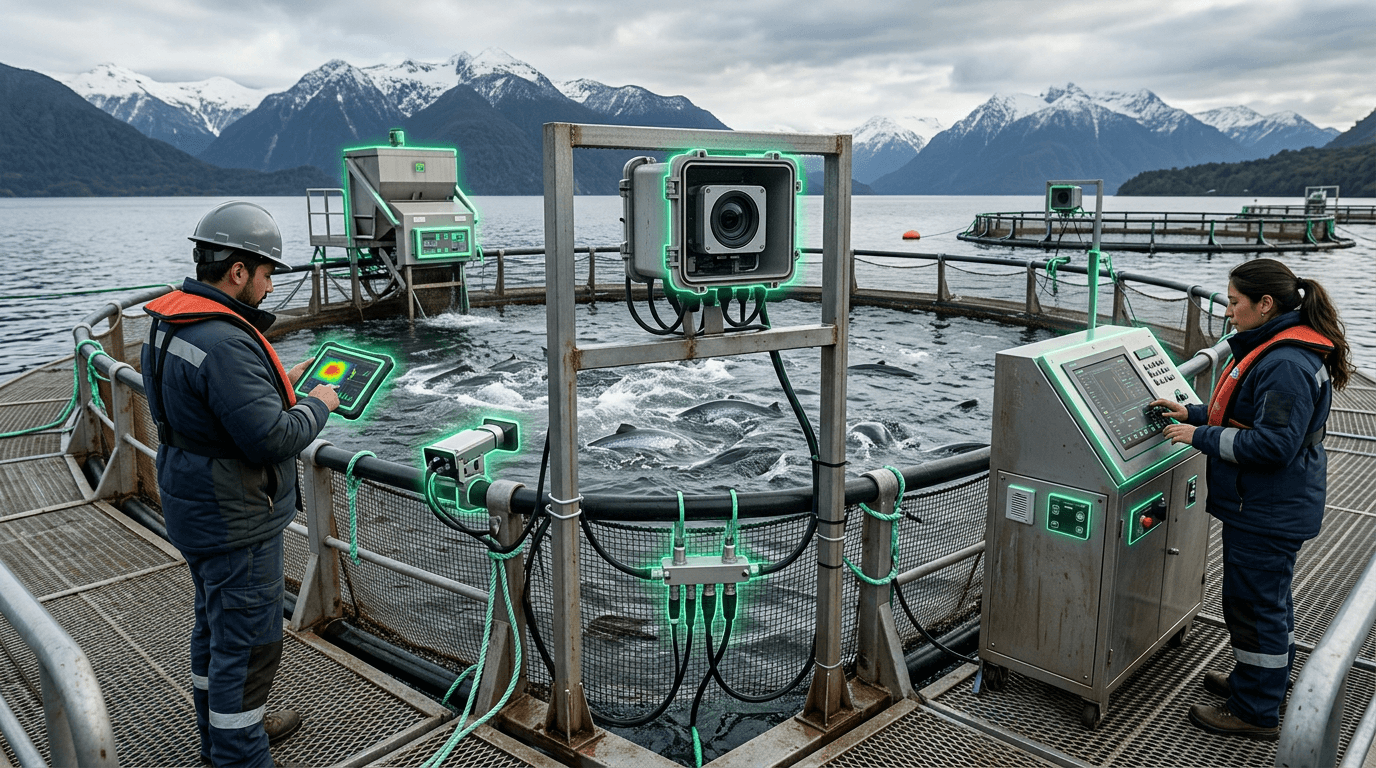
AI-Driven Aquaculture Monitoring Systems
Geography: Americas · South America · Latin America
Chile is the world's second-largest salmon producer (after Norway), and the industry is undergoing a technology transformation driven by environmental and health pressures. Major producers are deploying AI-powered monitoring systems that use underwater cameras and computer vision to assess individual fish health — detecting sea lice, gill disease, and behavioral anomalies in real-time. Machine learning algorithms optimize feeding schedules based on fish behavior, water temperature, dissolved oxygen, and growth models, reducing feed waste by 10-15%.
Project Yelcho, launched in 2025 as a pre-competitive initiative by 11 of Chile's leading salmon producers, aims to significantly reduce antibiotic use in the industry — Chile currently uses more antibiotics per ton of salmon than any other producing country, drawing regulatory scrutiny and consumer concern. The technology approach includes predictive disease models that trigger early intervention, genomic selection for disease-resistant fish strains, and recirculating aquaculture systems (RAS) that control pathogen exposure.
The strategic significance extends beyond Chile's $6B+ salmon export industry. Aquaculture is the world's fastest-growing food production sector, and the technologies being developed to address Chile's salmon challenges — AI monitoring, antibiotic alternatives, environmental sensors — are exportable to fish farming operations worldwide. Chile's unique position as a high-volume producer in cold southern waters provides a testing ground for sustainable aquaculture technology at industrial scale.
Research this in Signals
Signals turns a topic into a sourced research record you can inspect and rerun. Your first scan is free, and this one starts with AI-Driven Aquaculture Monitoring Systems already loaded, so edit it or scan as is.