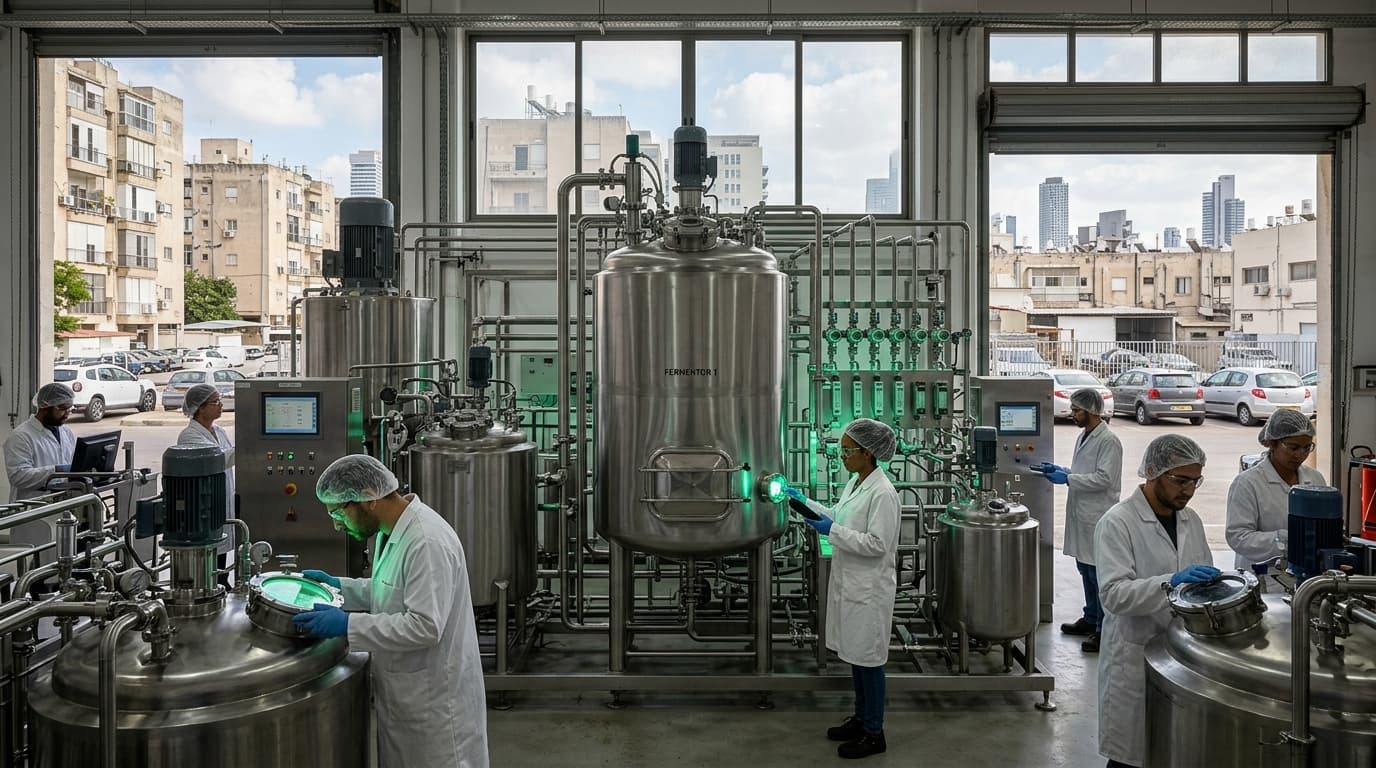
Precision Fermentation for Alternative Food Ingredients
Geography: Emea · Middle East · Israel
Israel's food tech ecosystem extends beyond cultivated meat to precision fermentation — using engineered microorganisms to produce specific proteins, fats, and flavor compounds traditionally derived from animals. Companies like Remilk (animal-free dairy protein), Imagindairy, and others use yeast or bacteria programmed to produce casein, whey, and other dairy proteins that are molecularly identical to those from cow's milk.
Precision fermentation offers a more near-term path to market than cultivated meat because the technology builds on established industrial fermentation (already used for insulin, enzymes, and vitamins) and produces ingredients rather than complete consumer products — reducing regulatory complexity. Israel's strength in molecular biology, genetic engineering, and food science converges in this domain.
Strategically, precision fermentation could disrupt the $150 billion global dairy industry by providing functionally identical ingredients at lower cost and environmental impact. Israel's early-mover ecosystem in alternative proteins — spanning cultivated meat, precision fermentation, and plant-based approaches — positions it as a comprehensive hub for the future-of-food industry. Government support through the Innovation Authority and dedicated food tech incubators accelerates commercialization.
Research this in Signals
Signals turns a topic into a sourced research record you can inspect and rerun. Your first scan is free, and this one starts with Precision Fermentation for Alternative Food Ingredients already loaded, so edit it or scan as is.