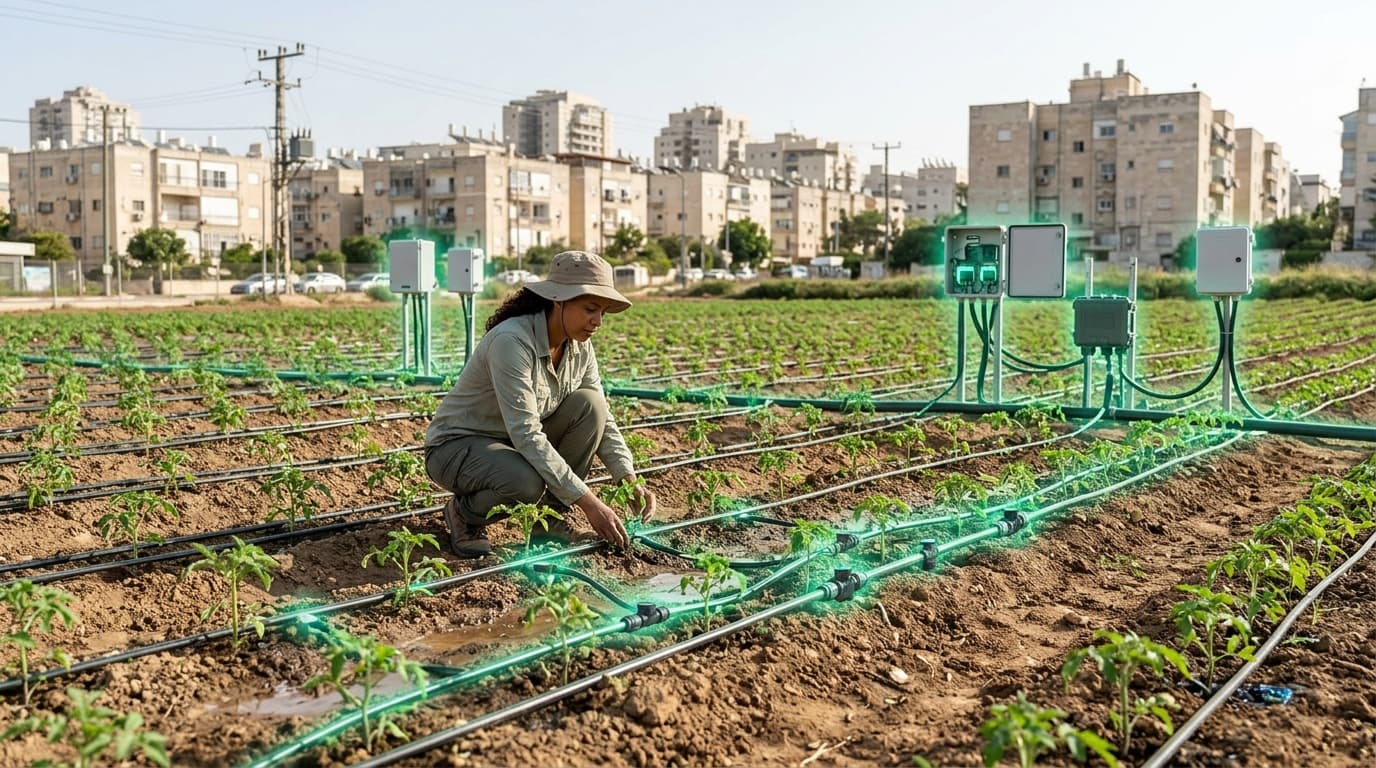
Precision Drip Irrigation with Smart Sensing
Geography: Emea · Middle East · Israel
Israel invented modern drip irrigation in the 1960s (Simcha Blass/Netafim) and has continuously evolved the technology into today's precision irrigation systems that integrate soil moisture sensors, weather station data, satellite imagery, and AI algorithms to deliver exactly the right amount of water and nutrients to each plant. Companies like Netafim, Rivulis, and N-Drip have deployed these systems across 110+ countries.
Drip irrigation's impact on global agriculture is difficult to overstate. It reduces water consumption by 30-60% compared to flood or sprinkler irrigation while increasing yields by 20-90% depending on crop type. For arid and semi-arid regions — where 40% of the world's population lives — Israeli drip technology is often the difference between productive agriculture and crop failure. The latest generation incorporates AI-driven fertigation (combined fertilizer and irrigation delivery) that optimizes nutrient uptake.
Strategically, drip irrigation is one of Israel's most consequential technology exports, directly addressing global food security and water scarcity challenges. N-Drip's gravity-powered system — requiring no electricity or pressure — is particularly transformative for developing nations. As climate change makes rainfall less predictable and groundwater more scarce, Israeli precision irrigation technology becomes increasingly critical to global agricultural resilience.
Research this in Signals
Signals turns a topic into a sourced research record you can inspect and rerun. Your first scan is free, and this one starts with Precision Drip Irrigation with Smart Sensing already loaded, so edit it or scan as is.