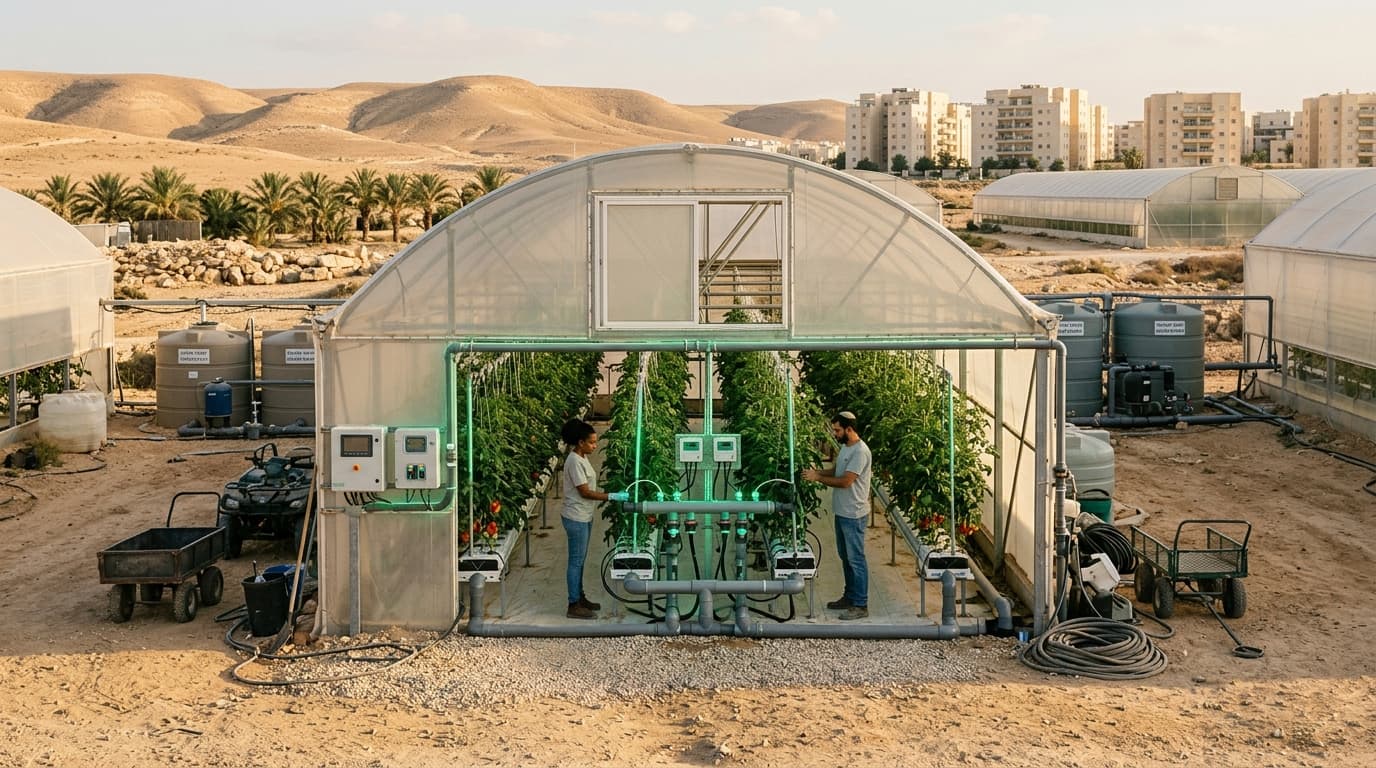
Desert and Arid-Climate Agriculture Systems
Geography: Emea · Middle East · Israel
Israel has developed integrated technology systems for productive agriculture in desert and arid environments, combining controlled-environment greenhouses, salt-tolerant crop varieties, brackish water utilization, and recycled wastewater irrigation. Despite 60% of its territory being desert, Israel's agricultural output per capita exceeds that of many countries with far more arable land. The Volcani Institute (founded 1921) and the Arava R&D Center drive continuous innovation in desert crop production.
The technology stack includes climate-controlled greenhouses with precision sensors, biological pest control integrated with AI monitoring, crop genetics optimized for heat and salt tolerance, and data-driven farming platforms. Israeli companies like Phytec, CropX, and Taranis provide sensor-based crop intelligence that helps farmers worldwide optimize resource use in challenging conditions.
As climate change pushes arable zones poleward and desertification expands, Israel's desert agriculture expertise becomes globally critical. The country serves as a living laboratory for technologies that billions of people in Africa, the Middle East, South Asia, and the American Southwest will need. Israel's agricultural technology exports exceed $1 billion annually, making constraint-driven innovation one of the country's most effective soft-power instruments.
Research this in Signals
Signals turns a topic into a sourced research record you can inspect and rerun. Your first scan is free, and this one starts with Desert and Arid-Climate Agriculture Systems already loaded, so edit it or scan as is.