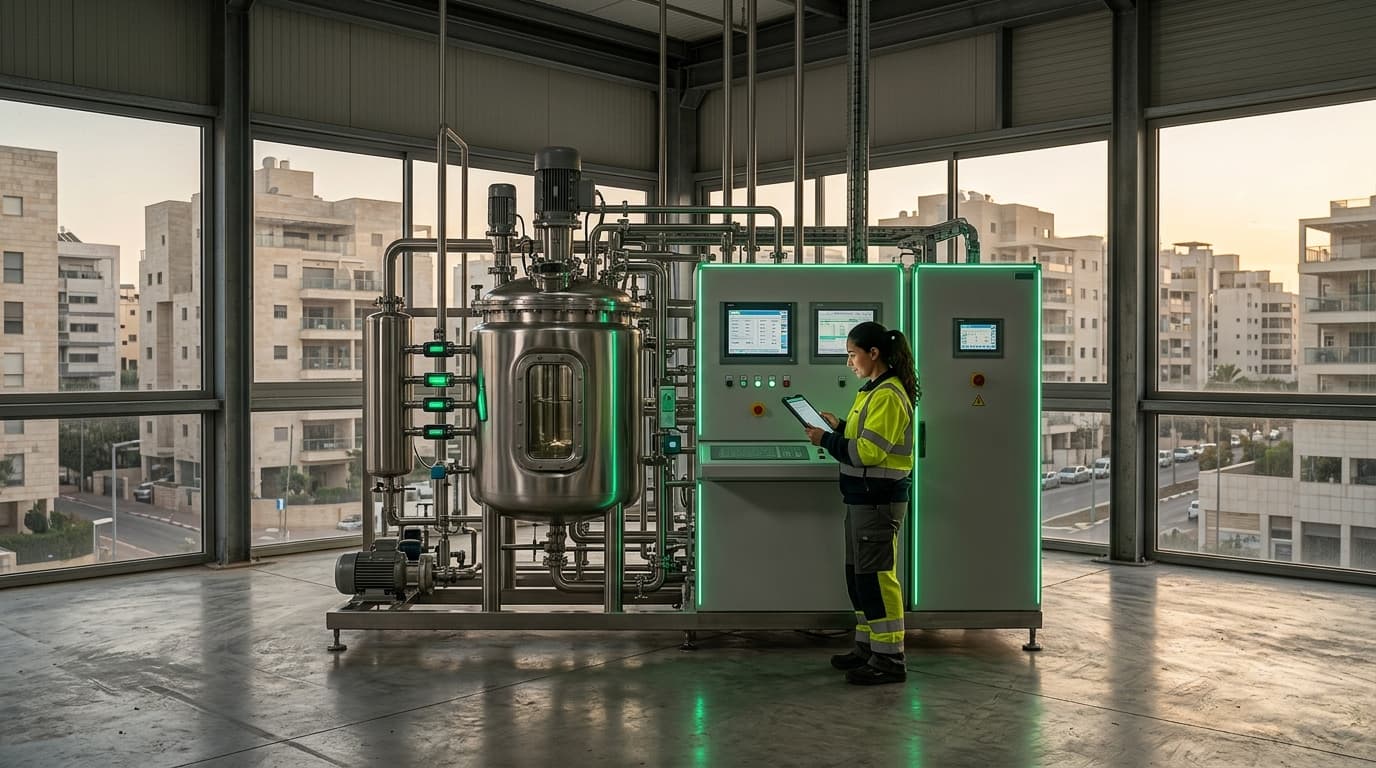
Cultivated Meat Bioreactor Technology
Geography: Emea · Middle East · Israel
Israel has emerged as the global epicenter of cultivated meat technology, with companies like Aleph Farms, SuperMeat, and Future Meat Technologies developing bioreactor-based production of animal protein from cell cultures. Aleph Farms achieved a historic milestone by receiving the world's first regulatory approval for cultivated beef from Israeli authorities in 2024, and has developed the Petit Steak — a whole-cut cultivated product. The companies use proprietary bioreactor designs, growth media optimization, and tissue engineering to produce meat without animal slaughter.
Israel's leadership in this space reflects the convergence of several national strengths: deep biotech research capabilities (Technion, Weizmann), a culture of food-tech entrepreneurship, government support through the Innovation Authority, and a relatively progressive regulatory environment. Three of the world's first eight cultivated meat companies are Israeli — a remarkable concentration for a country of 10 million.
Strategically, cultivated meat addresses food security, environmental sustainability, and ethical concerns simultaneously. If production costs continue falling (from $300,000/kg in 2013 to under $100/kg today), the technology could disrupt the $1.4 trillion global meat industry. Israel's first-mover advantage in regulatory approval and production scaling positions it to license technology and processes worldwide, particularly to protein-deficit regions.
Research this in Signals
Signals turns a topic into a sourced research record you can inspect and rerun. Your first scan is free, and this one starts with Cultivated Meat Bioreactor Technology already loaded, so edit it or scan as is.