3D-Printed Plant-Based Meat Manufacturing
Geography: Emea · Middle East · Israel
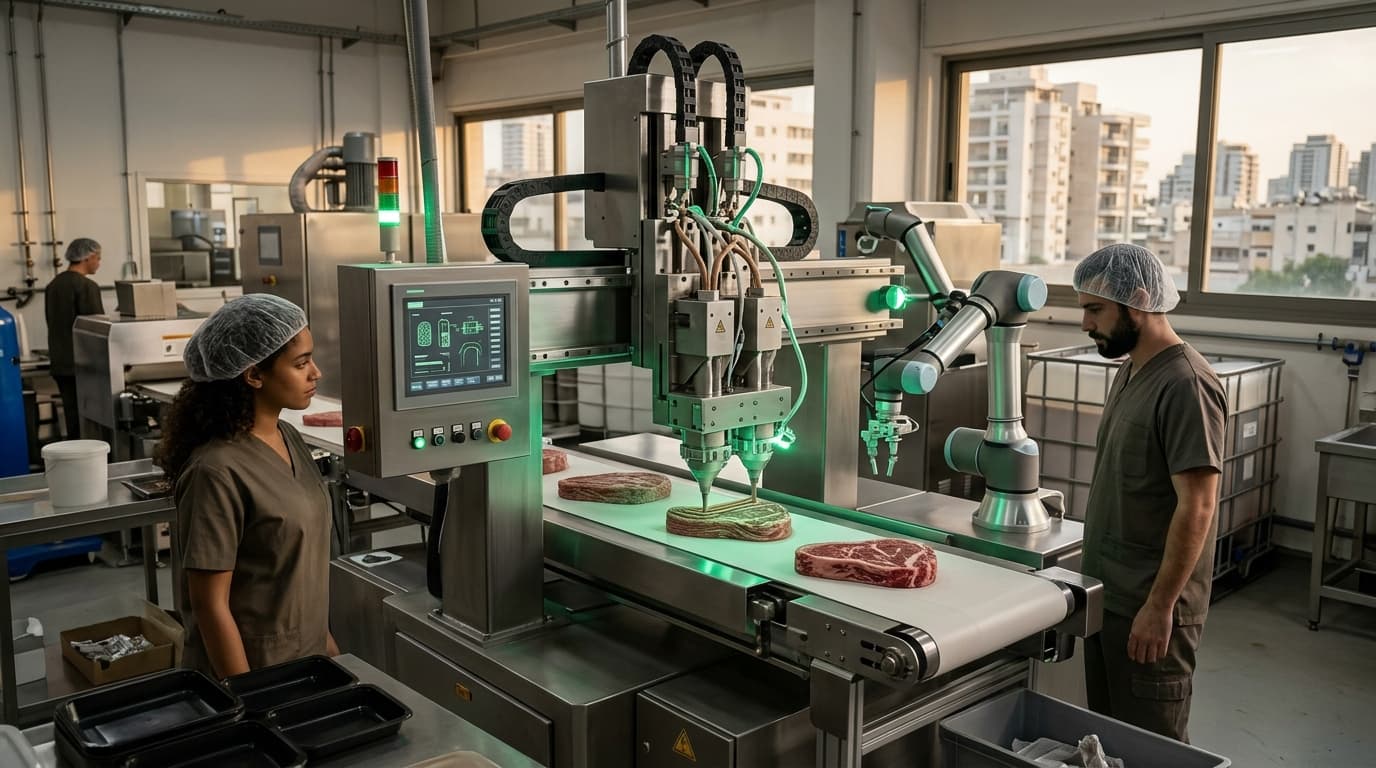
Redefine Meat has developed proprietary industrial-scale 3D printing technology that replicates the fibrous muscle structure, fat distribution, and mouthfeel of whole-cut meat using plant-based ingredients. Unlike ground-meat substitutes (Beyond Meat, Impossible), the technology prints complex architectural structures — steaks, tenderloins, lamb shanks — that mimic the heterogeneous texture of animal muscle. The company raised $135 million and deployed its products in over 3,000 restaurants across Europe and Israel.
The technology sits at the intersection of food science, materials engineering, and additive manufacturing. Redefine Meat's printers use multiple 'inks' — protein, fat, and flavor formulations — deposited in precise layered patterns to create products that chefs cannot distinguish from conventional meat in blind tastings. Israel ranks first globally in per-capita plant-based protein investment and second only to the U.S. in overall alternative protein funding.
Strategically, 3D-printed meat manufacturing represents a distinct approach from both cultivated meat (cell-based) and traditional plant-based products (extrusion-based). The technology's ability to produce whole-cut premium products at scale could capture the $270B center-of-plate protein market that ground-meat substitutes have struggled to penetrate. Israel's position as the global hub for alternative protein — hosting the Innovation Authority's dedicated food-tech programs — gives it structural advantages in this space.
Research this in Signals
Signals turns a topic into a sourced research record you can inspect and rerun. Your first scan is free, and this one starts with 3D-Printed Plant-Based Meat Manufacturing already loaded, so edit it or scan as is.