Precision Agriculture for Smallholder Farms
Geography: Asia Pacific · South Asia · India
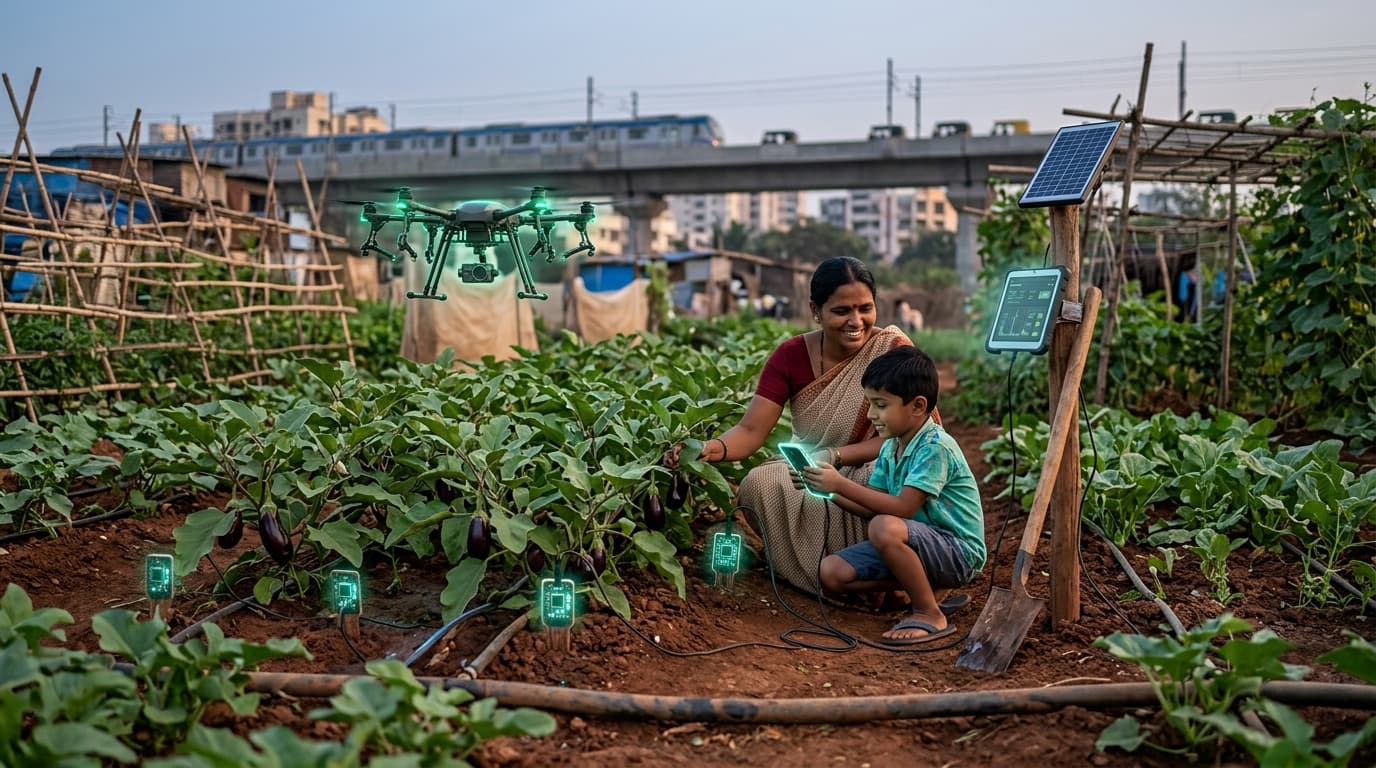
India is pioneering precision agriculture techniques adapted for smallholder farming contexts that are fundamentally different from Western large-farm precision agriculture. While US precision ag assumes GPS-guided tractors on thousand-acre farms, Indian precision ag works with smartphone apps, satellite imagery, and drone data on 1-2 hectare plots farmed by hand or with small tools. Companies like Fasal, SatSure, and CropIn have developed affordable sensor-and-AI systems for this context.
The technology stack includes: satellite-based crop health monitoring (using freely available Sentinel and Landsat imagery), smartphone-based soil testing kits, AI-powered crop disease identification from photographs, weather-based irrigation advisory, and market price prediction. These tools are delivered via simple mobile interfaces, often in local languages, to farmers who may have limited formal education but are increasingly smartphone-literate.
The impact potential is enormous. If precision agriculture techniques can improve yields by even 10-15% for India's smallholder farmers — who grow 80% of India's food — the effect on food security, farmer incomes, and agricultural sustainability would be transformative. India is essentially developing a new paradigm: precision agriculture for the Global South, where farms are small, capital is scarce, and labor is abundant. Solutions proven in India could scale to smallholder farming contexts across Africa, Southeast Asia, and Latin America.
Research this in Signals
Signals turns a topic into a sourced research record you can inspect and rerun. Your first scan is free, and this one starts with Precision Agriculture for Smallholder Farms already loaded, so edit it or scan as is.