Technology-Enabled Milk Cooperative System
Geography: Asia Pacific · South Asia · India
India's transformation from a milk-deficient nation importing dairy powder to the world's largest milk producer is one of the most consequential technology-enabled social innovations of the 20th century. The 'White Revolution' (Operation Flood), launched by Dr. Verghese Kurien through the National Dairy Development Board (NDDB) in 1970, created a three-tier cooperative structure: village-level societies collect milk from individual farmers, district-level unions process it, and state-level federations market it. The model, pioneered by Amul in Gujarat, now connects 16 million milk-producing households through 185,903 dairy cooperative societies.
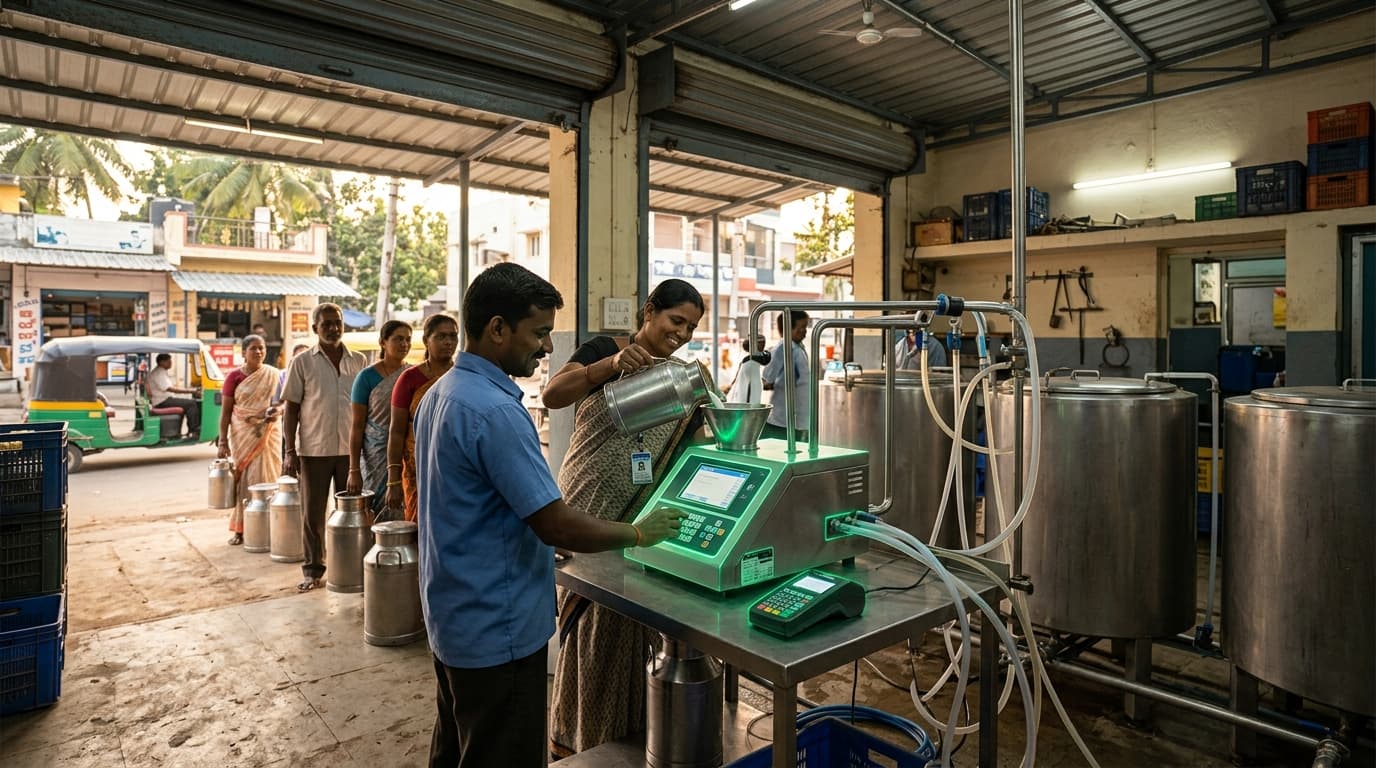
The technology layer is what makes the cooperatives work at scale. Every village collection point uses electronic milk testers that analyze fat content and SNF (solids-not-fat) in seconds, determining fair payment for each farmer's milk. Payments are automated through bank transfers. Cold chain logistics — chilling centers, refrigerated transport, processing plants — ensure milk reaches consumers without spoilage across India's extreme temperatures and vast distances. The data system tracks milk quality, volume, and payments for millions of daily transactions. Amul alone processes 150 metric tonnes of curd, 10 tonnes of yoghurt, and 10 tonnes of sweets daily in 2025.
The Amul model's genius is structural, not just technological. By organizing cooperatives as farmer-owned businesses rather than corporate supply chains, it ensures that value flows back to producers rather than being captured by intermediaries. India now produces over 230 million tonnes of milk annually — more than the US and EU combined — and dairy is India's single largest agricultural commodity by value. The cooperative technology model has been studied and replicated in countries across Africa and Southeast Asia. It demonstrates that technology-enabled institutional innovation can transform an entire sector when designed to serve the most marginal producers.
Research this in Signals
Signals turns a topic into a sourced research record you can inspect and rerun. Your first scan is free, and this one starts with Technology-Enabled Milk Cooperative System already loaded, so edit it or scan as is.