Saudi Red Sea Aquaculture
Geography: Emea · Middle East · Gulf States
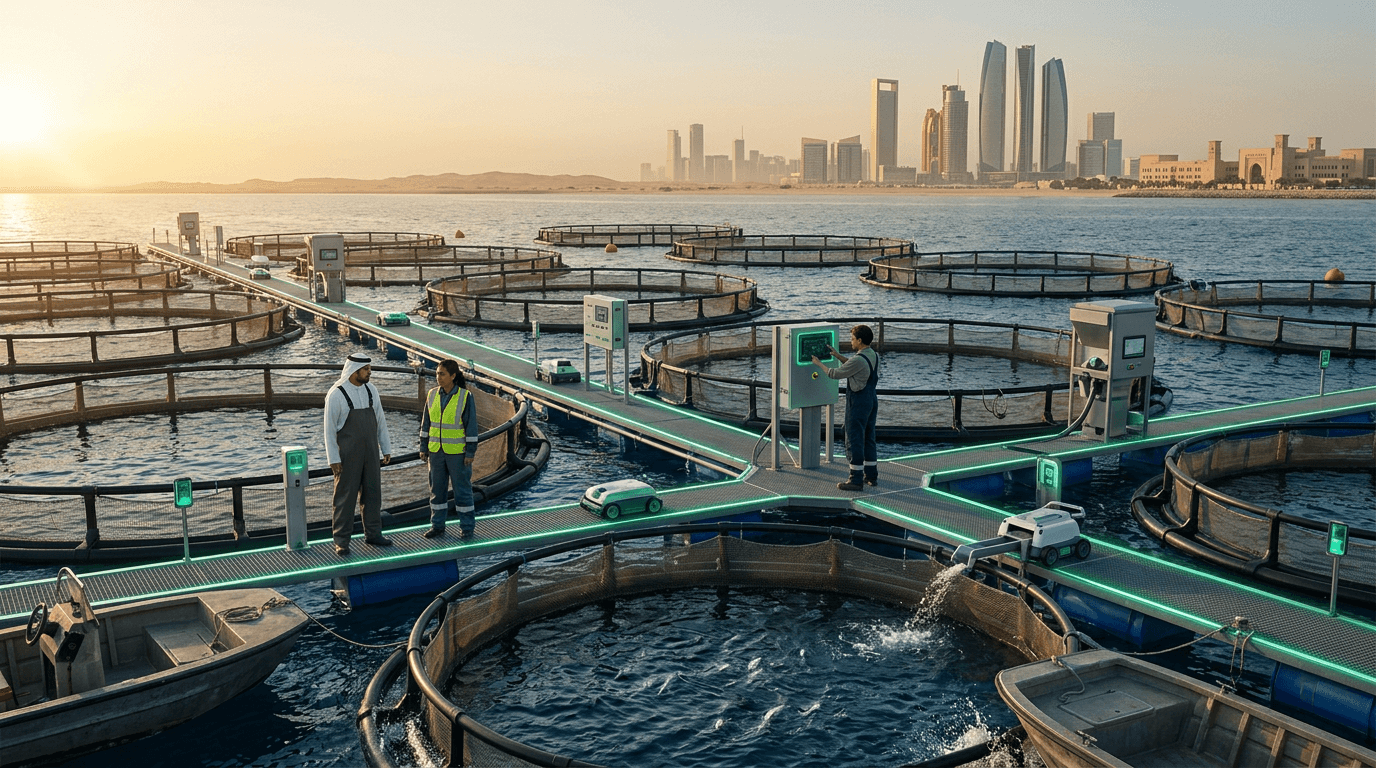
Saudi Arabia is developing industrial-scale aquaculture along its Red Sea coast as part of the National Fisheries Development Program under Vision 2030. NEOM's Oxagon project includes dedicated aquaculture zones, while multiple commercial fish farming operations are expanding capacity for species like shrimp, sea bass, and grouper in controlled offshore and onshore recirculating systems.
Aquaculture addresses the protein dimension of Gulf food security. While vertical farming handles fresh produce, fish farming reduces dependence on imported seafood and provides a domestic protein source. The Red Sea's relatively clean waters and warm temperatures offer favorable conditions for tropical aquaculture species.
The scale of investment in Saudi aquaculture — alongside similar programs in Oman and the UAE — reflects a strategic calculation that marine protein production will become increasingly important as global wild fisheries decline. Technologies developed for warm-water, high-salinity aquaculture environments have potential applications across the tropical developing world.
Research this in Signals
Signals turns a topic into a sourced research record you can inspect and rerun. Your first scan is free, and this one starts with Saudi Red Sea Aquaculture already loaded, so edit it or scan as is.