Desert Vertical Farming
Geography: Emea · Middle East · Gulf States
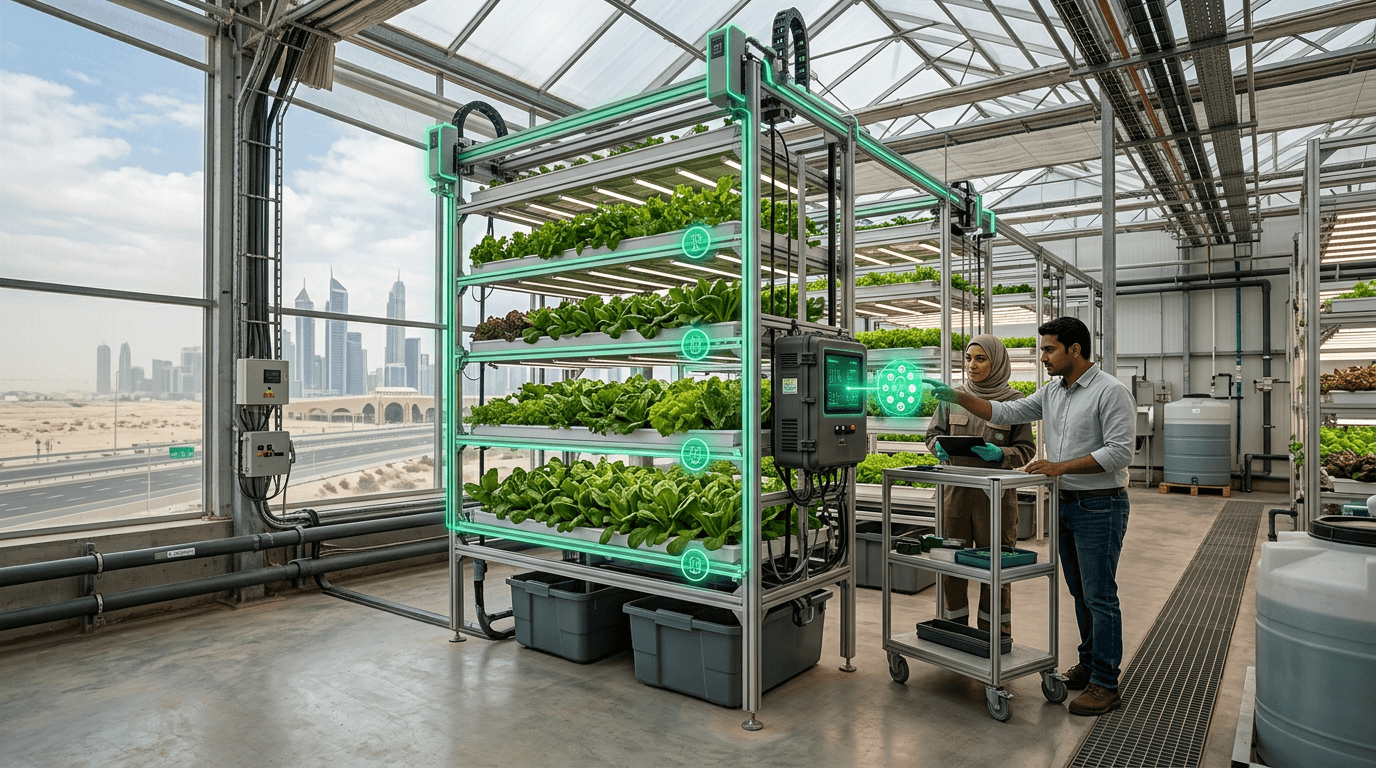
GCC countries import approximately 85% of their food, creating a strategic vulnerability that governments are addressing through controlled-environment agriculture. Companies like Pure Harvest Smart Farms and Alesca Life, both backed by Gulf sovereign investment, operate large-scale vertical farms and greenhouse complexes that produce fresh produce year-round despite external temperatures exceeding 50°C.
Investing in food security and sustainability could add $30.5 billion to the Gulf economy, according to the World Economic Forum. Government initiatives include Abu Dhabi's Food Security Centre and Dubai's Food Tech Valley, which provide subsidies, research facilities, and regulatory support for agtech startups. The integration of AI-controlled growing environments with solar-powered cooling systems creates genuinely novel agricultural technology.
The Gulf's food security technology is relevant far beyond the region. As climate change makes traditional agriculture increasingly difficult in arid and semi-arid zones worldwide, desert farming technologies developed under Gulf conditions — extreme heat, minimal water, high energy costs — become exportable solutions for food production in harsh environments.
Research this in Signals
Signals turns a topic into a sourced research record you can inspect and rerun. Your first scan is free, and this one starts with Desert Vertical Farming already loaded, so edit it or scan as is.