Black Soldier Fly Bioconversion for Circular Agriculture
Geography: Emea · Middle East · Gulf States
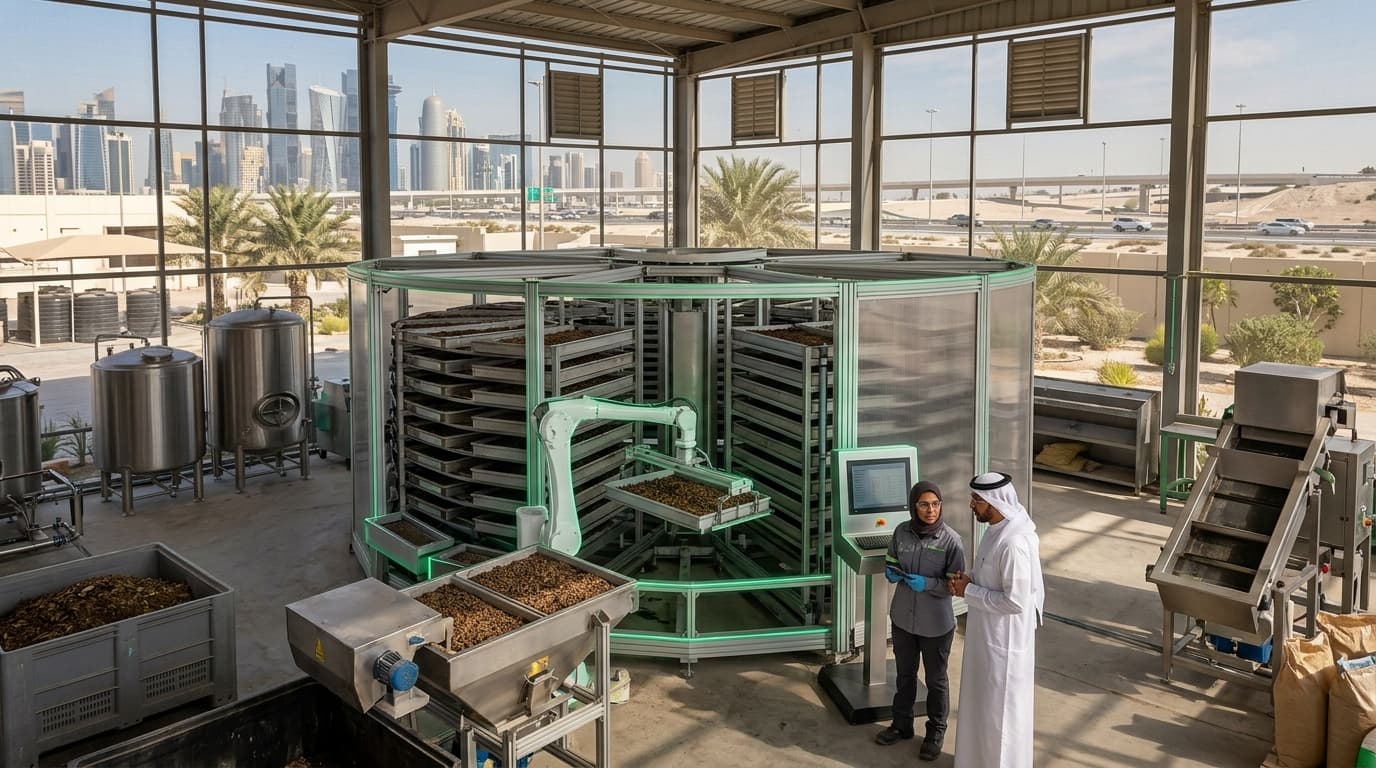
Black soldier fly (Hermetia illucens) bioconversion technology uses the larvae's extraordinary metabolic capacity to process organic waste at industrial scale. BSF larvae consume food waste, agricultural residues, and organic municipal waste, converting it into three valuable outputs: high-protein insect meal (42% protein, suitable for aquaculture and poultry feed), lipid-rich frass (organic fertilizer), and recovered water. Dubai's Food Tech Valley has integrated BSF bioconversion into its GigaFarm vertical farming complex, where larvae process the facility's organic waste and produce protein meal and water that feed back into the growing system — creating a genuine closed-loop food production cycle.
BSF bioconversion is particularly suited to Gulf conditions because it addresses two simultaneous problems: organic waste management and protein-feed imports. The UAE imports over 90% of its food, including animal feed. BSF larvae can convert a tonne of organic waste into approximately 200 kg of insect protein in 12-14 days — faster than any other biological waste processing method. The larvae thrive in the Gulf's warm climate, reducing the energy costs of maintaining optimal temperatures (27-30°C) that would be significant in colder regions. The water recovered from waste processing is especially valuable in arid environments.
The technology's export potential extends across arid and semi-arid regions. As climate change pushes more agricultural zones toward water scarcity and urban populations generate increasing organic waste, BSF bioconversion offers a scalable bridge technology. Unlike composting (which is slow and loses water) or anaerobic digestion (which produces biogas but not protein), BSF bioconversion simultaneously solves waste management, produces high-value protein, recovers water, and generates fertilizer — four outputs from a single biological process.
Research this in Signals
Signals turns a topic into a sourced research record you can inspect and rerun. Your first scan is free, and this one starts with Black Soldier Fly Bioconversion for Circular Agriculture already loaded, so edit it or scan as is.