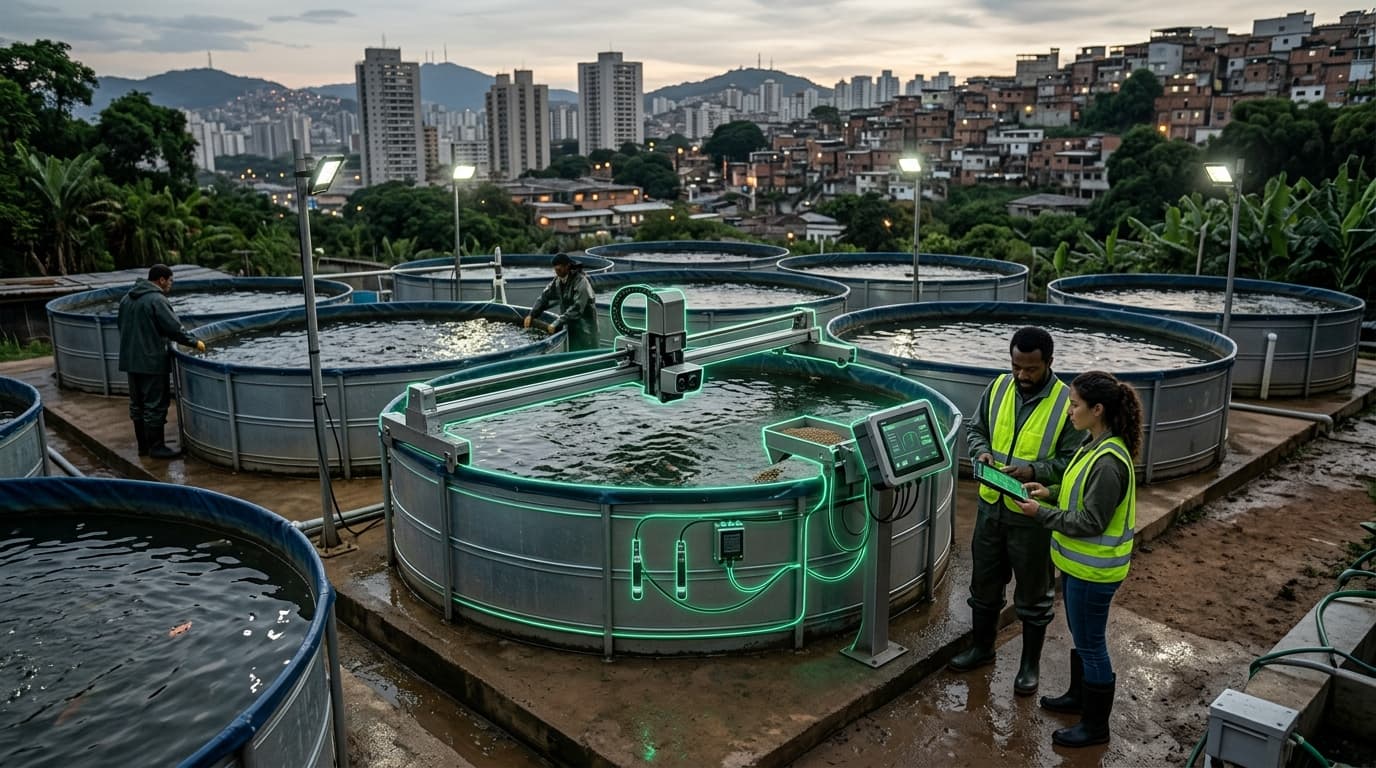
Tropical Aquaculture (Tilapia and Tambaqui)
Geography: Americas · South America · Brazil
Brazilian aquaculture production exceeded 900,000 tonnes in recent years, with tilapia accounting for roughly 60% of output. Tambaqui and other native species are farmed extensively in the Amazon and northeast regions, providing protein with lower environmental impact than cattle ranching.
The technology combines selective breeding (EMBRAPA developed improved tilapia and tambaqui strains), recirculating aquaculture systems (RAS), and cage farming in hydroelectric reservoirs. Brazil's vast freshwater resources — 12% of the world's total — provide a natural advantage.
Aquaculture is strategically important because it produces animal protein with a fraction of the land, water, and carbon footprint of beef cattle. As deforestation pressure on the Amazon intensifies, shifting protein production from ranching to fish farming reduces the incentive to clear forest for pasture.
Research this in Signals
Signals turns a topic into a sourced research record you can inspect and rerun. Your first scan is free, and this one starts with Tropical Aquaculture (Tilapia and Tambaqui) already loaded, so edit it or scan as is.