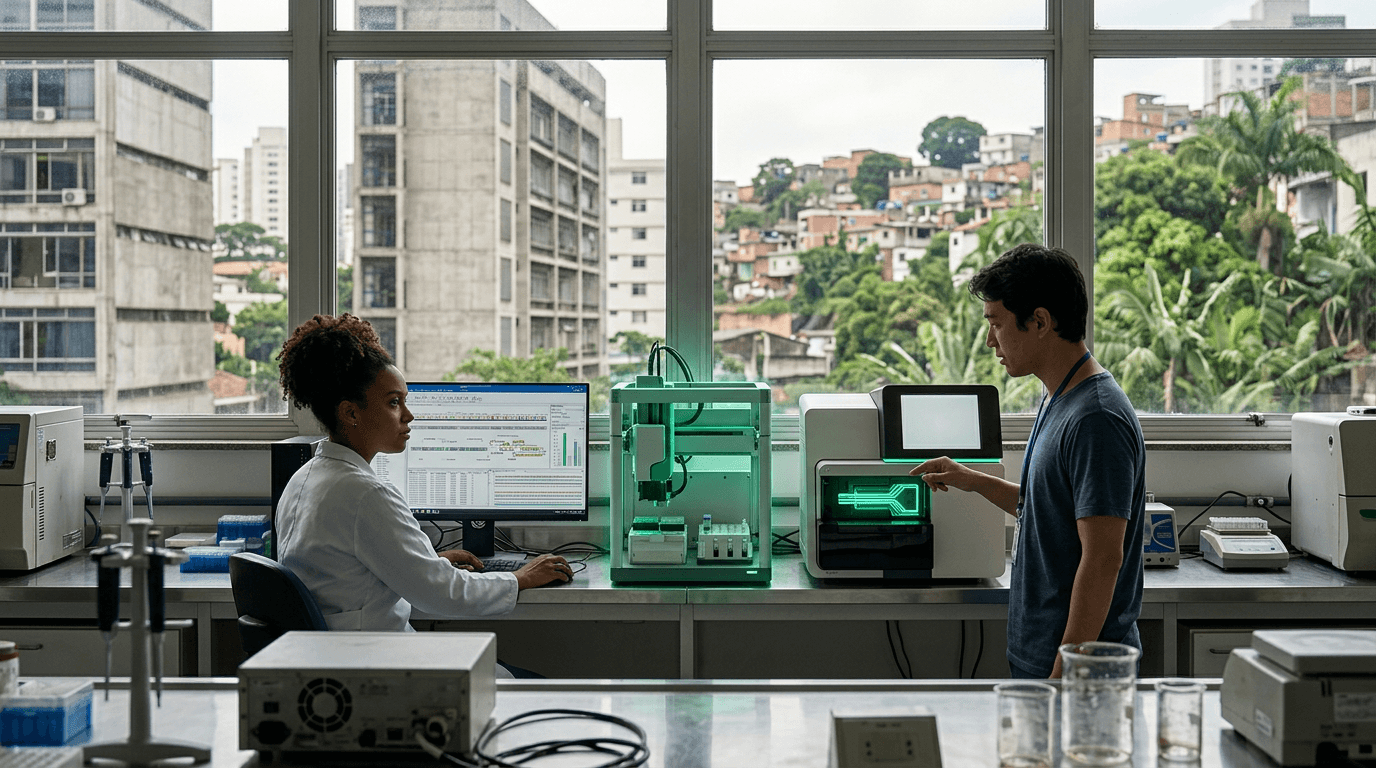
Sugarcane Genome Sequencing
Geography: Americas · South America · Brazil
Sugarcane has one of the most complex genomes in the plant kingdom: it's polyploid (10-12 copies of each chromosome) with roughly 10 billion base pairs — more than three times the human genome. Brazilian researchers at CTC, FAPESP, and university networks tackled this challenge over decades.
The genome sequence enables marker-assisted breeding: identifying genes linked to desirable traits (sugar content, drought tolerance, pest resistance) and selecting for them precisely rather than relying on trial-and-error cross-breeding. This accelerates the development of improved varieties from 12-15 years to 5-7 years.
For a country whose energy matrix, agriculture, and chemical industry depend on sugarcane, genomic tools are strategic infrastructure. Better varieties mean more ethanol per hectare, more sugar per ton, and more resilience to climate change — compounding advantages across Brazil's entire biofuel ecosystem.
Research this in Signals
Signals turns a topic into a sourced research record you can inspect and rerun. Your first scan is free, and this one starts with Sugarcane Genome Sequencing already loaded, so edit it or scan as is.