Envisioning is an emerging technology research institute and advisory.

LinkedInInstagramGitHub

2011 — 2026

research
  • Reports
  • Newsletter
  • Methodology
  • Origins
  • Vocab
services
  • Research Sessions
  • Signals Workspace
  • Bespoke Projects
  • Use Cases
  • Signal Scanfree
  • Readinessfree
impact
  • ANBIMAFuture of Brazilian Capital Markets
  • IEEECharting the Energy Transition
  • Horizon 2045Future of Human and Planetary Security
  • WKOTechnology Scanning for Austria
audiences
  • Innovation
  • Strategy
  • Consultants
  • Foresight
  • Associations
  • Governments
resources
  • Pricing
  • Partners
  • How We Work
  • Data Visualization
  • Multi-Model Method
  • FAQ
  • Security & Privacy
about
  • Manifesto
  • Community
  • Events
  • Support
  • Contact
  • Login
ResearchServicesPricingPartnersAbout
  1. Home
  2. Research
  3. Spore
  4. Safrinha Double-Cropping System

Safrinha Double-Cropping System

Tropical latitudes allow Brazilian farmers to harvest two crops per year on the same land — soy followed by corn — doubling productivity in a way temperate climates physically cannot replicate

Geography: Americas · South America · Brazil

Back to SporeBack to BrazilView interactive version

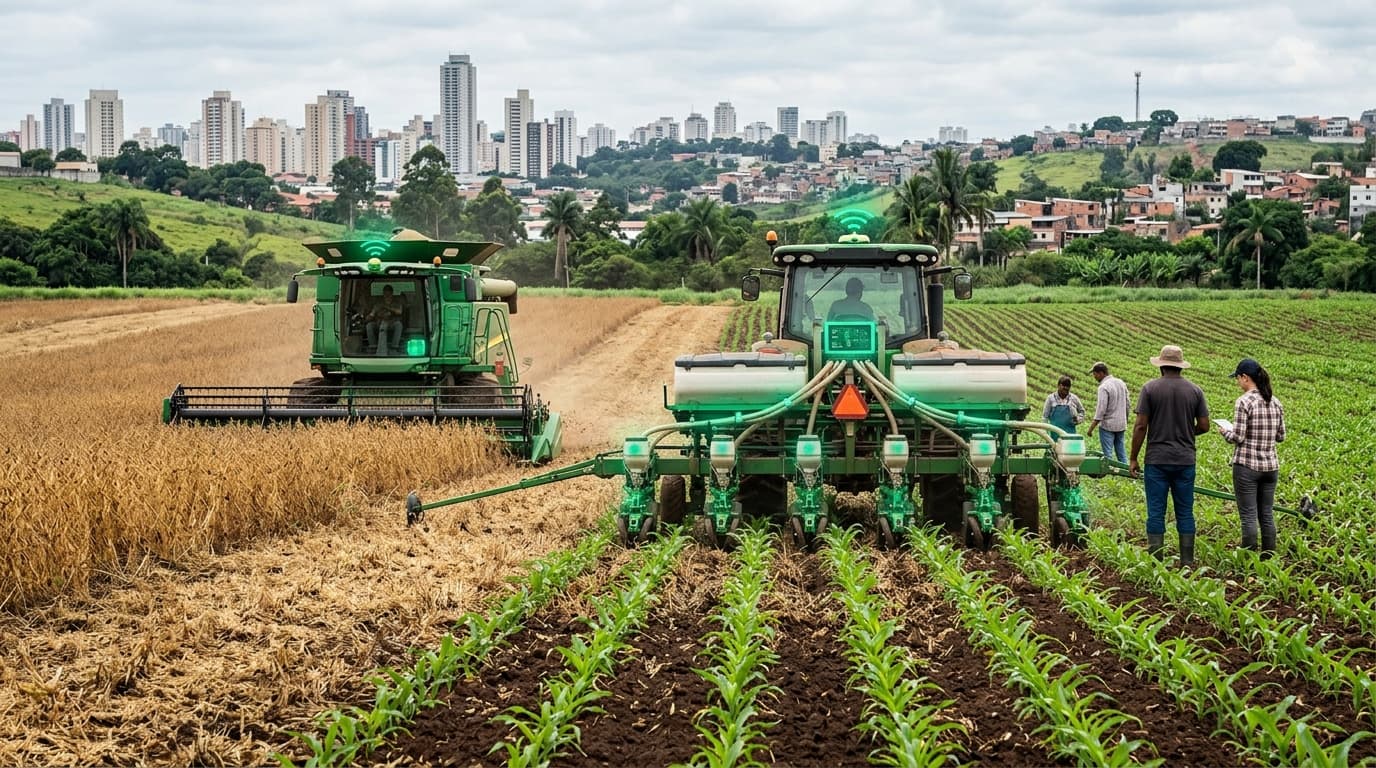
The safrinha ('little harvest') system plants soybeans in September-October and harvests in January-February, then immediately plants corn or cotton on the same field for a second harvest by June-July. This is only possible in tropical latitudes with year-round growing seasons.

Approximately 50% of Brazil's soybean area now supports a second corn crop. The potential for expansion is enormous: an additional 40 million acres could be double-cropped based on current soybean area in the eight main producing states.

The safrinha system gives Brazil a structural cost advantage over temperate competitors like the US and Argentina, who can only harvest once per year. It also reduces pressure to clear new land — increasing production per hectare rather than expanding hectares under cultivation.

TRL
9/9Established
Impact
4/5
Investment
3/5
Category
Applications

Book a research session

Bring this signal into a focused decision sprint with analyst-led framing and synthesis.
Research Sessions