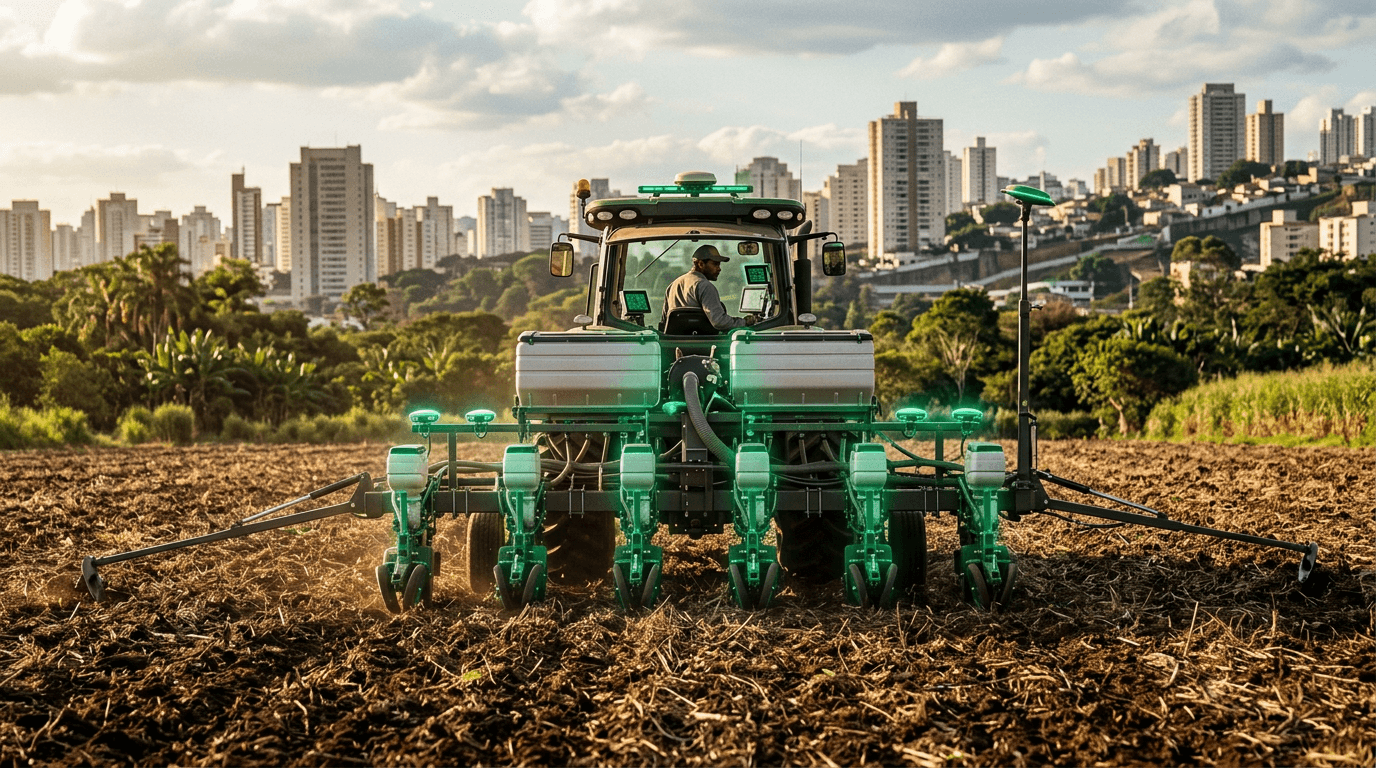
No-Till Farming (Plantio Direto)
Geography: Americas · South America · Brazil
No-till farming leaves previous crop residues on the field and plants the next crop directly into undisturbed soil using specialized seed drills. Brazil adopted the practice at massive scale — over 32 million hectares — making it one of the world's largest zero-tillage systems.
The benefits compound over time: soil erosion drops by 70-90%, moisture retention improves, microbial diversity increases, and carbon is sequestered in the soil rather than released by plowing. Combined with the safrinha system, no-till enables year-round soil cover that mimics the cerrado's natural vegetation cycle.
Brazilian no-till was driven by farmer-to-farmer knowledge exchange, not top-down mandates. Paraná state farmers pioneered the practice in the 1970s; it spread across the cerrado through agricultural cooperatives and EMBRAPA extension services.
Research this in Signals
Signals turns a topic into a sourced research record you can inspect and rerun. Your first scan is free, and this one starts with No-Till Farming (Plantio Direto) already loaded, so edit it or scan as is.