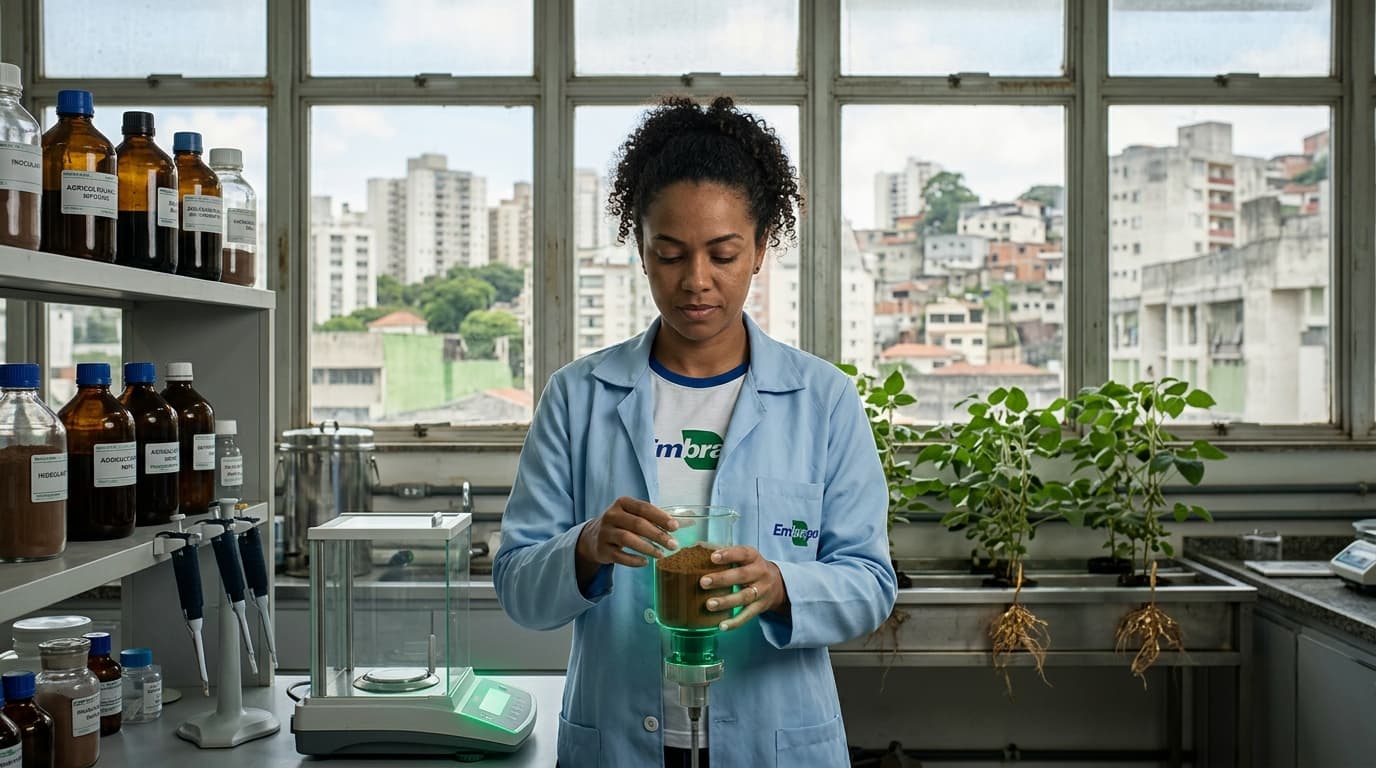
Biological Nitrogen Fixation (Inoculants)
Geography: Americas · South America · Brazil
Instead of applying synthetic nitrogen fertilizer (made from natural gas via the Haber-Bosch process), Brazilian soybean farmers coat seeds with Bradyrhizobium bacteria that form root nodules and convert atmospheric nitrogen into plant-available form. The inoculation costs R$8/hectare versus R$906/hectare for equivalent synthetic fertilizer.
Across 27.7 million hectares, this saves Brazil approximately $10.3 billion annually in fertilizer imports and reduces greenhouse gas emissions from both fertilizer production and application. The technology was highlighted by Nature as a model for sustainable intensification.
The significance extends beyond cost savings. Brazil's soybean industry — the world's largest — operates with minimal dependence on synthetic nitrogen, a petrochemical product subject to price spikes and supply disruptions. During the 2022 fertilizer crisis triggered by Russia's invasion of Ukraine, Brazilian soybean farmers were largely insulated.
Research this in Signals
Signals turns a topic into a sourced research record you can inspect and rerun. Your first scan is free, and this one starts with Biological Nitrogen Fixation (Inoculants) already loaded, so edit it or scan as is.