Virtual Fencing / Autonomous Livestock Management
Geography: Asia Pacific · Oceania · Australia New Zealand
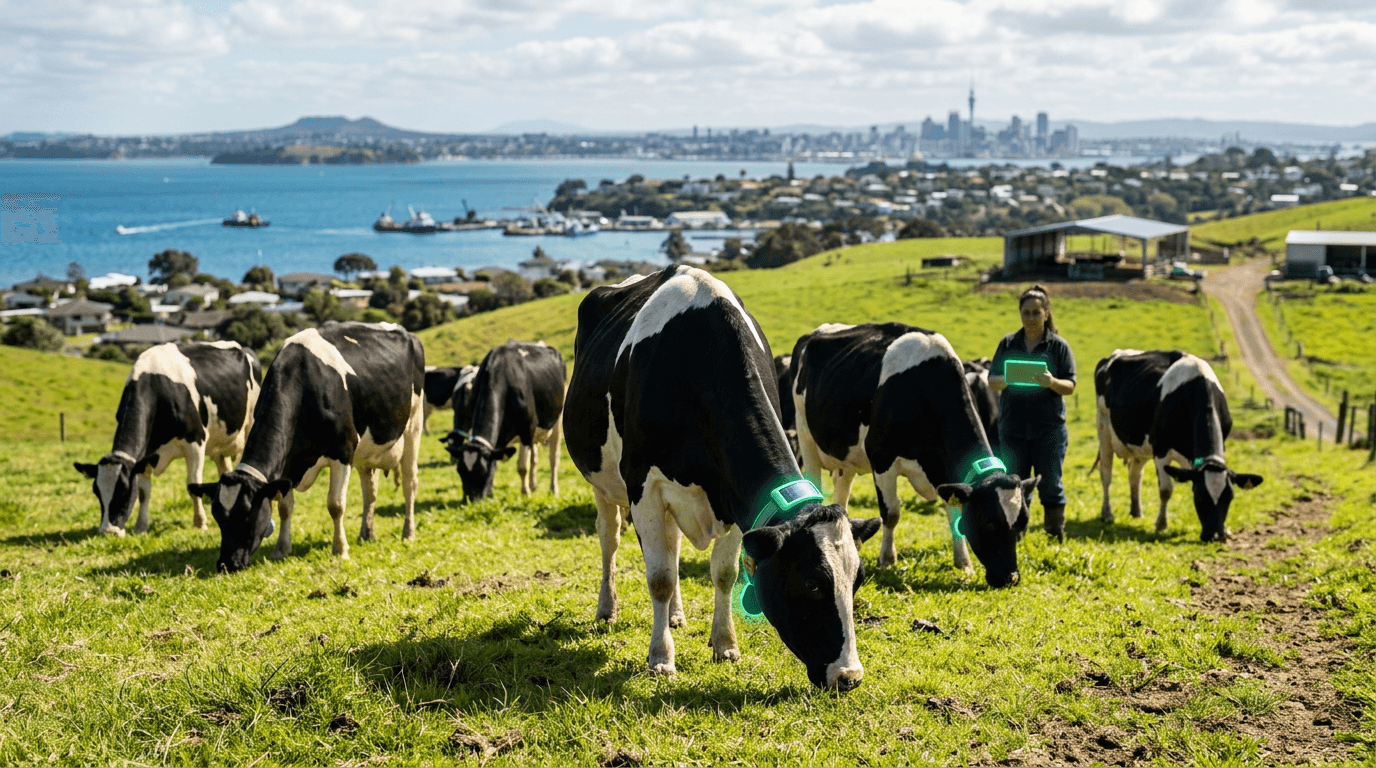
Halter, founded by 31-year-old Waikato entrepreneur Craig Piggott, has developed solar-powered GPS collars that create virtual fences and autonomously manage cattle movement using audio cues guided by behavioral AI and geospatial modeling. The collars monitor animal health 24/7, detect estrus, lameness, and illness, and enable farmers to manage grazing rotations from a smartphone app. In June 2025, Halter raised NZ$165M at a NZ$1.65B valuation — making it one of New Zealand's rare unicorns — and has expanded to Australia and the US, managing over 500,000 cattle globally.
Physical fencing is one of agriculture's largest cost and labor burdens, particularly in extensive pastoral systems. A single New Zealand dairy farm may maintain hundreds of kilometers of fences. Virtual fencing eliminates this infrastructure entirely while enabling precision grazing — moving cattle to fresh pasture multiple times daily in patterns optimized by AI for pasture recovery, soil health, and milk production. The technology transforms livestock farming from reactive (repairing fences, walking paddocks) to proactive (algorithmic grazing management).
Halter represents the most commercially successful ag-tech export from New Zealand, demonstrating that small-nation innovation can achieve global scale when the underlying technology solves a universal problem. The platform's expansion to US ranching — where cattle roam millions of acres of unfenced rangeland — opens an enormous addressable market. Strategically, virtual fencing could reshape land use globally by enabling grazing on public lands, conservation areas, and mixed-use properties where physical fencing is impractical or prohibited.
Research this in Signals
Signals turns a topic into a sourced research record you can inspect and rerun. Your first scan is free, and this one starts with Virtual Fencing / Autonomous Livestock Management already loaded, so edit it or scan as is.