Pasture-Based Robotic Milking Systems
Geography: Asia Pacific · Oceania · Australia New Zealand
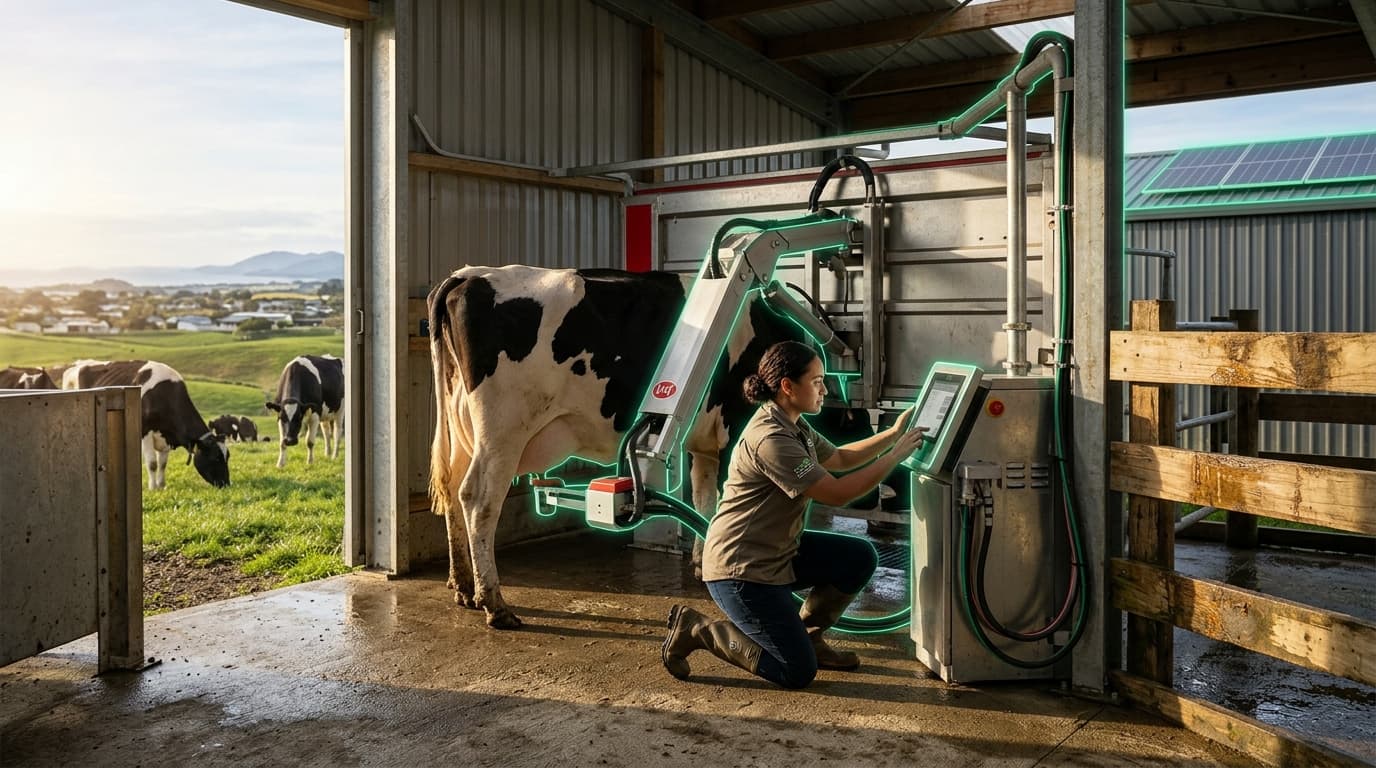
New Zealand's dairy industry is pioneering the adaptation of robotic milking systems — developed for European housed-cow operations — to pasture-based dairy farming where cows graze freely in paddocks and walk to milking stations voluntarily. The Lely A5-Next robotic milking system, launched in July 2025, features faster teat attachment, reduced downtime, remote software updates, and advanced teat health tracking. NZ dairy farmers are integrating these robots with virtual fencing (Halter) and AI pasture management (AIMER) to create fully automated pastoral dairy systems.
The engineering challenge is substantial: European robotic milking assumes cows are housed in barns within meters of the robot. In NZ's pasture system, cows may walk 2-3km from paddock to milking shed, arrive with muddy teats, and present in variable groups depending on grazing rotation. Adapting robots to handle this variability while maintaining milking frequency (2-3x daily for optimal production) requires integration of cow traffic management, teat preparation, and scheduling algorithms specific to pastoral conditions.
New Zealand has the world's highest ratio of dairy cows to people and faces chronic labor shortages on dairy farms. Robotic milking eliminates the requirement for humans to be present for each milking session — a transformational change for an industry where 5am and 3pm milkings dictate farmers' lives. The combination of NZ-developed virtual fencing, pasture AI, and adapted robotic milking creates the world's first fully integrated autonomous pastoral dairy system — technology applicable to grazing-based dairy industries in Australia, Ireland, and parts of South America.
Research this in Signals
Signals turns a topic into a sourced research record you can inspect and rerun. Your first scan is free, and this one starts with Pasture-Based Robotic Milking Systems already loaded, so edit it or scan as is.