CRISPR Gene Editing for Pasture Improvement
Geography: Asia Pacific · Oceania · Australia New Zealand
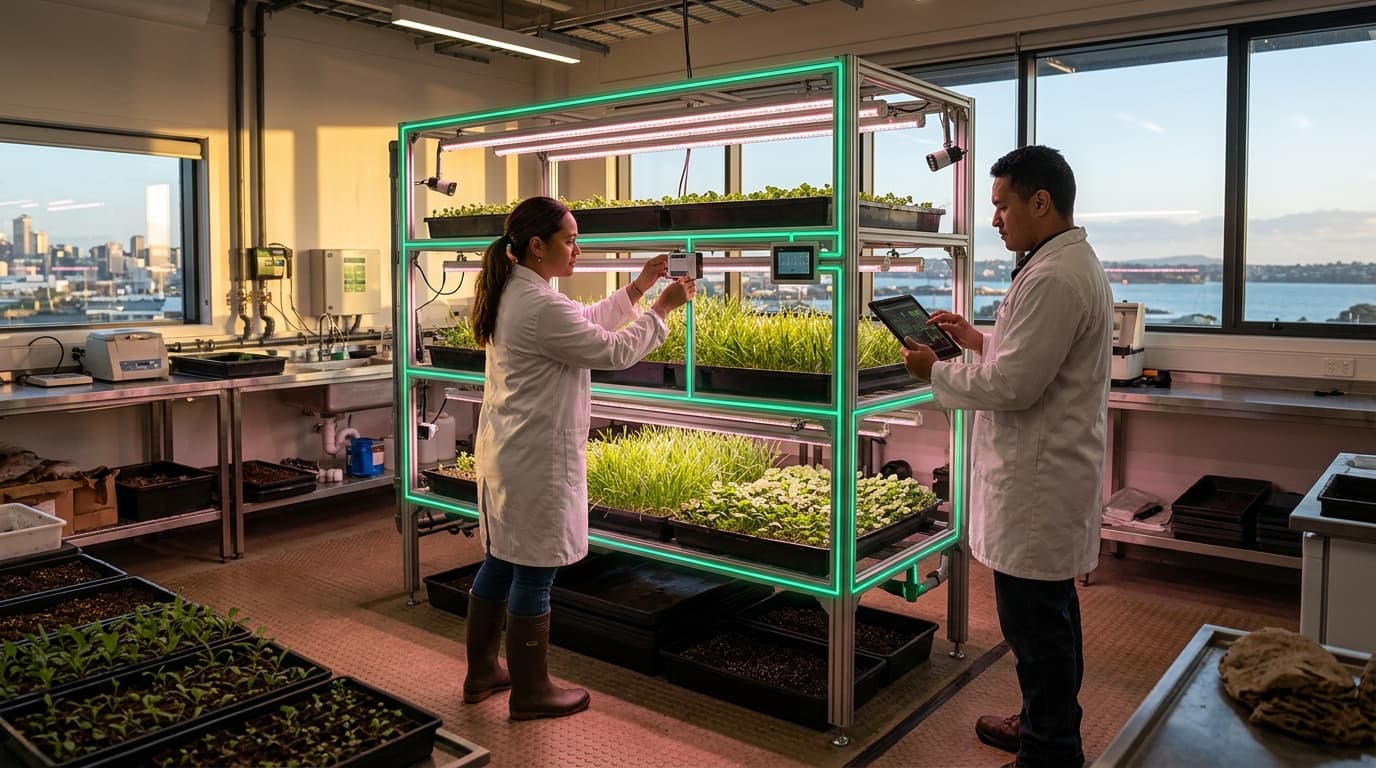
New Zealand agricultural researchers at AgResearch and university labs are applying CRISPR-Cas9 gene editing to develop improved pasture species — particularly perennial ryegrass and white clover — with traits including enhanced drought tolerance, improved nitrogen fixation efficiency, higher energy content (reducing methane per unit of production), and resistance to endophyte toxins. These precision edits target specific genes without introducing foreign DNA, potentially qualifying as non-GMO under evolving regulatory frameworks.
New Zealand's pastoral farming system depends almost entirely on ryegrass-clover pastures, yet pasture productivity has stagnated over the past two decades according to 2025 research published in the New Zealand Journal of Agricultural Research. Traditional breeding has struggled to deliver the step-change improvements needed to maintain international competitiveness. CRISPR offers a pathway to rapid trait improvement — achieving in 2-3 years what conventional breeding requires 10-15 years to accomplish.
The regulatory landscape for gene-edited (as opposed to transgenic) crops is evolving rapidly, with several jurisdictions (including Australia) distinguishing between gene edits that could have occurred naturally and transgenic insertions of foreign DNA. New Zealand's regulatory position on gene editing will determine whether the technology can be deployed domestically, but the research output itself has global relevance for any pasture-based dairy or beef industry facing productivity and emissions pressures.
The integration of CRISPR-edited pasture varieties with other NZ-developed technologies — UV-treated seeds from BioLumic, methane-reduction bolus from Ruminant BioTech, and precision rotational grazing from Halter — creates a vertically integrated technology stack that addresses the entire pastoral production chain. This convergence positions New Zealand as the global leader in pasture systems research at a moment when sustainable dairy and beef production is becoming a strategic resource globally.
Research this in Signals
Signals turns a topic into a sourced research record you can inspect and rerun. Your first scan is free, and this one starts with CRISPR Gene Editing for Pasture Improvement already loaded, so edit it or scan as is.