Sustained-Release Livestock Methane Reduction Bolus
Geography: Asia Pacific · Oceania · Australia New Zealand
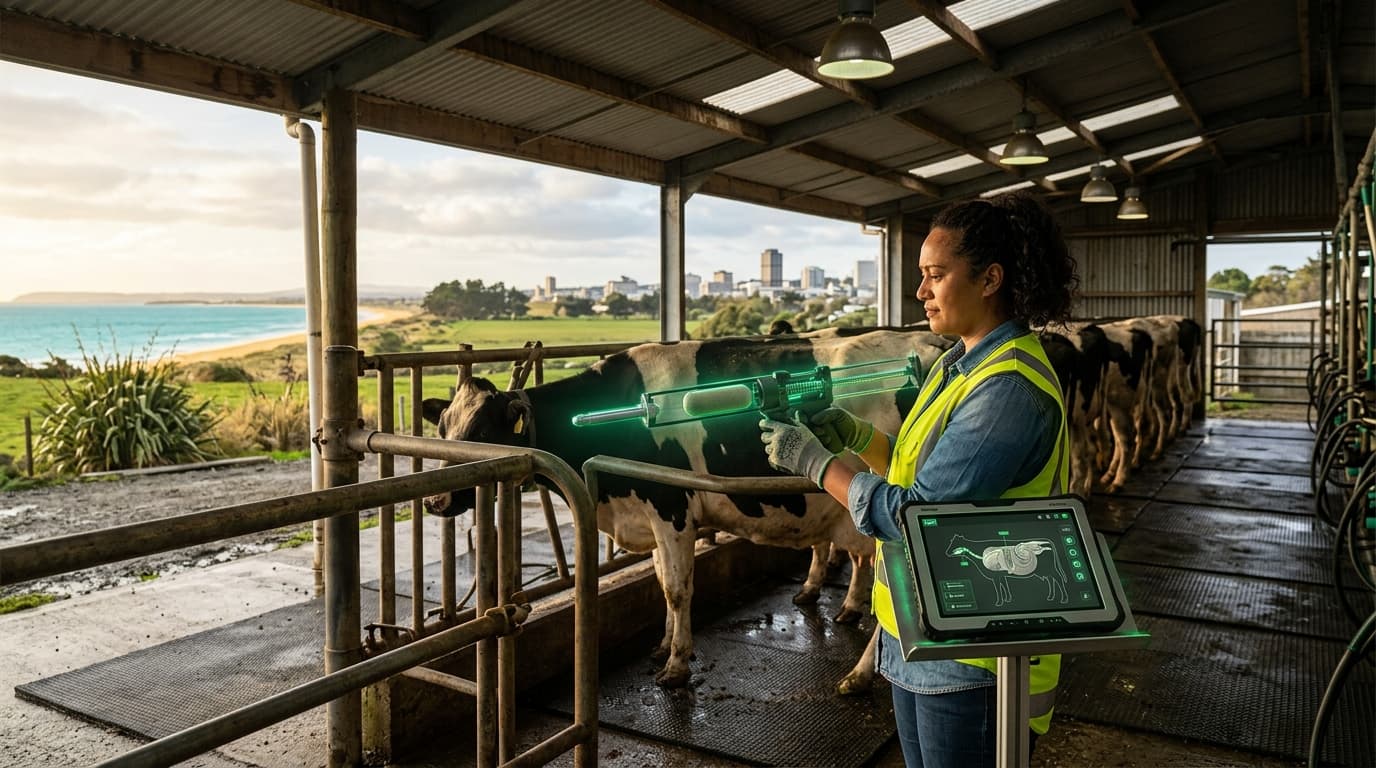
New Zealand's Ruminant BioTech has developed a sustained-release bolus (a large pill inserted into a cow's rumen) that delivers methane-inhibiting compounds over 100+ days from a single dose. Animal trials demonstrate a 75% reduction in methane emissions, with the company targeting six-month duration in next-generation products. The CALM (Cut Agricultural Livestock Methane) program, co-funded with NZ$7.8M from the New Zealand government, completed its Series A (NZ$17M) in November 2025 to prepare for commercial launch across Australia and New Zealand in 2026.
Livestock methane — primarily from cattle belching — accounts for approximately 14.5% of global greenhouse gas emissions and nearly half of New Zealand's total emissions. Existing methane-reduction technologies (feed additives like 3-NOP/Bovaer) require daily dosing mixed into feed, which is impractical for pasture-based systems where cattle graze freely. The bolus delivery mechanism solves this constraint, making methane reduction feasible for the first time in pastoral farming systems that dominate Australasia, South America, and parts of Africa.
If commercialized at scale, this technology could reshape the emissions profile of global ruminant agriculture without requiring dietary changes, feedlot confinement, or herd reduction. New Zealand's outsized contribution to this technology stems from the existential pressure of a national emissions profile dominated by agricultural methane, combined with strong pastoral science infrastructure at Massey University and AgResearch. The global addressable market — approximately 1 billion cattle — makes this potentially one of the highest-impact climate technologies emerging from the region.
Research this in Signals
Signals turns a topic into a sourced research record you can inspect and rerun. Your first scan is free, and this one starts with Sustained-Release Livestock Methane Reduction Bolus already loaded, so edit it or scan as is.