IoT-Enabled Smart Irrigation for Smallholders
Geography: Emea · Africa · Africa
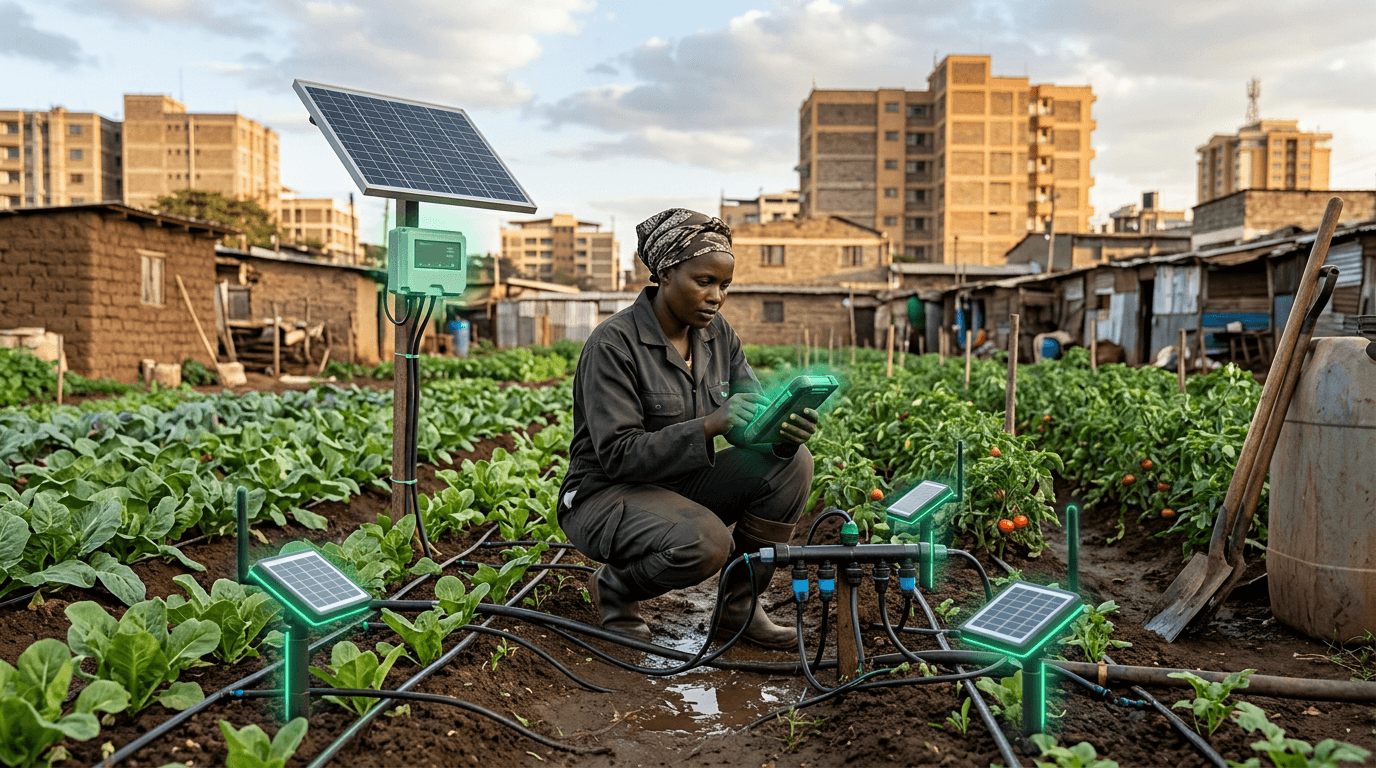
Smart irrigation systems adapted for African smallholders combine solar-powered soil moisture sensors, automated drip irrigation, and mobile-phone-based controls. Companies like SunCulture (Kenya) and Futurepump (East Africa) produce solar-powered water pumps that feed automated drip irrigation systems, controlled by soil moisture data. A farmer can monitor and adjust irrigation from a basic smartphone — turning water on or off, checking moisture levels, and receiving alerts.
African agriculture is overwhelmingly rainfed (95% of cropland), making it extremely vulnerable to drought. Smart irrigation allows the efficient use of whatever water is available — boreholes, rivers, rainwater harvesting — reducing water consumption by up to 60% compared to flood irrigation while improving yields. SunCulture's system replaces diesel-powered pumps (expensive fuel, maintenance, emissions) with solar-powered alternatives at zero ongoing fuel cost.
The technology package — solar pump, drip system, IoT sensors, mobile interface — costs $500-2,000, financed through PAYG models. A farmer making $200/month can pay $10-20/month to own the system outright within 1-2 years. The yield improvement (documented at 2-5x for vegetables under drip vs. rainfed) makes the investment case straightforward. This is climate adaptation technology designed for the people most affected by climate change — African smallholders who contribute least to emissions but suffer most from their effects.
Research this in Signals
Signals turns a topic into a sourced research record you can inspect and rerun. Your first scan is free, and this one starts with IoT-Enabled Smart Irrigation for Smallholders already loaded, so edit it or scan as is.