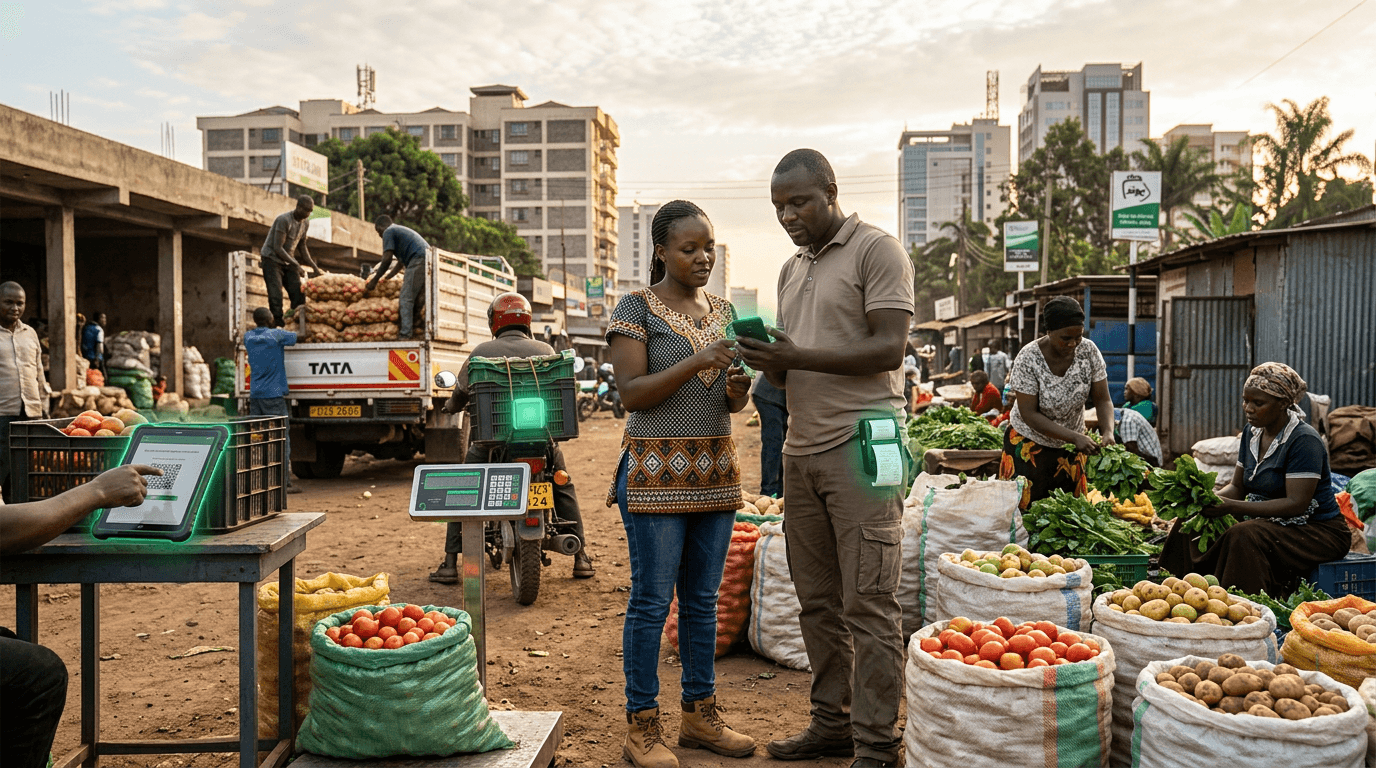
Mobile-First Agricultural Marketplace Platforms
Geography: Emea · Africa · Africa
Digital agricultural marketplaces like Twiga Foods (Kenya), FarmCrowdy (Nigeria), and AgroMall (Nigeria) connect smallholder farmers directly to buyers — wholesalers, processors, retailers, and restaurants — via mobile platforms. Operating through USSD for feature phone users and apps for smartphone users, these platforms provide real-time price information, match supply with demand, and often include logistics coordination and quality assurance.
In traditional African agricultural markets, farmers sell to local middlemen at deeply discounted prices because they lack market information and transport. The digital platforms reduce post-harvest losses (which can reach 40% in sub-Saharan Africa) by coordinating harvest timing with buyer demand and providing cold chain logistics. Twiga Foods in Kenya aggregates produce from 70,000+ farmers and delivers to 40,000+ vendors in Nairobi, using data analytics to predict demand and reduce waste.
The platforms are also becoming credit and insurance conduits. By tracking farmer transaction histories, they generate the data needed for crop insurance, input financing, and working capital loans — services that formal financial institutions have never been able to offer to smallholders. This creates a virtuous cycle: better market access increases income, which improves creditworthiness, which enables investment in better inputs, which increases yields.
Research this in Signals
Signals turns a topic into a sourced research record you can inspect and rerun. Your first scan is free, and this one starts with Mobile-First Agricultural Marketplace Platforms already loaded, so edit it or scan as is.