Crowdsourced Weather Observation Networks
Geography: Emea · Africa · Africa
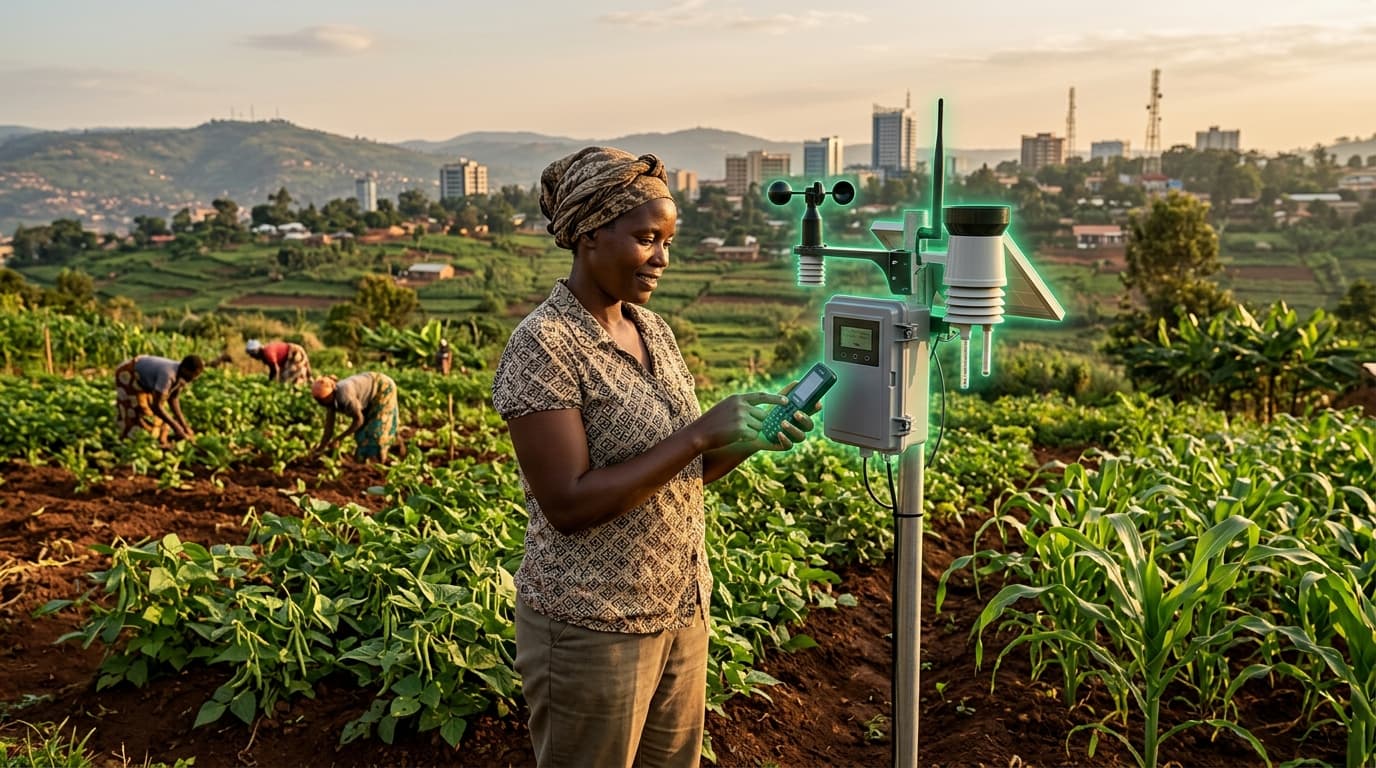
Africa has only 12% of the weather observation stations recommended by the World Meteorological Organization — the world's largest weather data desert. Crowdsourced weather networks fill this gap by having farmers report local conditions (rainfall, temperature, drought indicators) via SMS or USSD. Organizations like TAHMO (Trans-African Hydro-Meteorological Observatory) combine IoT weather stations with farmer observations to create hyper-local weather intelligence.
The technology innovation is making useful weather forecasts from sparse data. Machine learning models interpolate between scattered observation points, combining satellite imagery, farmer reports, and the limited ground station data to produce forecasts localized to individual farming communities. This is critical because weather in tropical Africa varies dramatically over short distances — a village can experience drought while another 20 km away has adequate rainfall.
The economic impact is substantial. Improved weather information reduces crop losses, enables better planting timing, and supports index insurance products that depend on accurate local weather data. The crowdsourced approach also builds farmer engagement — people who contribute data use the resulting forecasts more effectively. This participatory model turns Africa's data scarcity into a technology opportunity, creating observation networks that are more granular than anything satellite data alone could provide.
Research this in Signals
Signals turns a topic into a sourced research record you can inspect and rerun. Your first scan is free, and this one starts with Crowdsourced Weather Observation Networks already loaded, so edit it or scan as is.