Equatorial Controlled-Environment Floriculture Technology
Geography: Emea · Africa · Africa
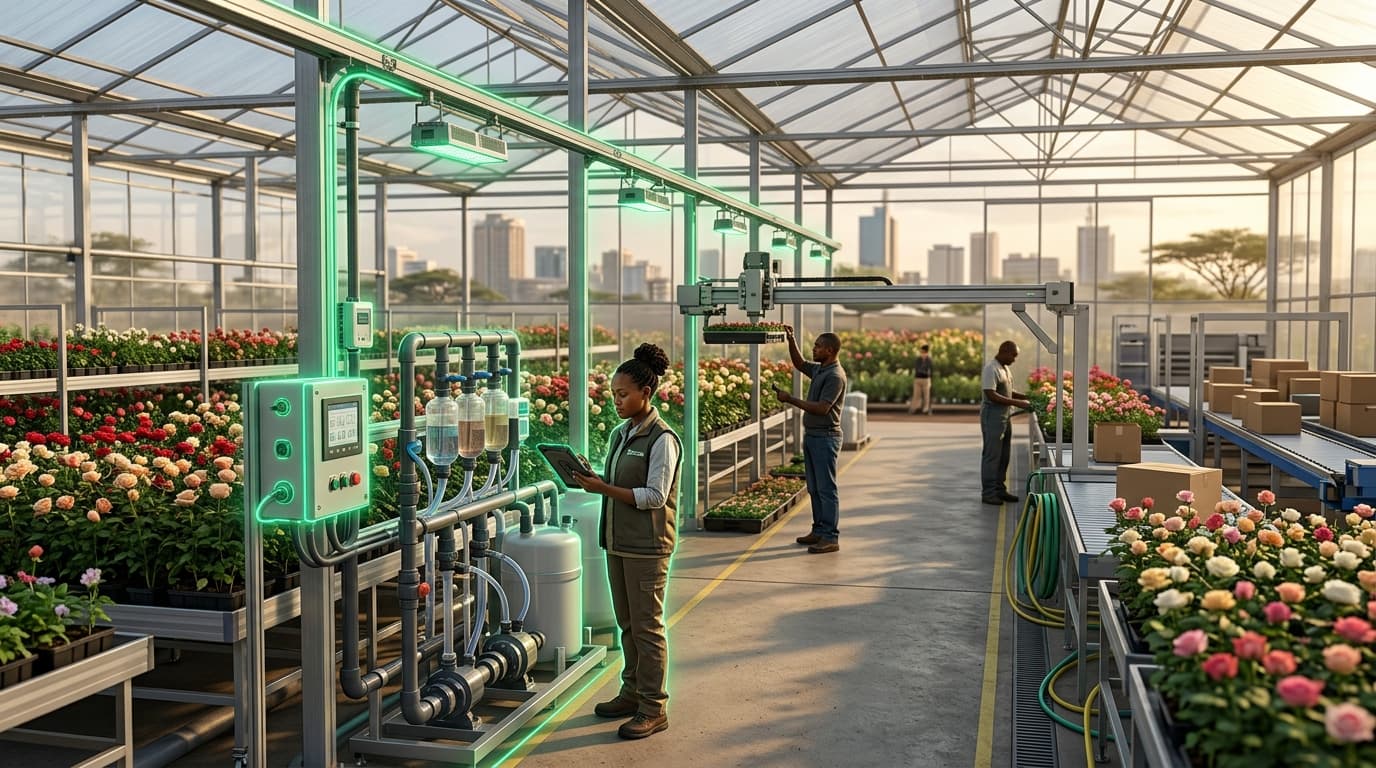
Kenya is the world's third-largest cut flower exporter (after the Netherlands and Colombia), shipping over 200,000 tonnes annually — primarily roses grown in greenhouses around Lake Naivasha at 1,900m altitude. The industry has developed a distinctive technology stack: greenhouse ventilation systems adapted for equatorial day-length patterns, fertigation (combined fertilization and irrigation) with closed-loop nutrient recycling, artificial lighting to manipulate photoperiod for year-round bloom timing, and integrated cold chains from farm gate to Nairobi airport to European auction houses.
The technology adaptation is specific to East Africa's equatorial highlands: 12-hour days year-round (unlike European greenhouses that must compensate for extreme seasonal variation), altitude-moderated temperatures that reduce cooling costs, and intense equatorial sunlight that enables higher photosynthetic efficiency. Kenyan flower farms have developed proprietary pest management systems using integrated biological controls — predatory insects and microorganisms — to meet European pesticide residue standards. Post-harvest handling involves pre-cooling rooms, cold storage at exactly 2°C, and GPS-tracked refrigerated transport to maintain the unbroken cold chain that determines vase life.
The strategic significance is that Kenya has built the world's most sophisticated tropical floriculture technology ecosystem. Ethiopian and Rwandan flower industries are essentially technology transfers from Kenyan expertise. The sector employs 150,000+ workers directly and 500,000+ indirectly, representing one of Africa's most successful examples of high-tech agricultural value addition for export.
Research this in Signals
Signals turns a topic into a sourced research record you can inspect and rerun. Your first scan is free, and this one starts with Equatorial Controlled-Environment Floriculture Technology already loaded, so edit it or scan as is.