Off-Grid Cold Chain Technology
Geography: Emea · Africa · Africa
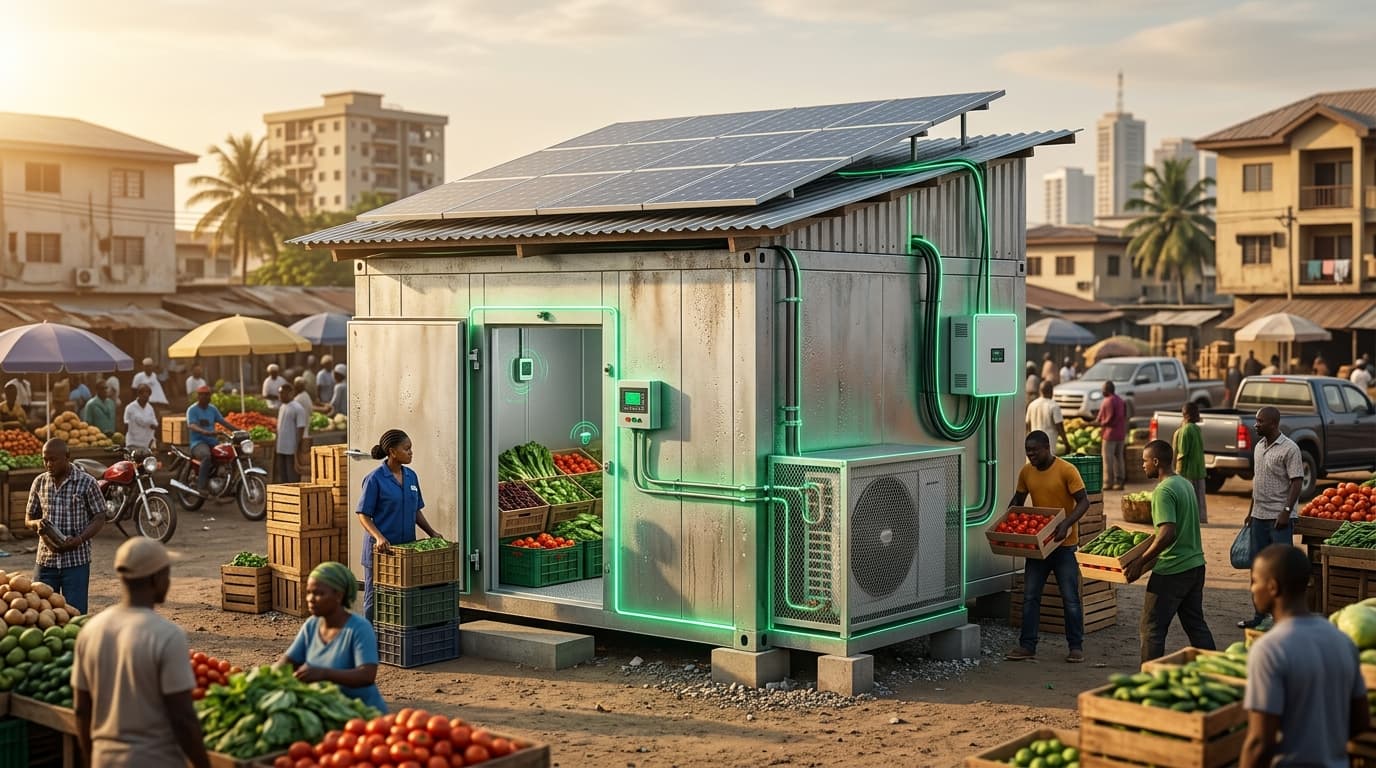
Africa loses an estimated 40% of its food production to post-harvest losses, largely because the continent has virtually no cold chain infrastructure — refrigerated transport, cold storage, and temperature-controlled logistics that developed countries take for granted. Nigerian startup ColdHubs builds solar-powered walk-in cold rooms deployed at farms and markets, storing perishable produce at optimal temperatures without grid electricity. Each unit preserves 2-3 tonnes of food, extending shelf life from 2 days to 21 days.
The technology combines solar panels, battery storage, insulation, and temperature monitoring into units that cost $30,000-50,000 and operate autonomously. Farmers and traders pay a per-crate daily fee via mobile money to store produce. The unit pays for itself within 2-3 years through user fees. Similar technologies are deployed across Kenya (InspiraFarms), Tanzania, and South Africa, with designs optimized for local conditions — extreme heat, dust, and unreliable or absent grid power.
The cold chain gap is not just a food waste problem — it's an economic development constraint. Without cold storage, farmers must sell perishable crops immediately at harvest, when prices are lowest. Cold storage enables strategic timing of sales, bargaining power, and access to distant markets. Building Africa's cold chain from scratch using distributed, off-grid technology rather than centralized, grid-dependent infrastructure reflects the continent's broader approach to development: solving 21st-century problems without 20th-century prerequisites.
Research this in Signals
Signals turns a topic into a sourced research record you can inspect and rerun. Your first scan is free, and this one starts with Off-Grid Cold Chain Technology already loaded, so edit it or scan as is.