Standardized Cocoa Fermentation and Quality Assurance Technology
Geography: Emea · Africa · Africa
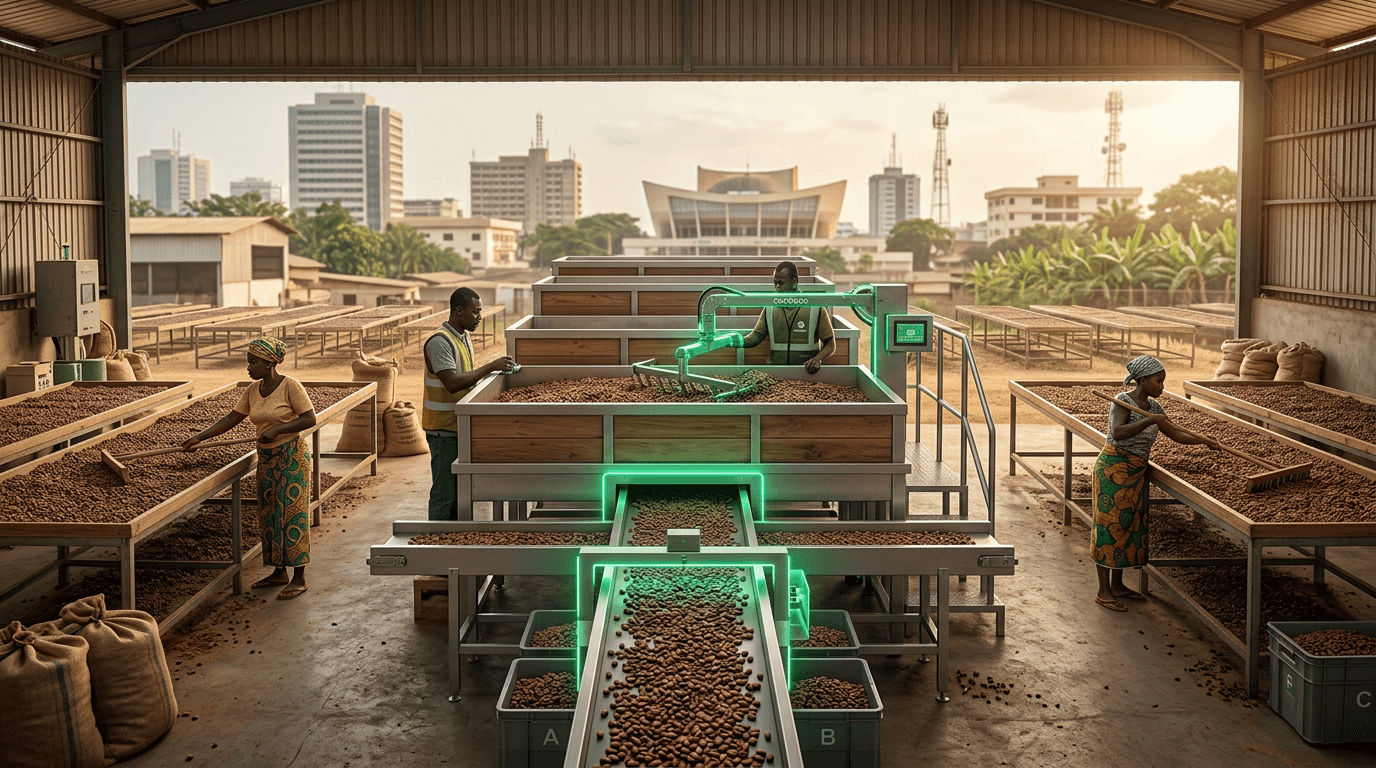
Ghana has developed the world's most systematic cocoa quality assurance technology chain, managed by COCOBOD's Quality Control Division (QCD). The system enforces standardized fermentation (6-day heap method with three turnings on plantain leaves), mandatory sun-drying on raised bamboo mats, and a multi-tier grading system with physical sampling at every point from village purchasing clerk to port. This integrated quality chain gives Ghana cocoa a consistent flavor profile that commands a $100-200/tonne premium over Ivory Coast cocoa on global commodity markets — the 'Ghana premium.'
The technology is deceptively simple but systemically sophisticated. Unlike Ivory Coast (the world's largest producer), where quality is variable, Ghana's COCOBOD employs over 5,000 quality controllers who physically sample and grade every lot using standardized cut tests (slicing beans to check fermentation depth and uniformity). The fermentation protocol — turning frequency, heap size, covering material, duration — has been optimized through decades of research at Ghana's Cocoa Research Institute (CRIG). Digital moisture meters, bean-count standards, and mycotoxin testing are integrated at export points.
The strategic significance is that Ghana proved quality assurance technology for smallholder-produced commodities is possible at national scale. The 'Ghana premium' adds $200-400 million annually to the country's cocoa export revenue. With the EU EUDR requiring full traceability, Ghana's existing quality infrastructure gives it a competitive advantage. The challenge is extending quality control to include digital traceability from individual farms — which satellite monitoring and blockchain systems are now adding to the existing physical quality chain.
Research this in Signals
Signals turns a topic into a sourced research record you can inspect and rerun. Your first scan is free, and this one starts with Standardized Cocoa Fermentation and Quality Assurance Technology already loaded, so edit it or scan as is.