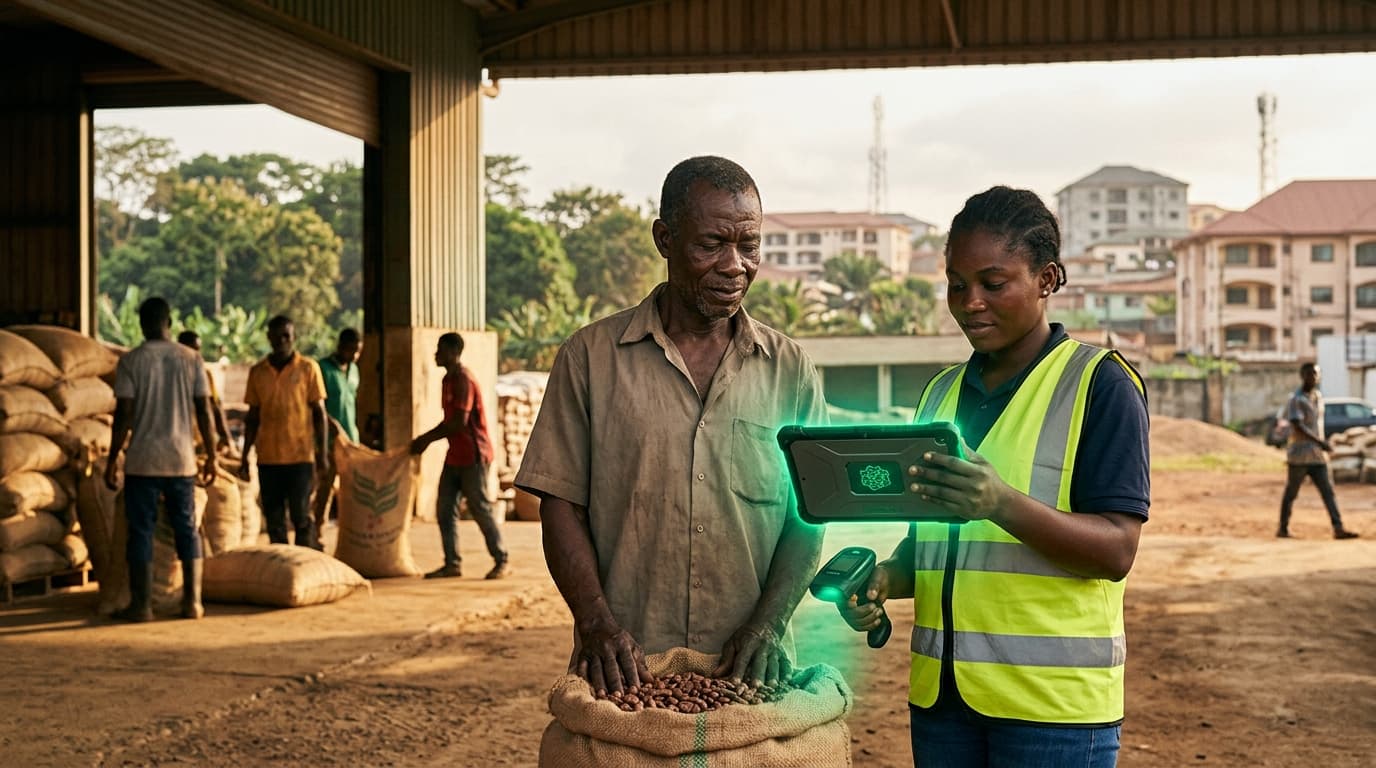
Blockchain-Based Agricultural Supply Chain Traceability
Geography: Emea · Africa · Africa
Blockchain-based traceability systems are being deployed across African agricultural supply chains to create immutable records of product origin, handling, and compliance. In Ghana's cocoa sector, platforms track beans from individual farms through cooperatives, processors, and exporters to European chocolate manufacturers. Similar systems trace coffee from Ethiopian and Kenyan farms, and minerals from DRC and Rwandan mines (addressing 'conflict mineral' regulations).
The driving force is regulation: the EU Deforestation Regulation (EUDR) requires companies importing certain commodities to prove they weren't produced on recently deforested land. Without traceability, African producers could be locked out of their largest markets. Blockchain provides the tamper-proof audit trail that regulators demand — each transaction in the supply chain is recorded immutably, from GPS-verified farm boundaries through every intermediary to the final buyer.
For African producers, traceability technology is a double-edged sword. It enables market access and potentially commands premium prices for verified sustainable products. But the cost and complexity of implementation could disadvantage smallholders who lack the technology access. The challenge for African tech companies building these systems is ensuring that traceability serves producers (through fair pricing and market access) rather than just satisfying distant regulators.
Research this in Signals
Signals turns a topic into a sourced research record you can inspect and rerun. Your first scan is free, and this one starts with Blockchain-Based Agricultural Supply Chain Traceability already loaded, so edit it or scan as is.