Digital Afterlife Rights
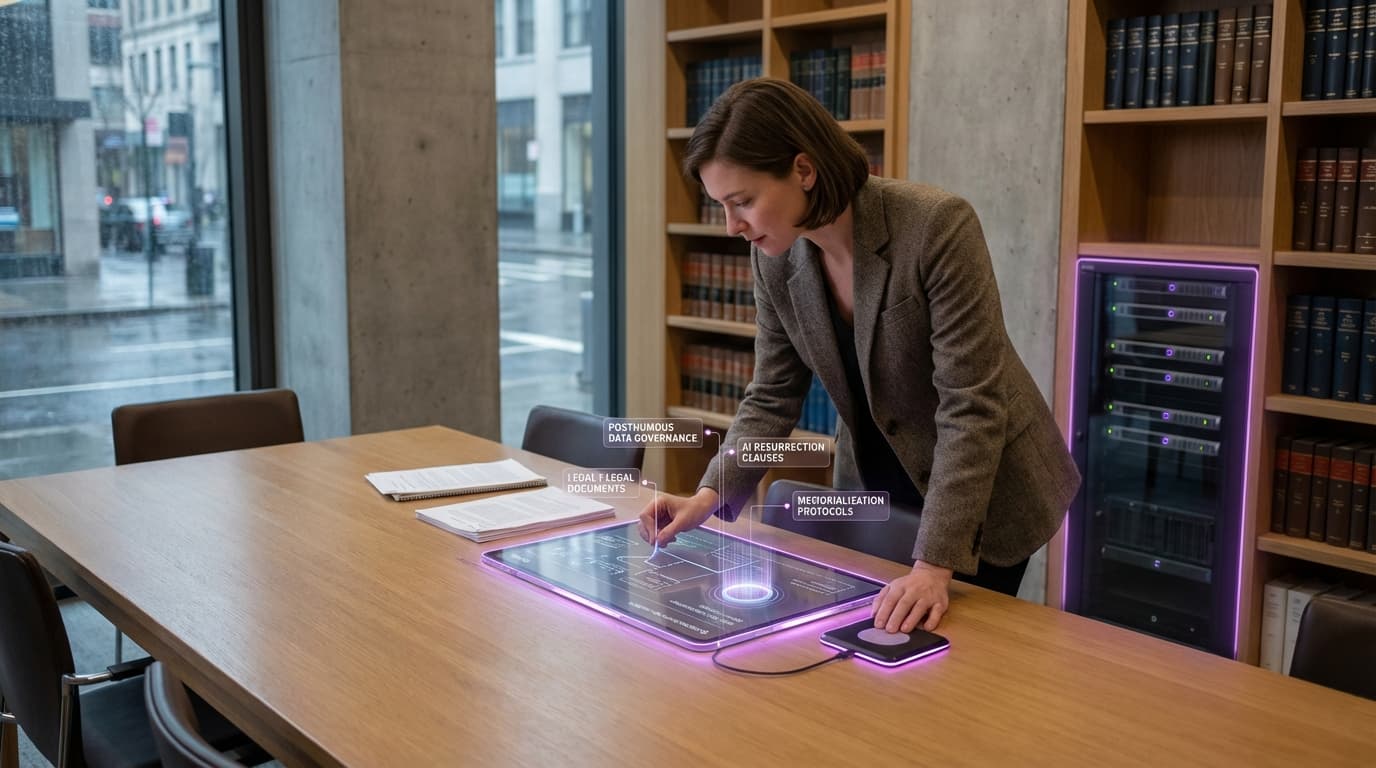
The rapid advancement of artificial intelligence and digital archiving technologies has created an unprecedented challenge: what happens to our digital selves after we die? Digital afterlife rights represent an emerging legal and ethical framework designed to address the complex questions surrounding posthumous data usage, AI-generated representations of deceased individuals, and the preservation of digital legacies. At its core, this framework seeks to establish clear boundaries around how personal data, social media histories, voice recordings, photographs, and other digital artifacts can be used after someone's death. The technology operates at the intersection of data privacy law, intellectual property rights, and emerging AI capabilities that can synthesize realistic representations of individuals from their digital footprints. Key mechanisms include consent protocols that allow individuals to specify during their lifetime how their data may be used posthumously, authentication systems to verify the legitimacy of digital memorial projects, and legal structures that balance the rights of the deceased with those of surviving family members and the broader public interest.
The fundamental problem this framework addresses is the current legal vacuum surrounding digital remains in an era where AI can convincingly recreate human voices, generate realistic video deepfakes, and even produce conversational agents trained on someone's writing and speech patterns. Without clear governance, families face difficult decisions about whether to permit AI resurrections of loved ones, companies may exploit deceased individuals' likenesses without consent, and conflicts arise between different stakeholders claiming rights over digital legacies. Industry analysts note that as generative AI becomes more sophisticated, the potential for both therapeutic applications and exploitative misuse grows exponentially. This framework enables new possibilities for grief processing and memory preservation while establishing necessary guardrails against unauthorized digital resurrection. It also addresses practical business challenges for social media platforms and tech companies managing billions of accounts belonging to deceased users, providing clear protocols for data retention, deletion, and memorial transformation.
Early implementations of digital afterlife rights are emerging through piecemeal legislation in various jurisdictions, with some regions beginning to recognize digital assets in estate planning and others establishing specific consent requirements for posthumous AI applications. Research suggests growing public concern about these issues, particularly among younger generations who have extensive digital footprints and are more likely to encounter AI-generated representations of deceased friends and family members. Pilot programs exploring therapeutic uses of conversational AI trained on deceased individuals have highlighted both the potential benefits for grief counseling and the psychological risks of overly realistic digital proxies. As the technology continues to evolve, this legal framework will likely expand to address increasingly sophisticated forms of digital preservation and resurrection, from immersive virtual reality memorials to AI agents that can continue evolving beyond their training data. The trajectory points toward a future where digital afterlife rights become as fundamental to estate planning as wills and trusts, shaping how we remember, honor, and interact with those who have passed in an increasingly digital world.
Related Organizations
A professional body dedicated to raising standards in digital asset planning and posthumous data privacy.

An app that records personal stories and uses AI to let loved ones ask questions about those memories later.

Creates conversational video AI that allows people to record their life stories for future generations to interact with.

A platform focused on creating AI models of people to preserve their consciousness and personality.
A non-profit association that drafted the Revised Uniform Fiduciary Access to Digital Assets Act (RUFADAA).

A comprehensive digital legacy platform allowing users to manage social media, financial accounts, and memories, including AI-driven photo animation.

A multidisciplinary research and teaching department of the University of Oxford.

An open VR world that natively supports external NFT assets and avatars.

Online will-writing platform that includes provisions for digital assets and executor instructions.

Through Copilot and the 'Recall' feature in Windows, Microsoft is integrating persistent memory and agentic capabilities directly into the operating system.
Supporting Evidence
Research this in Signals
Signals turns a topic into a sourced research record you can inspect and rerun. Your first scan is free, and this one starts with Digital Afterlife Rights already loaded, so edit it or scan as is.