Community Co-Design Platforms
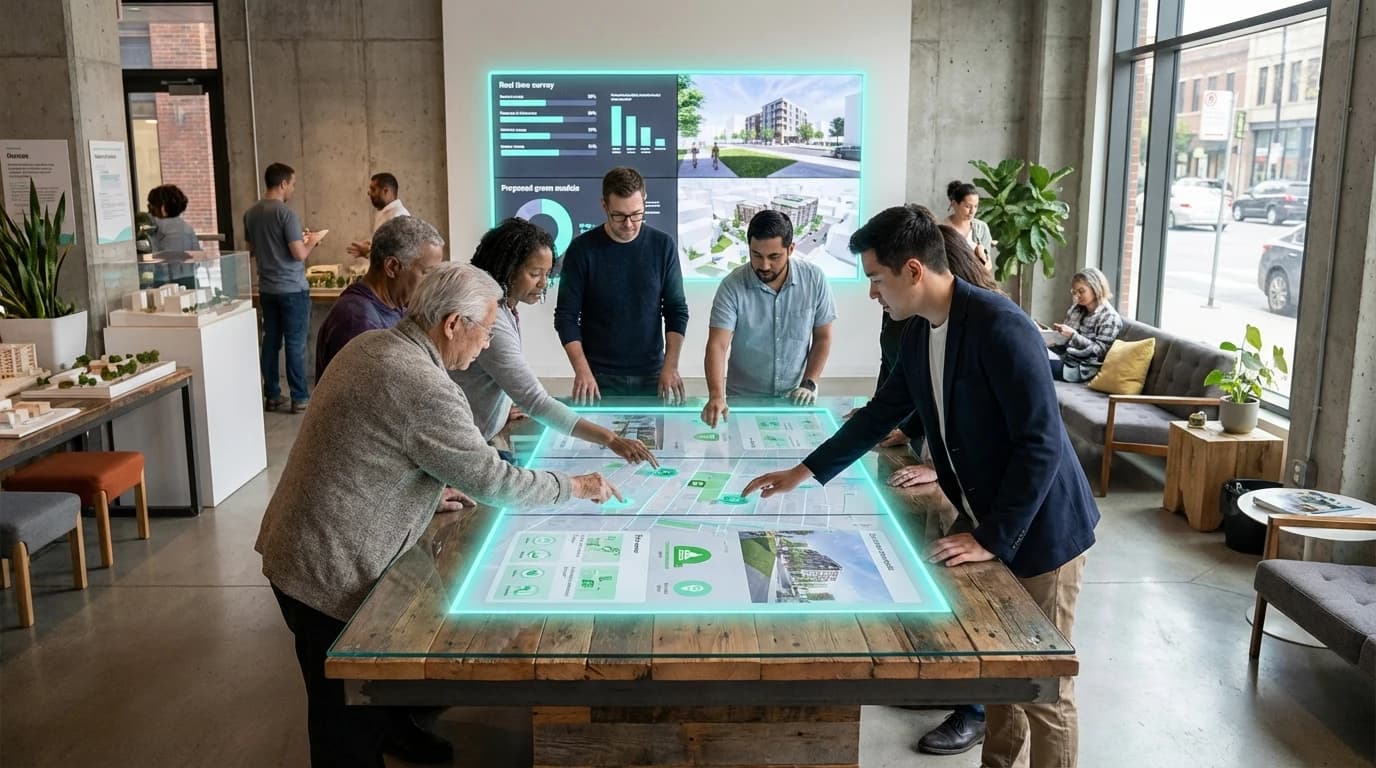
Community co-design platforms represent a fundamental shift in how cities engage with their residents, moving beyond traditional top-down planning models toward genuinely participatory governance. These digital systems integrate multiple technologies—participatory mapping interfaces, deliberation tools, voting mechanisms, and increasingly, augmented and virtual reality visualizations—to create accessible spaces where community members can actively shape the physical and social infrastructure around them. At their technical core, these platforms combine geospatial data layers with collaborative design tools, allowing residents to annotate maps, propose changes to public spaces, comment on policy drafts, and visualize potential futures for their neighborhoods. The systems typically employ moderation algorithms and facilitation frameworks designed to ensure constructive dialogue, prevent harassment, and amplify voices that have historically been excluded from planning processes. Many platforms incorporate accessibility features such as multi-language support, screen reader compatibility, and simplified interfaces to lower barriers to participation across diverse populations.
The emergence of these platforms addresses a persistent crisis in urban governance: the disconnect between institutional decision-making and lived community experience. Traditional public consultation processes often suffer from low participation rates, demographic skew toward more privileged residents, and limited ability for citizens to meaningfully influence outcomes. Community co-design platforms tackle these challenges by meeting people where they are—on their phones and computers—and by structuring engagement in ways that accommodate different schedules, communication styles, and levels of technical expertise. They enable asynchronous participation, allowing working parents, shift workers, and others with constrained time to contribute meaningfully. Perhaps most significantly, these systems create transparent records of how community input shapes final decisions, building trust and accountability that traditional consultation methods often lack. For municipal governments and organizations, these platforms reduce the cost and logistical complexity of engagement while generating richer, more representative data about community needs and preferences.
Early implementations have demonstrated promising results across diverse contexts. Cities have deployed these platforms for projects ranging from park redesigns and pedestrian safety improvements to budget allocation and climate adaptation planning. Research suggests that well-designed co-design platforms can increase participation rates significantly compared to traditional public meetings, particularly among younger residents and communities of color who face greater barriers to in-person engagement. Some platforms have successfully integrated with formal planning processes, creating pathways for community-generated proposals to receive official consideration and funding. The technology continues to evolve toward more immersive experiences, with some systems now offering virtual reality walkthroughs of proposed developments or augmented reality overlays that let residents visualize changes in situ using their smartphones. As urban populations grow more diverse and demands for authentic participation intensify, these platforms represent a crucial infrastructure for democratic renewal—tools that can help cities become not just smarter, but more responsive to the collective wisdom and wellbeing of the communities they serve.
Related Organizations

A free open-source participatory democracy framework for cities and organizations.

A digital community engagement platform used by local governments to consult citizens.

Open source citizen participation tool used by governments worldwide for debates, proposals, and voting.

A digital engagement platform for cities and developers to connect with the community about planning and development.

Community engagement platform for map-based surveys and participatory planning.
A nonprofit that empowers people to decide together how to spend public money.

An open-source system for gathering open-ended feedback and using machine learning to surface consensus across divided groups.

A platform that helps civic organizations collaborate with residents on the future of their communities.

A collaborative decision-making tool that helps groups reach consensus.

Provides an urban intelligence platform that analyzes data to assist governments and utilities in planning for climate, energy, and community resilience.
Supporting Evidence
Research this in Signals
Signals turns a topic into a sourced research record you can inspect and rerun. Your first scan is free, and this one starts with Community Co-Design Platforms already loaded, so edit it or scan as is.