Mobile Digital Identity (mDL)
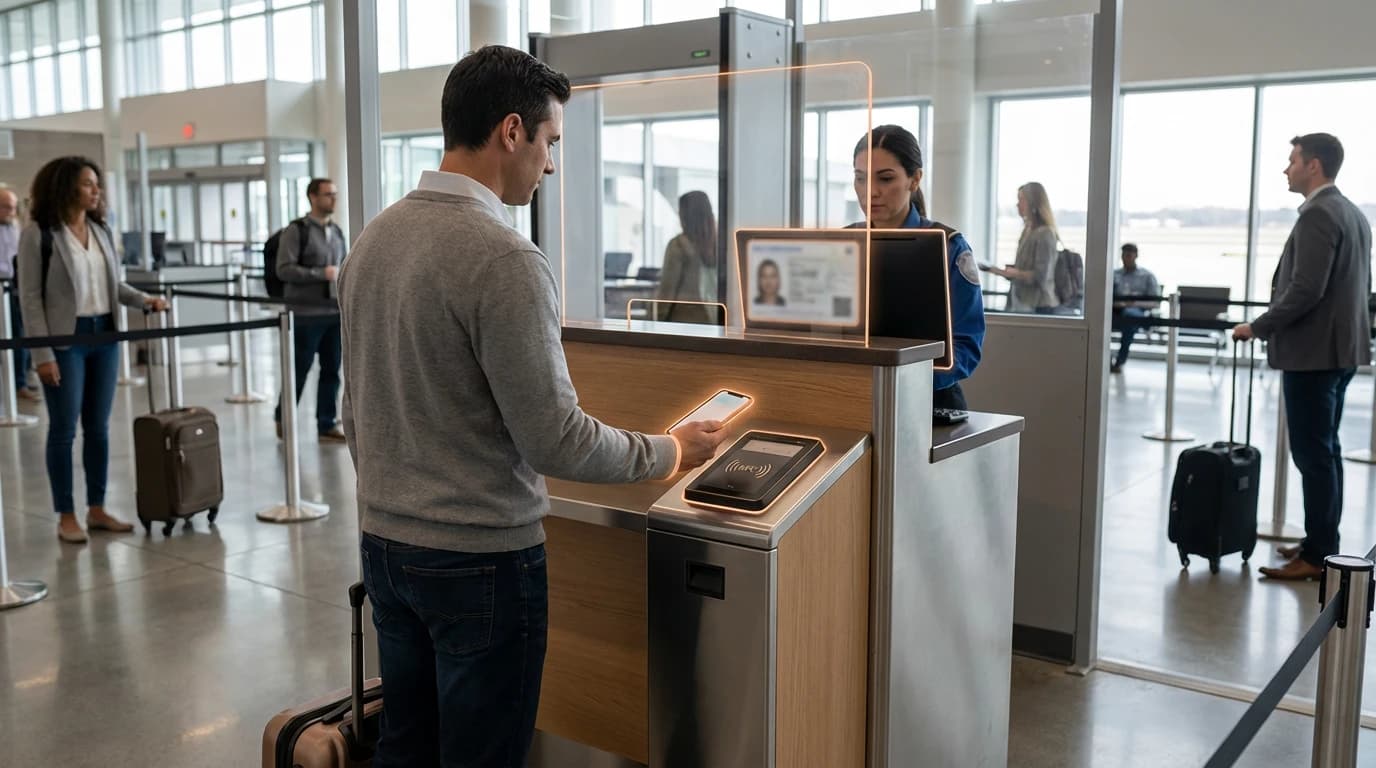
Mobile Digital Identity (mDL) represents a fundamental shift in how government-issued credentials are stored, presented, and verified in the digital age. Built on the ISO/IEC 18013-5 international standard, mDL systems transform traditional physical driver's licenses and national identity documents into secure digital credentials stored directly on smartphones. The technology employs a sophisticated architecture that combines cryptographic security, biometric authentication, and privacy-preserving protocols. At its technical core, mDL credentials are digitally signed by issuing authorities and bound to the device holder through biometric verification—typically facial recognition or fingerprint authentication. The system supports both online and offline verification modes, utilizing near-field communication (NFC) for contactless presentation and QR codes for visual verification scenarios. Crucially, the standard incorporates selective disclosure capabilities, allowing credential holders to share only the specific data elements required for a given transaction rather than exposing their entire identity document. This granular control is enforced through cryptographic protocols that maintain tamper-evidence while enabling users to prove, for instance, that they are over a certain age without revealing their exact birthdate or home address.
The emergence of mDL technology addresses several critical challenges that have long plagued identity verification systems. Traditional physical credentials are vulnerable to loss, theft, counterfeiting, and degradation, while their presentation typically requires sharing more personal information than necessary for a given interaction. Digital identity solutions solve these problems by providing cryptographically verifiable credentials that cannot be easily forged and enable privacy-respecting verification workflows. For government agencies, mDL systems reduce the costs associated with producing and replacing physical cards while enabling more efficient service delivery and fraud prevention. The technology also creates new possibilities for remote identity verification, allowing citizens to prove their identity for online services, age-restricted purchases, and digital transactions without requiring in-person document inspection. This capability has become particularly valuable as more government services, financial transactions, and commercial interactions migrate to digital channels. Furthermore, mDL systems provide audit trails and consent mechanisms that give individuals greater visibility and control over how their identity data is accessed and used.
Multiple jurisdictions have moved beyond pilot programs to full-scale deployment of mDL systems. Several US states have launched mobile driver's license programs that allow residents to present digital credentials at TSA checkpoints, during traffic stops, and for age verification at retail establishments. European nations are implementing mDL capabilities as part of broader digital identity initiatives aligned with the EU Digital Identity Wallet framework, while countries across the Asia-Pacific region are integrating mobile credentials into national digital identity ecosystems. Early deployments indicate strong user adoption rates, with residents appreciating the convenience of consolidated digital credentials and enhanced privacy controls. The technology is evolving in parallel with broader trends toward decentralized identity systems and verifiable credentials, positioning mDL as a foundational component of emerging digital trust infrastructures. As smartphone penetration continues to increase globally and interoperability standards mature, mobile digital identity is poised to become the dominant form factor for government-issued credentials, fundamentally reshaping how individuals prove their identity in both physical and digital contexts while establishing new paradigms for privacy-preserving verification.
Related Organizations

Develops implementation guidelines and facilitates interoperability for mDLs across North America.

Identity and security company developing offline CBDC payment cards and secure elements.

Developing 'Apple Intelligence', a personal intelligence system integrated into iOS/macOS that uses on-device context to mediate tasks and information.

Creators of CausalImpact, a package for causal inference using Bayesian structural time-series.

Develops ISO-compliant mobile IDs and digital travel credentials.

Multinational company designing and building electrical systems and providing services for the aerospace, defence, transportation and security markets.



The US agency responsible for security in public travel.

Develops decentralized identity software, including tools for verifiable credentials and ZK-based authentication.
Supporting Evidence
Research this in Signals
Signals turns a topic into a sourced research record you can inspect and rerun. Your first scan is free, and this one starts with Mobile Digital Identity (mDL) already loaded, so edit it or scan as is.