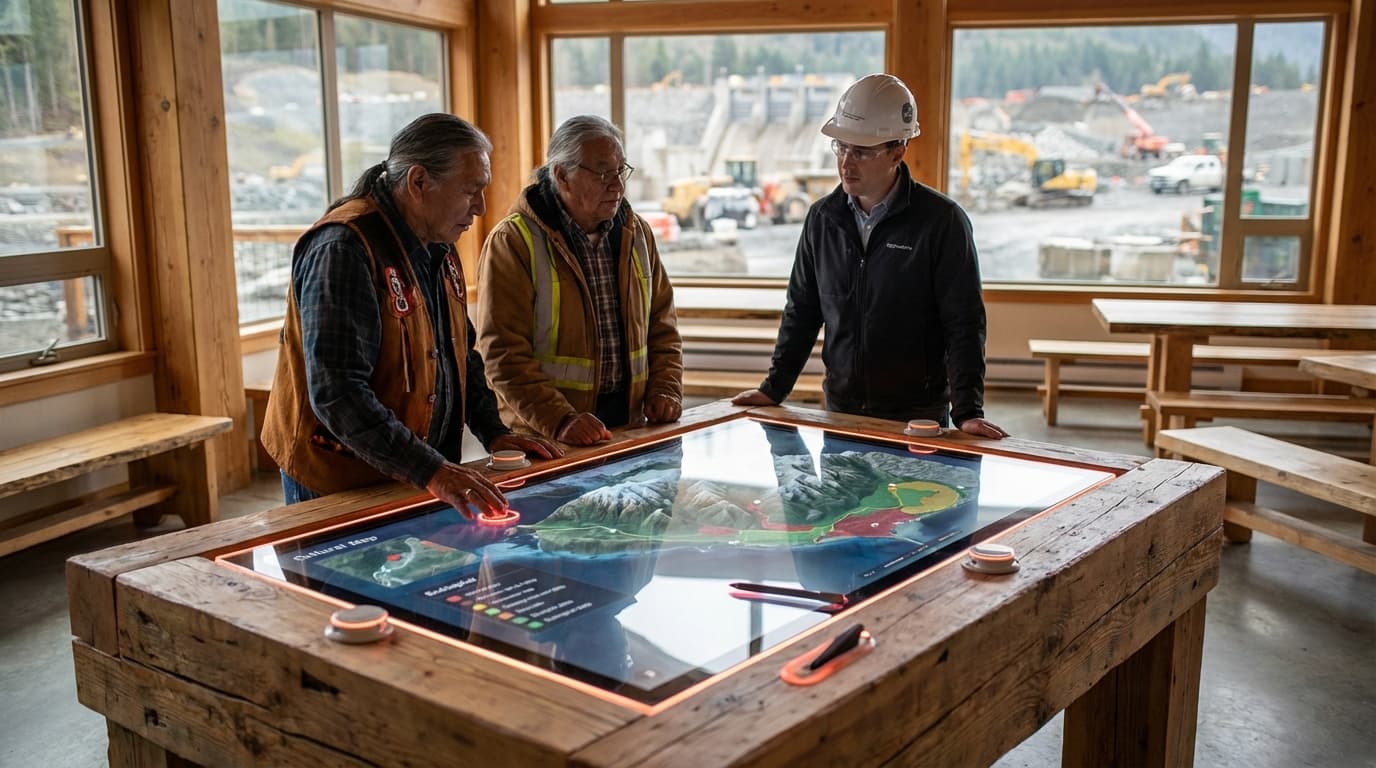
Indigenous Rights & Consultation in Megaprojects
The principle of Free, Prior, and Informed Consent (FPIC) has emerged as a cornerstone of ethical project development on or near Indigenous territories, rooted in international frameworks such as the International Labour Organization's Convention 169 and the United Nations Declaration on the Rights of Indigenous Peoples (UNDRIP). At its core, FPIC requires that Indigenous communities be consulted before any project begins, that they receive comprehensive information about potential impacts in culturally appropriate formats, and that they retain the right to grant or withhold consent without coercion. This framework operates through structured consultation processes that typically involve multiple stages: initial notification, information sharing, dialogue sessions, impact assessments that incorporate traditional knowledge, and formal decision-making protocols determined by the community itself. Geographic Information Systems (GIS) and digital mapping tools can help visualize project boundaries and potential environmental impacts, while online platforms may facilitate broader participation in consultations. However, these technologies serve only as supplements to face-to-face engagement, translation services, and the recognition of traditional governance structures that vary widely across Indigenous nations.
The construction and resource extraction industries have historically proceeded with projects that disregard Indigenous land rights and sovereignty, resulting in environmental degradation, cultural disruption, and the violation of treaty obligations. This approach has proven increasingly untenable as legal frameworks strengthen and investors demand greater social license to operate. Projects that bypass meaningful consultation face mounting risks: court injunctions can halt construction for years, financial backers may withdraw support, and companies suffer lasting reputational damage that affects their ability to secure permits for future developments. The challenge this framework addresses is not merely procedural compliance but the fundamental need to reconcile economic development with Indigenous self-determination and the protection of territories that often hold irreplaceable cultural, spiritual, and ecological significance. When implemented authentically, FPIC processes can identify project modifications that reduce harm, establish benefit-sharing agreements, and create employment opportunities that align with community priorities, transforming potential conflicts into collaborative relationships.
Across North America, Latin America, and Oceania, the consequences of inadequate consultation have become increasingly visible through high-profile project delays and cancellations. Pipeline developments, mining operations, and hydroelectric dams have encountered sustained opposition from Indigenous communities asserting their rights, with some projects abandoned entirely after years of legal battles and public pressure. Conversely, early examples of genuine partnership demonstrate that when developers engage Indigenous communities as decision-makers rather than stakeholders to be managed, projects can proceed with greater stability and social acceptance. National jurisdictions are gradually strengthening their consultation requirements, with some countries incorporating FPIC into domestic law and regulatory frameworks for environmental assessments. As global attention to Indigenous rights intensifies and investors adopt environmental, social, and governance criteria, the construction and resource sectors are recognizing that meaningful consultation is not an obstacle to development but a prerequisite for sustainable, legally defensible projects. The trajectory points toward a future where Indigenous consent is understood not as a box to check but as an ongoing relationship that shapes project design, implementation, and long-term stewardship of affected territories.
Related Organizations

A risk management framework, adopted by financial institutions, for determining, assessing, and managing environmental and social risk in projects.

An organization that works to bridge the gap between investors and Indigenous communities, specifically translating FPIC risks into financial terms for the market.

A global organization that works to protect Indigenous Peoples from criminalization and violence.
Member of the World Bank Group, investing in green building (EDGE certification) and affordable housing tech companies globally.

Environmental and regulatory consultants working exclusively for Indigenous nations to provide technical support during major project consultations.

A nonprofit organization founded to protect the rainforest and advance the rights of Indigenous peoples in the Amazon Basin.
A human rights organization working with forest peoples to secure their rights to their land and control over their resources.

Mining giant that operates 'AutoHaul', the world's first fully autonomous, heavy-haul, long-distance railway system.

A global risk analytics company providing data and forecasting on political, human rights, and environmental risks.

WSP
Canada · Company
A global engineering professional services firm that provides technical expertise for ropeway and cable car projects.
Supporting Evidence
Research this in Signals
Signals turns a topic into a sourced research record you can inspect and rerun. Your first scan is free, and this one starts with Indigenous Rights & Consultation in Megaprojects already loaded, so edit it or scan as is.