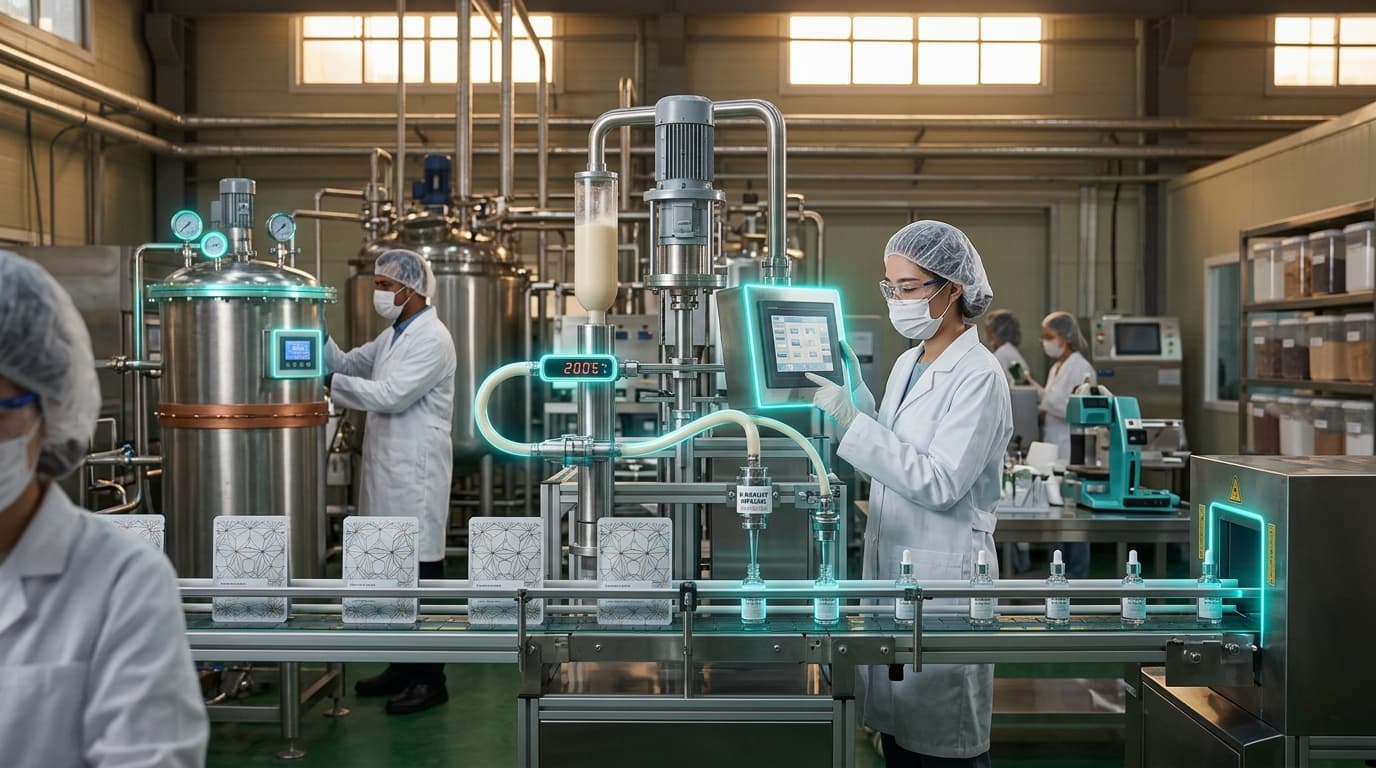
K-Beauty Technology Pipeline
Geography: Asia Pacific · East Asia · South Korea
South Korea's cosmetics industry (Amorepacific, LG H&H, Cosrx, Innisfree, Sulwhasoo) files more beauty-related patents than any country except China and the US. Korean companies pioneered product formats that became global standards: sheet masks, multi-step skincare routines, essences, ampoules, and cushion compacts. The industry generated $9.5B in exports in 2024, making it Korea's largest consumer goods export after electronics and automobiles.
K-beauty innovation is R&D-intensive in ways that casual consumers don't see — Korean cosmetics companies operate advanced dermatological research labs testing ingredients like snail mucin, centella asiatica, fermented extracts, and peptide complexes with clinical rigor. Companies like Amorepacific use AI skin analysis (camera-based and microbiome-based) to personalize product recommendations, and 3D-printed face masks customized to individual facial geometry.
The K-beauty pipeline functions as a leading indicator for global beauty trends — formulations and formats that appear in Korean products typically reach Western markets 2-3 years later. This trend-setting position gives Korean companies structural first-mover advantage and premium pricing power in international markets.
Research this in Signals
Signals turns a topic into a sourced research record you can inspect and rerun. Your first scan is free, and this one starts with K-Beauty Technology Pipeline already loaded, so edit it or scan as is.