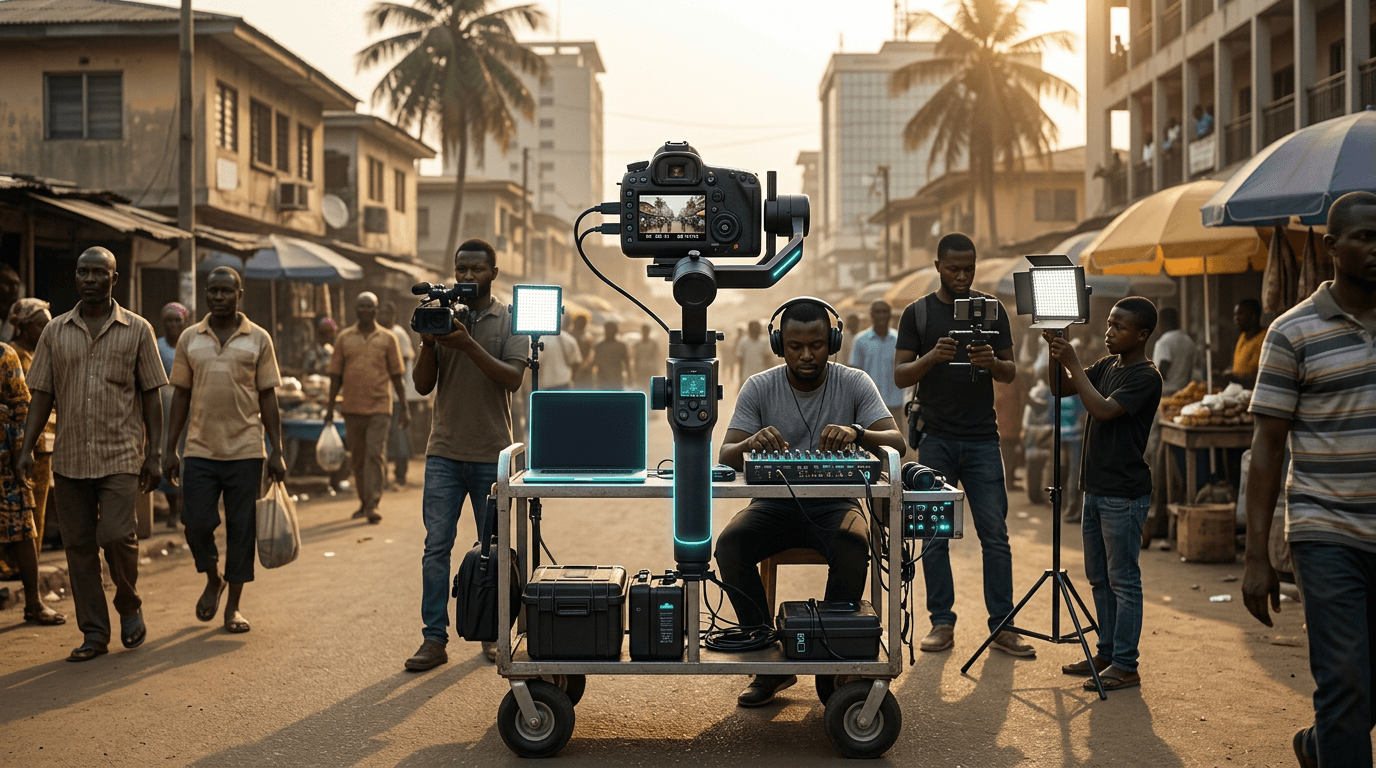
Low-Cost Digital Content Production Pipeline
Geography: Emea · Africa · Africa
Nollywood — Nigeria's film industry — produces approximately 2,500 films annually, second only to India's Bollywood by volume and ahead of Hollywood. The industry was built on a radical technology choice: in the 1990s, Nigerian filmmakers bypassed expensive celluloid film entirely, shooting directly to video with consumer-grade digital cameras. This slashed production costs from millions to thousands of dollars, enabling a production volume that no other industry structure could achieve.
The digital revolution continues with the streaming era. Nollywood content is now distributed through YouTube (free), iROKOtv (Africa's Netflix), Netflix, Amazon Prime, and Showmax. The production pipeline has evolved: smartphone-shot content coexists with higher-budget productions, and AI-assisted editing, color grading, and post-production tools are being adopted by Nigerian filmmakers. The industry contributes $6.4 billion annually to Nigeria's GDP and employs over 1 million people.
Nollywood's significance is as a content production model, not just an entertainment industry. It proved that a viable film industry can emerge without Hollywood's studio system, without government subsidies, and without expensive equipment — just stories, cameras, and distribution networks. This model is being replicated across Africa and is influencing content creation in Southeast Asia and Latin America. The cultural soft power dimension is equally important: Nollywood shapes how a billion Africans see themselves and how the world sees Africa.
Research this in Signals
Signals turns a topic into a sourced research record you can inspect and rerun. Your first scan is free, and this one starts with Low-Cost Digital Content Production Pipeline already loaded, so edit it or scan as is.