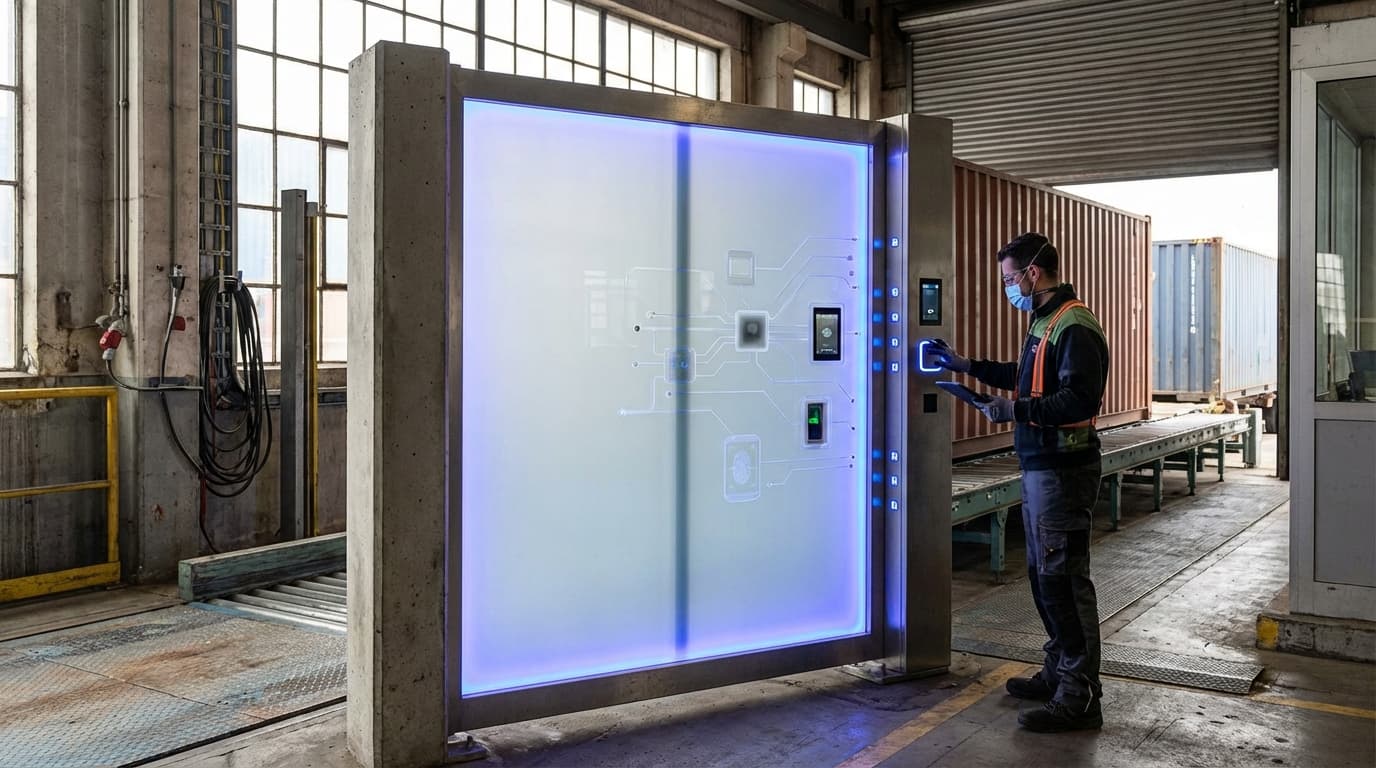
Zero-Knowledge Compliance Layers
Zero-knowledge compliance layers represent a cryptographic innovation that addresses a fundamental tension in modern governance: the need for regulatory oversight versus the imperative to protect individual privacy. Traditional compliance frameworks require citizens and businesses to disclose sensitive personal or financial information to prove they meet regulatory requirements, creating extensive databases of private data that become attractive targets for breaches and potential vectors for abuse. Zero-knowledge proofs solve this dilemma through mathematical protocols that allow one party (the prover) to demonstrate to another party (the verifier) that a specific statement is true without revealing any information beyond the validity of that statement itself. For instance, a business can cryptographically prove it maintains adequate capital reserves without disclosing exact account balances, transaction histories, or banking relationships. These protocols rely on advanced cryptographic techniques that generate verifiable proofs through complex mathematical operations, ensuring that regulators can confirm compliance while the underlying data remains completely private and never leaves the control of the entity being verified.
The implications for public sector institutions are profound, as these systems fundamentally reshape the relationship between regulatory bodies and those they oversee. Governments currently bear enormous costs and liabilities associated with storing, securing, and managing vast repositories of citizen data required for tax compliance, licensing, benefit eligibility, and countless other administrative functions. Zero-knowledge compliance layers eliminate the need for these centralized data stores, dramatically reducing the attack surface for data breaches while simultaneously lowering infrastructure costs and administrative overhead. For regulated entities, this approach removes the risk of sensitive information being compromised through government databases or misused by future administrations. The technology enables new models of selective disclosure where individuals can prove specific attributes—such as being above a certain age, residing in a particular jurisdiction, or meeting income thresholds—without revealing exact birthdates, addresses, or financial details. This capability is particularly valuable in contexts requiring repeated verification, such as ongoing tax compliance or professional licensing, where traditional systems demand continuous access to private records.
Early implementations of zero-knowledge compliance are emerging in financial regulation and digital identity systems, where the technology shows particular promise for cross-border transactions and international regulatory cooperation. Several jurisdictions are exploring pilot programs that would allow businesses to demonstrate tax compliance across multiple tax authorities without exposing proprietary financial information to foreign governments. In the realm of public benefits administration, research initiatives are investigating how zero-knowledge proofs could streamline eligibility verification while protecting applicant privacy and reducing fraud. The technology aligns with broader movements toward privacy-preserving computation and data minimization principles increasingly embedded in regulatory frameworks worldwide. As computational costs for generating these proofs continue to decline and standardized protocols mature, zero-knowledge compliance layers are positioned to become foundational infrastructure for next-generation governance systems that balance accountability with privacy, enabling more trustworthy institutions that collect only the minimum information necessary to fulfill their public mandates.
Related Organizations

Develops zero-knowledge proofs specifically for solvency and reserve verification for financial institutions.

A Layer-1 blockchain platform for building private applications using zero-knowledge cryptography.

Developing a privacy-first zero-knowledge rollup on Ethereum.

Sismo
France · Startup
Issues ZK Badges that allow users to prove reputation or data ownership (e.g., 'I own this NFT' or 'I passed KYC') without revealing the source wallet.

A lightweight blockchain that uses recursive zero-knowledge proofs (zk-SNARKs) to verify the state of the chain.
Developers of a Zero-Knowledge Virtual Machine (zkVM) that allows developers to run arbitrary code and prove its execution.

Developing scaling and privacy solutions for Web3.
Supporting Evidence
Research this in Signals
Signals turns a topic into a sourced research record you can inspect and rerun. Your first scan is free, and this one starts with Zero-Knowledge Compliance Layers already loaded, so edit it or scan as is.